
Timeline / The first chronograph
The first chronograph
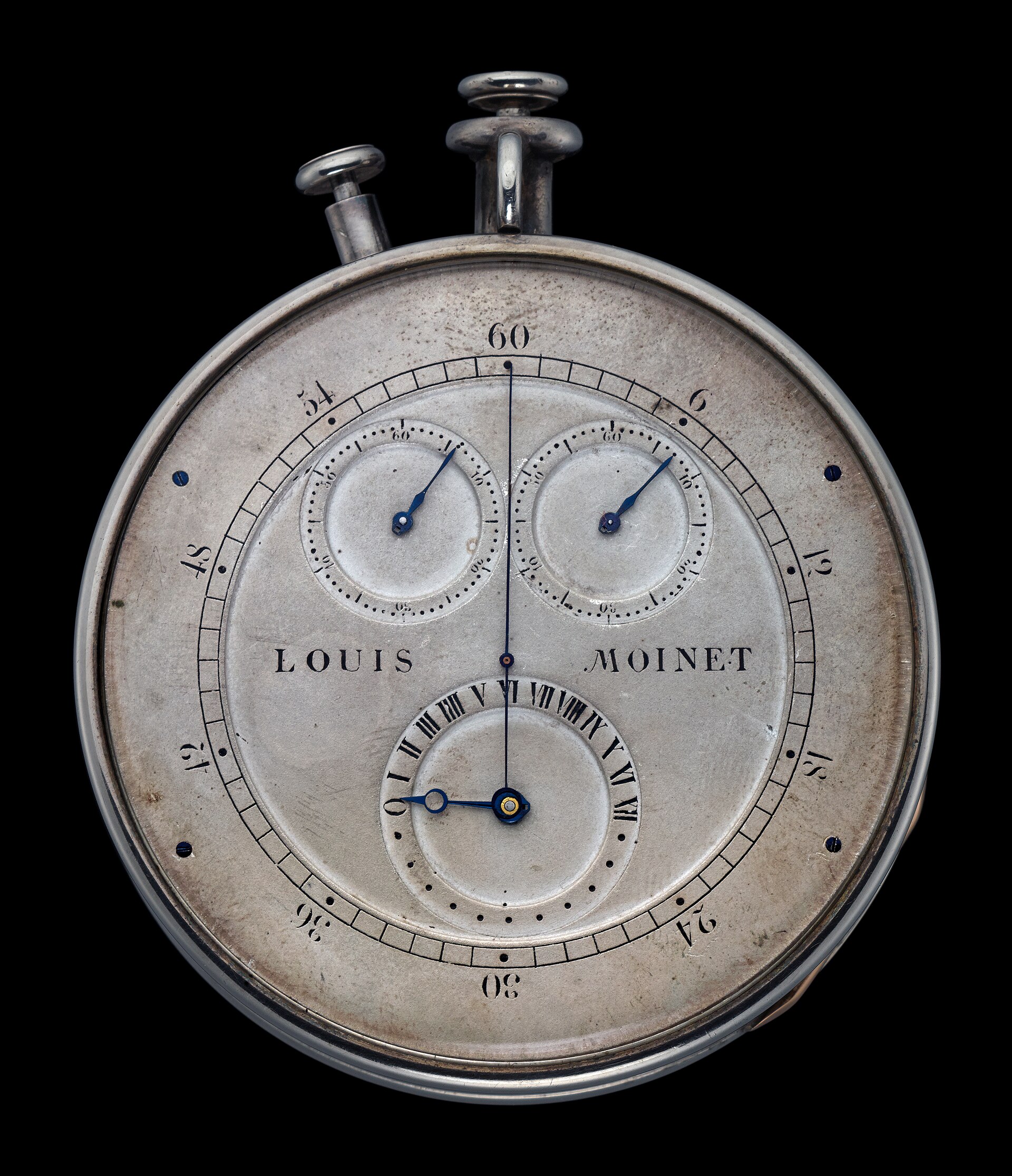
Louis Moinet’s compteur de tierces of 1816 is the oldest known instrument that could start, stop and return to zero.

- The need
- Timing astronomical observations to a fraction of a second.
- Made by
- Louis Moinet, a Paris watchmaker, teacher and author, for his own work at the telescope.
- What was new
- The three controls that define a chronograph: start, stop and return to zero. It beat at 216,000 vibrations an hour and could measure a sixtieth of a second.
- Worth knowing
- It was unknown until it came to light in 2012 and was presented in 2013. Until then the first chronograph was said to be Nicolas Rieussec’s of 1821, which marked the dial with a drop of ink and gave the device its name: chronograph means time-writer.
- Where it is now
- Owned by the modern Louis Moinet watch company, which uses his name but does not descend from his workshop.
Historian’s noteThe 1816 date comes from Moinet’s own papers. Some argue that a counter which records nothing is a chronoscope, not a chronograph, so that Rieussec keeps the title on the strict meaning of the word.
SourcesLouis Moinet
Suggest a correction
Thank you. Your note has reached the editor.