
Certina
- Group
- Swatch Group, since 1983.
- Headquarters
- Le Locle, Switzerland.
- Founded
- 1888
- Founder
- Adolf and Alfred Kurth
- Known for
- DS (Double Security) shock-resistant concept (1959), DS Action, DS PH200M.
Lineage and calibres
- 1888
The brothers Adolf and Alfred Kurth opened a factory for watch parts and movements in Grenchen, with three employees.
- 1906
The Kurth brothers began naming their watches ‘Grana’, after Granacus, the Latin name for Grenchen.
- 1920s
Alfred’s sons Erwin and Hans joined the company and steered it through the Great Depression.
- 1939
The Certina name, from the Latin ‘certus’, was officially registered.
- 1959
Certina introduced its DS (‘Double Security’) concept. The turtle became the brand’s symbol of robustness.
- 1971
Certina presented the Biostar.
- 1983
Certina became a founding member of the SMH Group, formed when ASUAG and SSIH merged, which later became the Swatch Group.
- 2013
For its 125th anniversary Certina introduced three movements: the Powermatic 80 automatic, the C01.21 chronograph and the Precidrive quartz calibre.Calibre
- 2019
Certina introduced the Nivachron balance spring.Calibre
Contributions to horology
- 1959
DS (Double Security) concept
Certina’s DS concept was built to improve shock and water resistance, rated to 20 bar (200 m) at launch. Certina watches were later worn by the 1960 Dhaulagiri expedition and in the Sealab II (1965) and Tektite (1969) underwater programmes.
- 1971
Biostar biorhythm watch
Certina says the Biostar was the first watch to display daily biorhythms.
- 2004
DS-3 1000m
Certina says the DS-3 was water-resistant to a record 1,000 metres.
- 2013
Powermatic 80 and Nivachron
Certina adopted the Powermatic 80 automatic movement, with up to 80 hours of power reserve, in its 125th-anniversary year. From 2019 it used the Nivachron balance spring developed with the Swatch Group.
From the archive
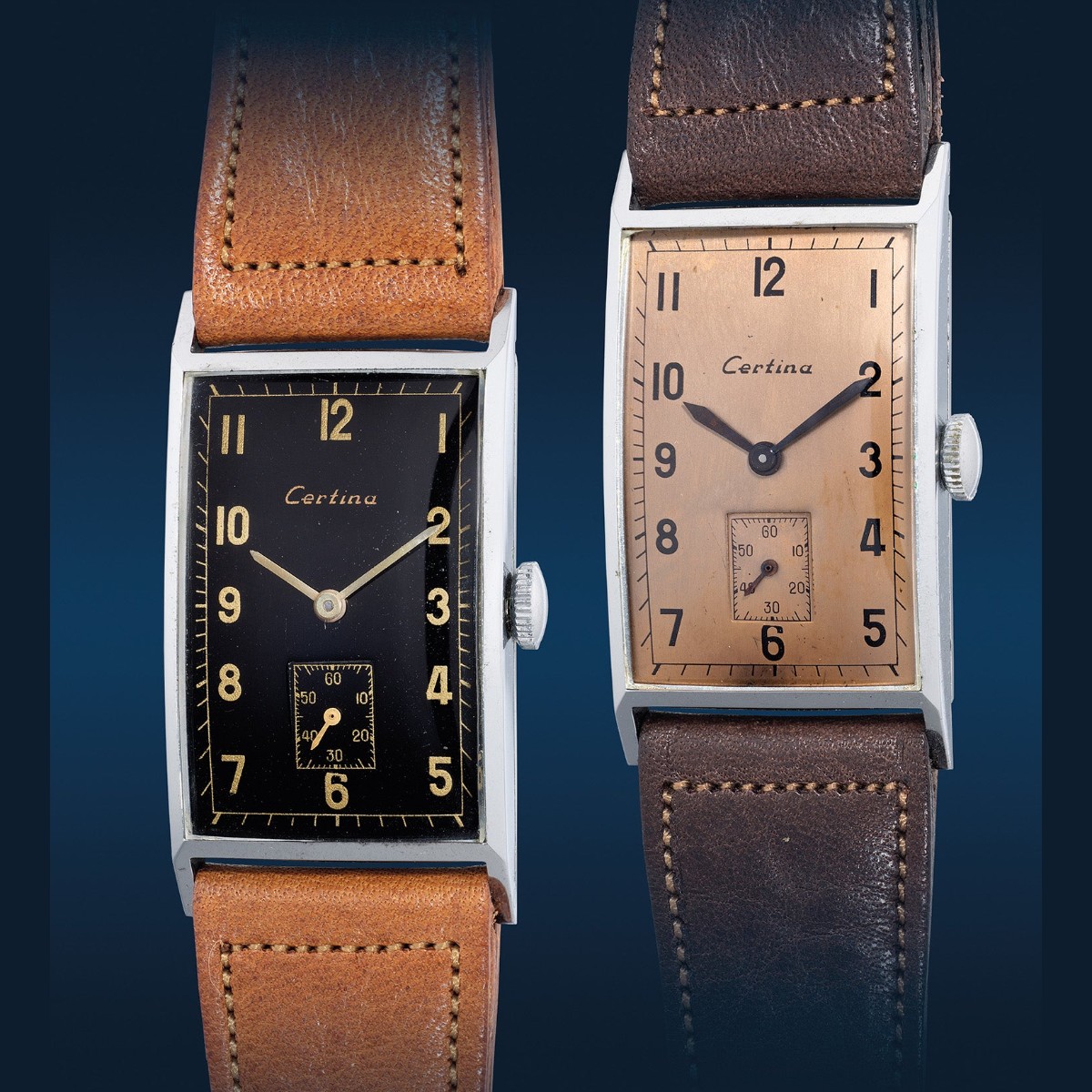
Pair of rectangular Certina wristwatches
Two rectangular steel wristwatches of the 1930s, sold by Phillips; not Certina’s first.
Popular Models
In the collection as of October 2026.
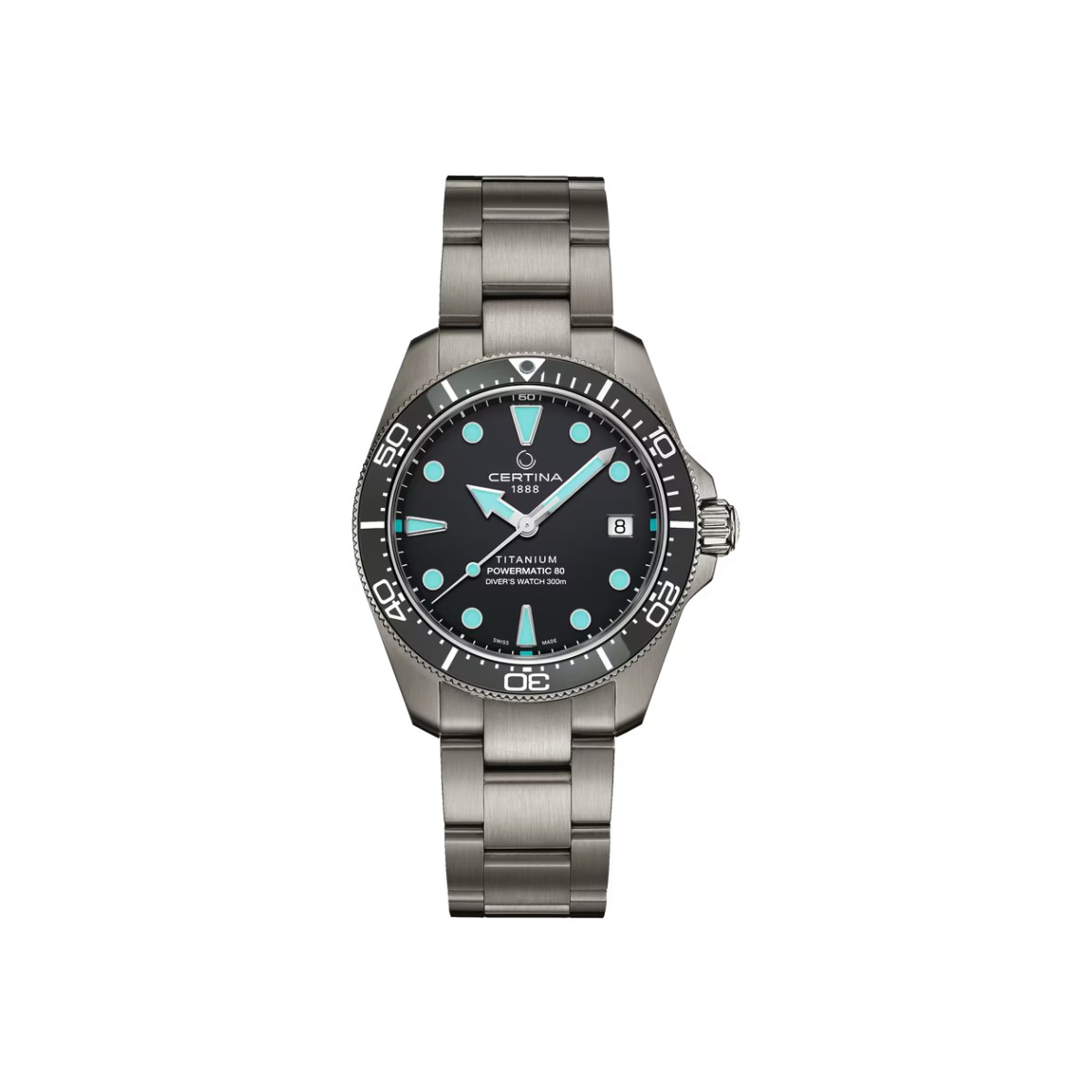
DS Action Diver 38mm Titanium
A 38 mm titanium diver with a grey dial, rated to 300 m; Powermatic 80.611.
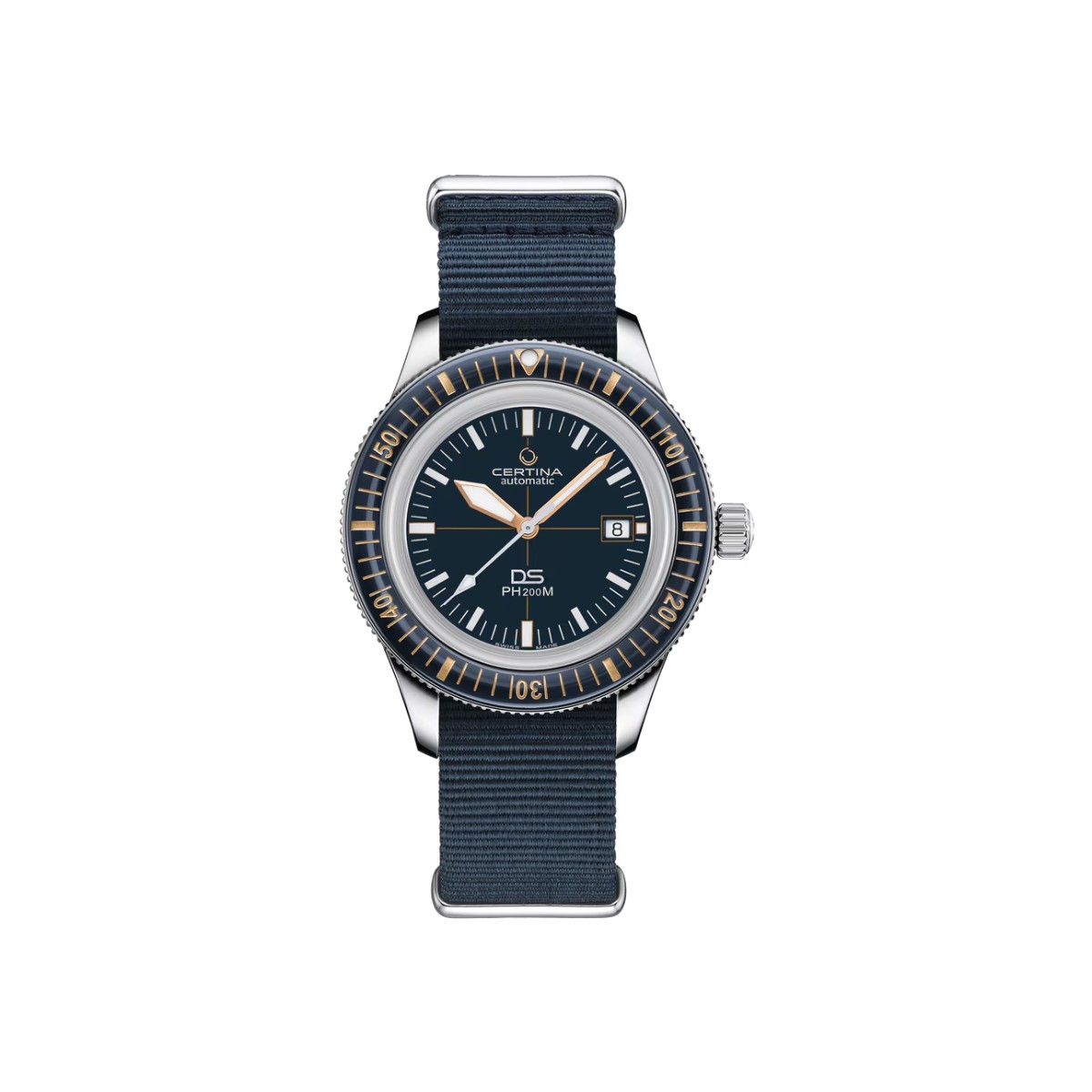
DS PH200M Powermatic 80
A 42.8 mm steel diver with a blue dial on a NATO strap; Powermatic 80.611.
Sourcescertina.com · Certina, Our history · Certina, Since 1888 · Phillips, Hong Kong, lot 985, pair of Certina wristwatches, c. 1930s · Certina, DS Action Diver 38mm Titanium C048.807.44.081.00 · Certina, DS PH200M Powermatic 80 C036.407.18.040.00