
Alpina
- Group
- Citizen Group, since 2016.
- Headquarters
- Plan-les-Ouates, Geneva, Switzerland.
- Founded
- 1883
- Founder
- Gottlieb Hauser
- Known for
- Alpina 4 (1938), Startimer, Seastrong, Alpiner.
Lineage and calibres
- 1883
Alpina dates its history to 1883 and says it was innovative from the start, both in its working conditions and in introducing new quality-control criteria.
- 1920s
By Alpina's account, its watches were sold in more than 2,000 outlets worldwide in the 1920s.
- 1938
Hauser introduced the 'Alpina 4' concept.
- 1970s
Alpina says the Alpina 4 rule brought success until the quartz crisis of the 1970s hit Swiss mechanical watchmaking.
- 2002
Alpina returned in 2002.Calibre
- 2006
Alpina moved into a purpose-built, 3,200 m² manufacture at Plan-les-Ouates, Geneva, where it makes and assembles its movements and watches.
- 2026
The new Startimer Pilot Automatic uses the AL-525 calibre on a La Joux-Perret base, with 68 hours of power reserve.Calibre
- 20th century
Among Alpina's 20th-century calibres it names the hand-wound 592, 'one of the sturdiest movements of its generation', and the 877 that powered the Alpina Techno.Calibre
Contributions to horology
- 1938
The 'Alpina 4' sports-watch rules
Alpina says Hauser set four essential properties that every true sports watch had to have. It also says that Alpina 4 watches became the choice of mountaineers, air-force pilots, divers, navies and armies.
- 2002
In-house calibres after the relaunch
Since 2002 Alpina has introduced six in-house calibres: a tourbillon, a regulator, a world timer, a small date, a flyback chronograph and Heritage Manufacture.
From the archive
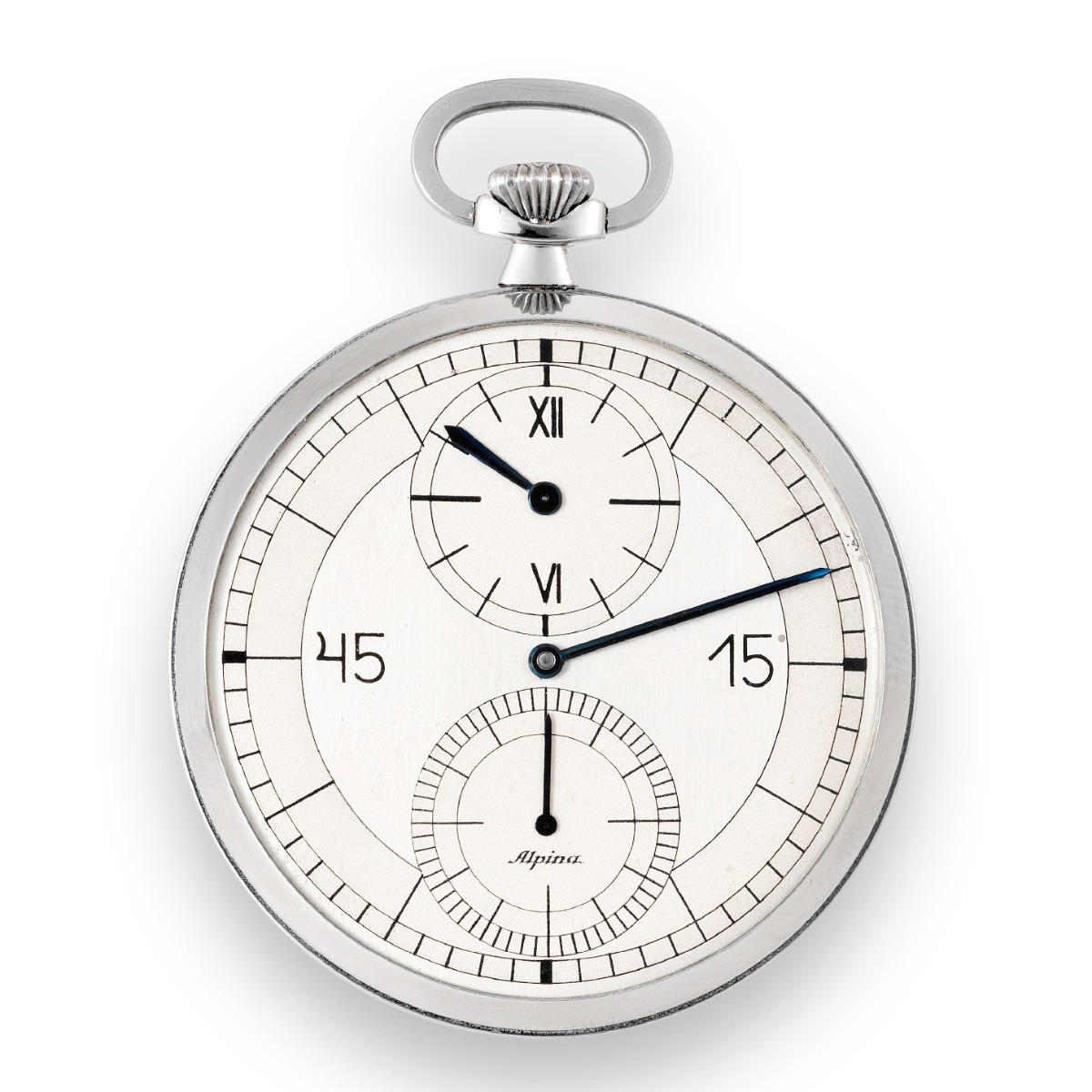
Alpina regulator-dial watch
A 1930s Alpina with a regulator dial, the earliest pictured one found.
Popular Models
In the collection as of October 2026.
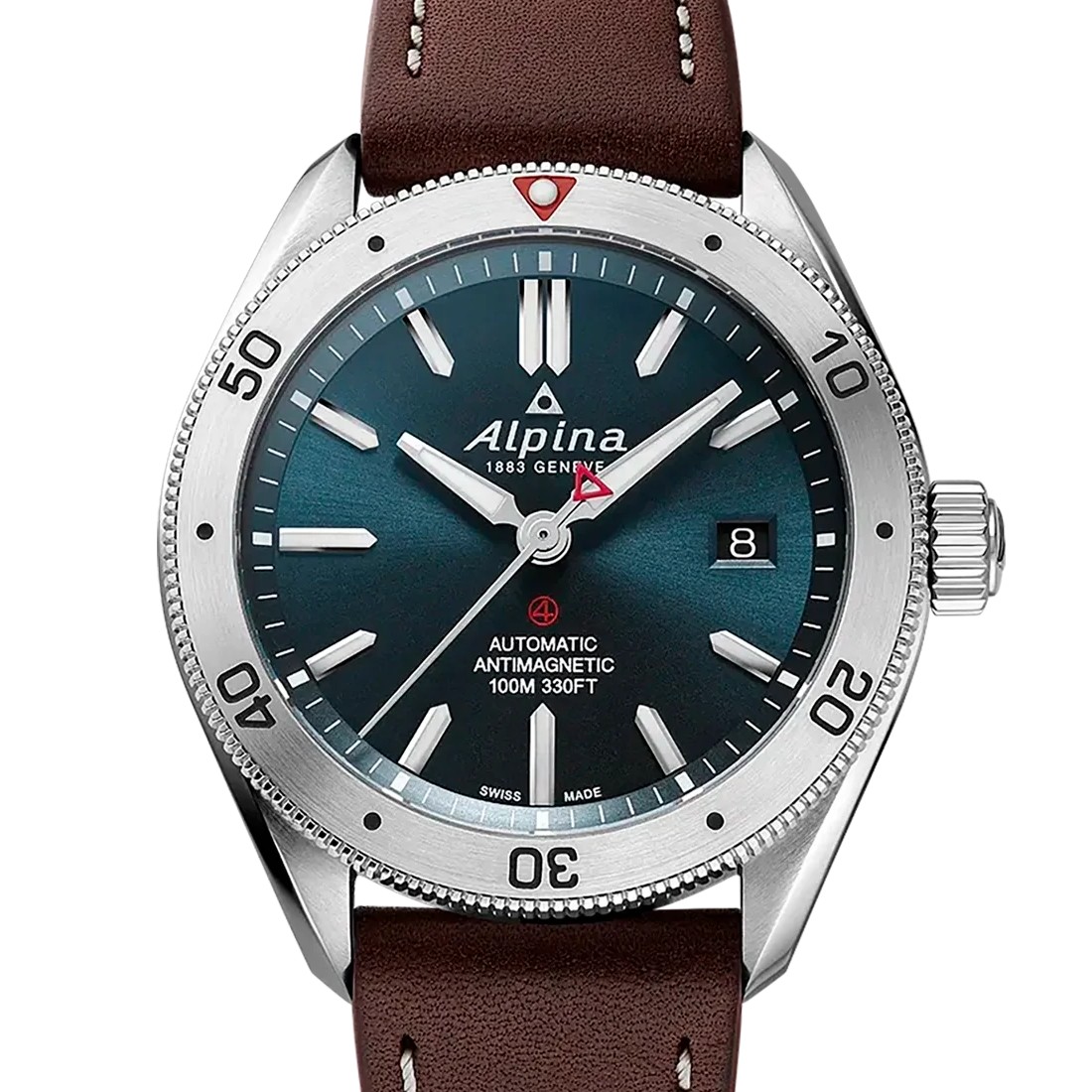
Alpiner 4 Automatic
A 40 mm steel sports watch with a blue dial and rotating bezel; 38-hour automatic.
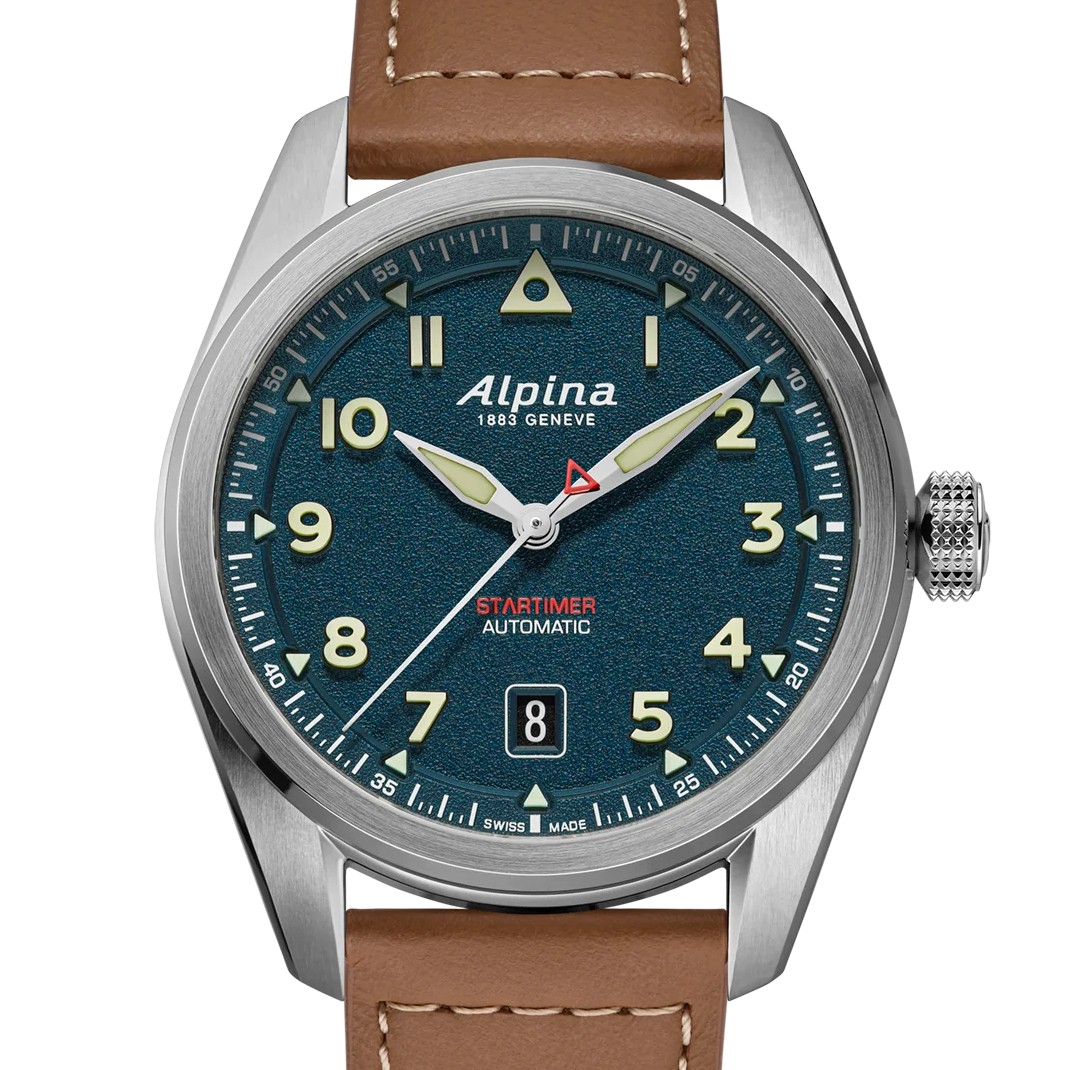
Startimer Pilot Automatic
A 40 mm steel pilot's watch with a navy dial; calibre AL-525, 68 hours.
SourcesAlpina, The Book (PDF) · alpinawatches.com · citizen.co.jp · Alpina, Manufacture · Alpina, Calibers · Alpina, Startimer · Alpina, Press access (‘Founded in 1883… famous for its iconic red triangle’) · Antiquorum, Geneva 8 May 2010, lot 277: Alpina regulator-dial watch, 1930s · Alpina, Alpiner 4 Automatic AL-525N4AQ6 · Alpina, Startimer Pilot Automatic AL-525NW4S36 · Alpina, Alpiner Extreme Automatic AL-525GR4AE6 · Alpina, Best sellers