
Bovet
- Group
- Independent.
- Headquarters
- Château de Môtiers, Switzerland; watches made in Tramelan.
- Founded
- 1822
- Founder
- The Bovet brothers
- Known for
- Fleurier, Amadeo convertible case (2010), 19Thirty (2015), Récital.
Lineage and calibres
- 1814
As Bovet tells it, Edouard, Alphonse and Frédéric Bovet left for London to work for the trading house Magniac & Co. Bovet says they were sons of the Fleurier watchmaker Jean-Frédéric Bovet.
- 1818
Magniac & Co. sent Edouard Bovet to Guangzhou (Canton) with four pocket watches, which he sold almost at once, by the brand's account.
- 1822
Edouard and his brothers founded the Maison Bovet, registered in London on 1 May, with production in Fleurier and sales in Guangzhou.
- 1855
At the Paris Universal Exhibition Bovet won a gold medal for a pair of enamelled pocket watches made for the Xianfeng Emperor, the brand says.
- 1930
Albert Bovet filed Swiss patent CH 148535 for an easel watch.
- 2001
Pascal Raffy, a collector, bought the House and remains its sole owner.
- 2006
Raffy bought the manufacture that supplied Bovet's tourbillon movements, so that Bovet no longer relied on outside movement makers. Today its Tramelan works make movements, balance springs and dials.Calibre
Contributions to horology
- 1889
Flyback chronograph with a second time zone
Bovet says it developed a flyback chronograph in 1889 whose two sub-dials could be set to show a second time zone.
- 1930
The easel watch
Albert Bovet patented a pocket watch with a fold-out foot so it can stand as a table clock (CH 148535, filed 1930, published 1931). Bovet says it later inspired the Amadéo system and the 19Thirty.
- 2010
Amadéo convertible case
Bovet patented the Amadéo system in 2010. With it, one watch can be worn reversed, used as a table clock or carried as a pocket watch, with no tools.
From the archive
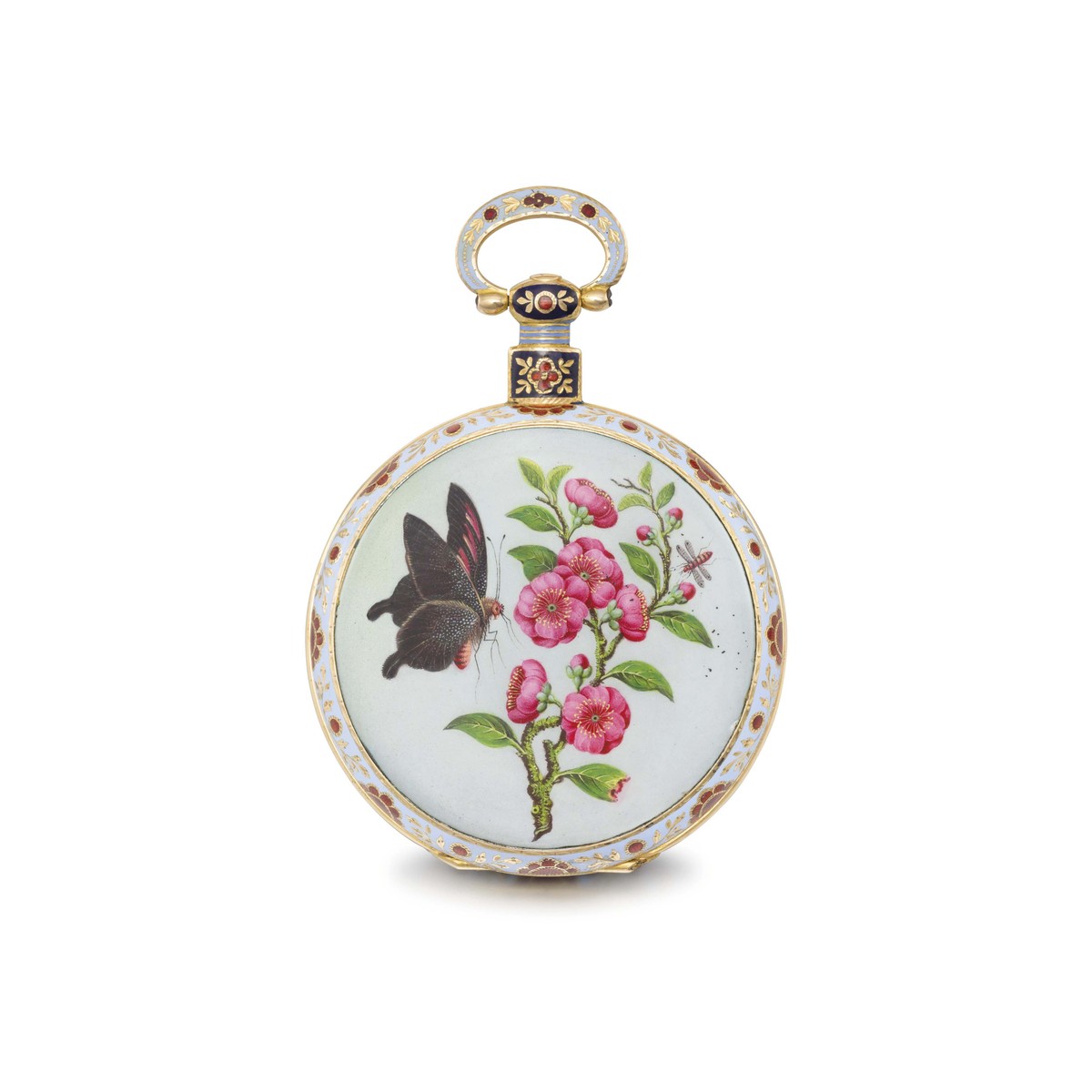
Bovet enamelled gold watch for China
An 18k gold and enamel Bovet watch of about 1830, made for China; sold by Christie's.
Popular Models
In the collection as of October 2026.
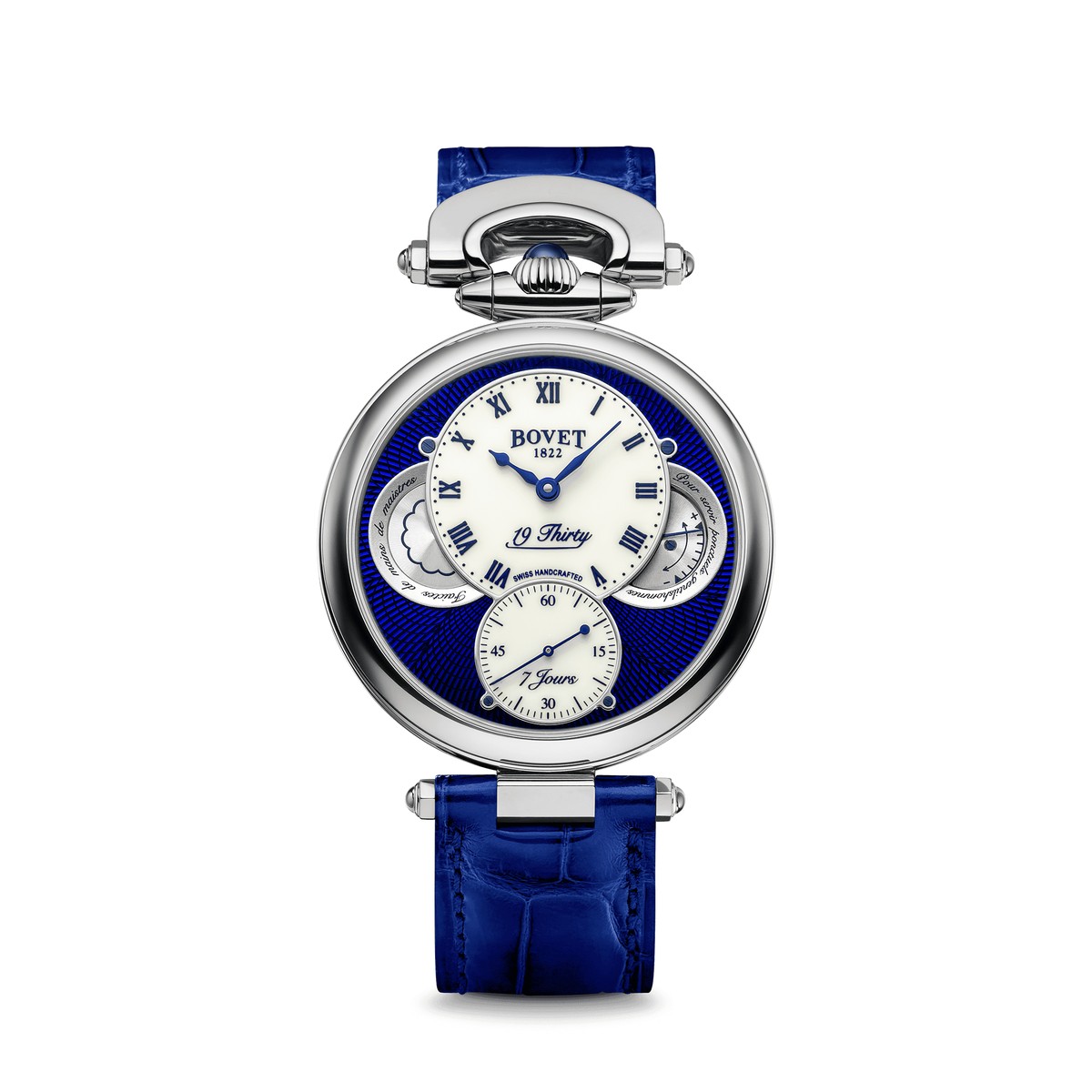
19Thirty Blue Guilloché Ivory Lacquered Dial
A 42 mm steel watch with an ivory and blue guilloché dial; seven-day hand-wound.
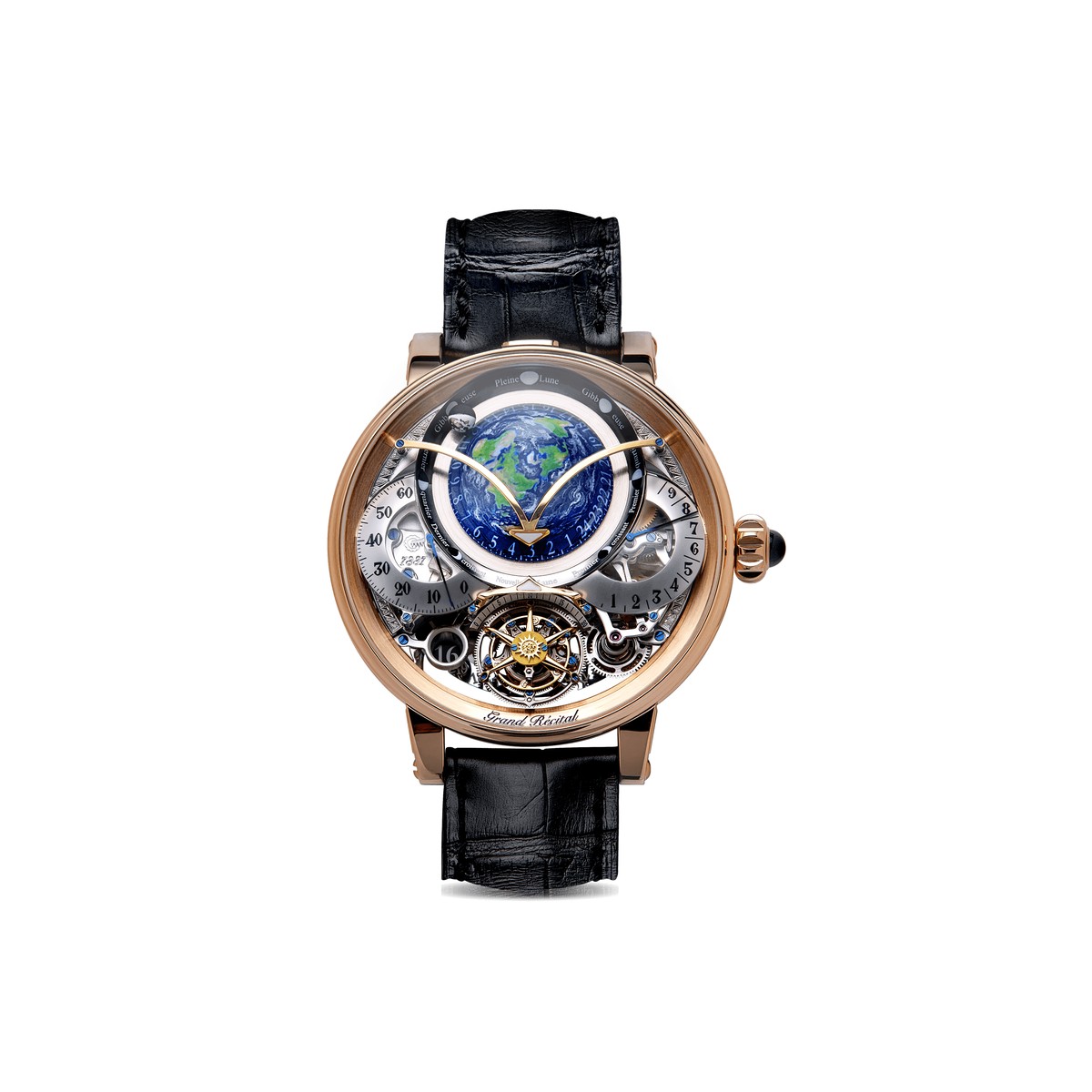
Récital 22 Grand Récital
A 46.3 mm red gold tourbillon with an Earth-and-Moon orrery and perpetual calendar.
Sourcesbovet.com · Bovet, History · Swiss patent CH 148535 A, Easel watch (Albert Bovet), Google Patents · Bovet, Amadéo Amadéo Tourbillon · Christie’s, Important Watches, Geneva 2012, lot 117 · Bovet, Fleurier 19Thirty · Bovet, Récital 22 Grand Récital