Girard-Perregaux
- Group
- Sowind Group, since 2022.
- Headquarters
- La Chaux-de-Fonds, Switzerland.
- Founded
- 1791
- Founder
- Jean-François Bautte
- Known for
- Laureato (1975), Tourbillon with Three Gold Bridges (1867), 1966, Free Bridge.
- Scale
- About 6,000 watches, CHF 52m in 2025; 44th among Swiss brands (estimate).
Lineage and calibres
- 1791
Girard-Perregaux traces its origins to Jean-François Bautte, who opened his own company in Geneva that year. By the brand’s account, he gathered every watchmaking trade under one roof.
- 1856
Constant Girard and Marie Perregaux joined their names, and Girard-Perregaux was born.
- 1867
Constant Girard presented his Tourbillon with Three Bridges.Calibre
- 1889
Constant Girard showed La Esmeralda at the Paris Exposition Universelle, where it won a gold medal.Calibre
- 1906
Constant Girard-Gallet, who succeeded his father in 1903, bought Bautte & Cie, uniting the two houses.
- 1950
The Gyromatic automatic movement was developed by Jean-Pierre Graef of the owning family.Calibre
- 1965
Girard-Perregaux created a high-frequency movement.Calibre
- 1971
Girard-Perregaux presented a quartz watch at 32,768 Hz.Calibre
- 2011
PPR (now Kering), a 23% shareholder in Sowind Group since 2008, took 50.1% of the group, which Luigi Macaluso had controlled since 1992.
- 2022
Kering sold Sowind Group, owner of Girard-Perregaux and Ulysse Nardin, to its management under Patrick Pruniaux.
Contributions to horology
- 1867
Tourbillon with Three Bridges
Constant Girard laid out the movement of this chronometer pocket watch under three parallel bridges so that the regulating organ was on show. It was shown at the Neuchâtel Observatory and the Paris Universal Exhibition. Girard-Perregaux says the 1867 piece set a record at the Neuchâtel Observatory that stood for 17 years. The perfected design, patented in the United States in 1884, became La Esmeralda (1889) with three gold arrow-shaped bridges.
- 1950
Gyromatic winding
Girard-Perregaux says the Gyromatic replaced ratchet-based automatic winding with unidirectional roller clutches, giving smoother winding with less wear and allowing thinner calibres.
- 1965
High-frequency movement
Girard-Perregaux describes its 36,000 vph (5 Hz) movement as the world’s first high-frequency movement. Presented at the Basel fair in 1966, it won the Neuchâtel Observatory’s Centenary Prize the same year.
- 1971
32,768 Hz quartz
By Girard-Perregaux’s account, it unveiled the first watch with a quartz movement running at 32,768 Hz, the frequency now used almost universally in quartz watches.
- 2013
Constant Escapement L.M.
The Constant Escapement was shown as a prototype in 2008 and made from 2013. It uses an ultra-thin silicon blade that buckles and snaps back to give the balance an even impulse as the mainspring runs down. It won the Aiguille d’Or at the 2013 Grand Prix d’Horlogerie de Genève.
From the archive
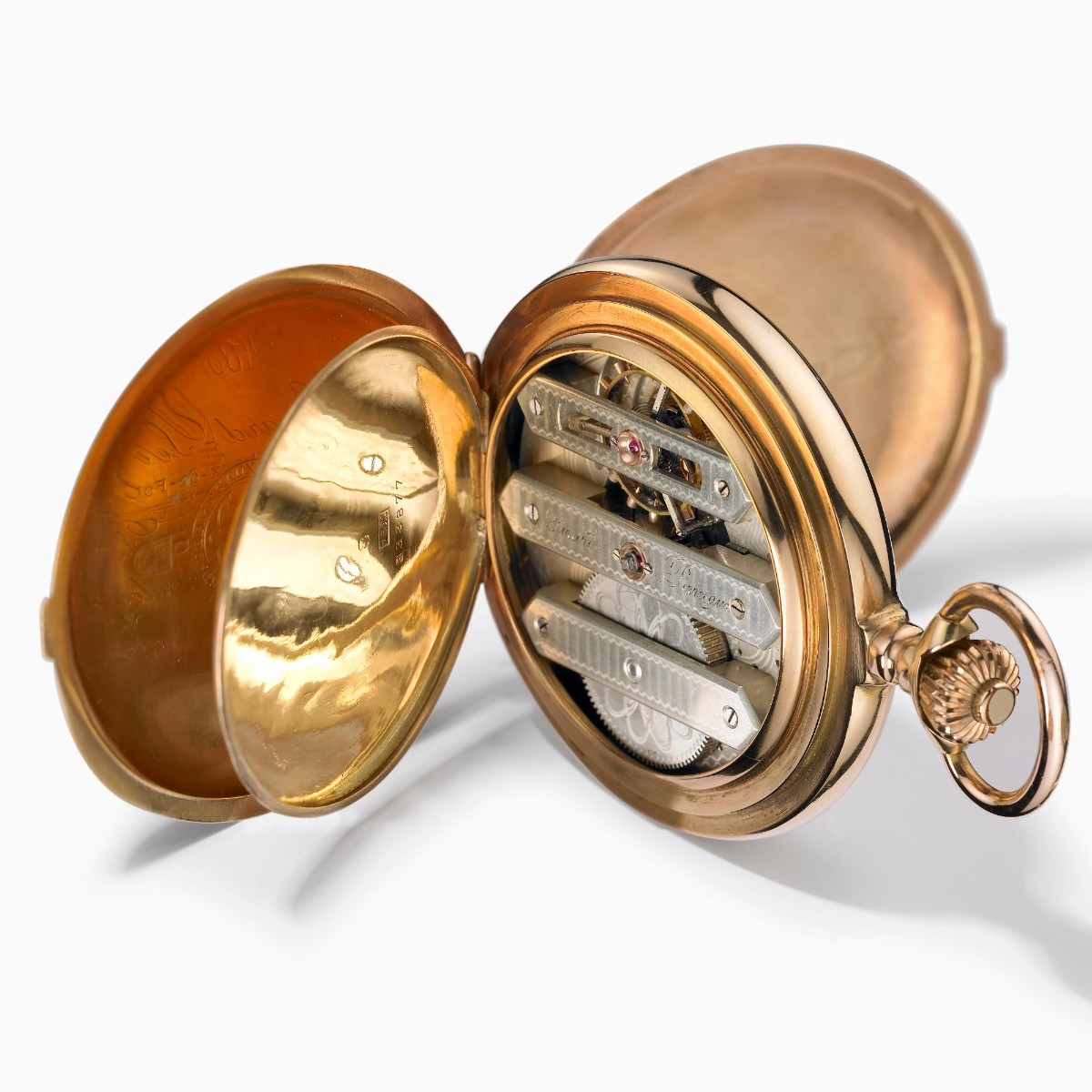
Tourbillon with Three Bridges
Constant Girard’s 1867 tourbillon pocket watch; the oldest the brand shows, not its first.
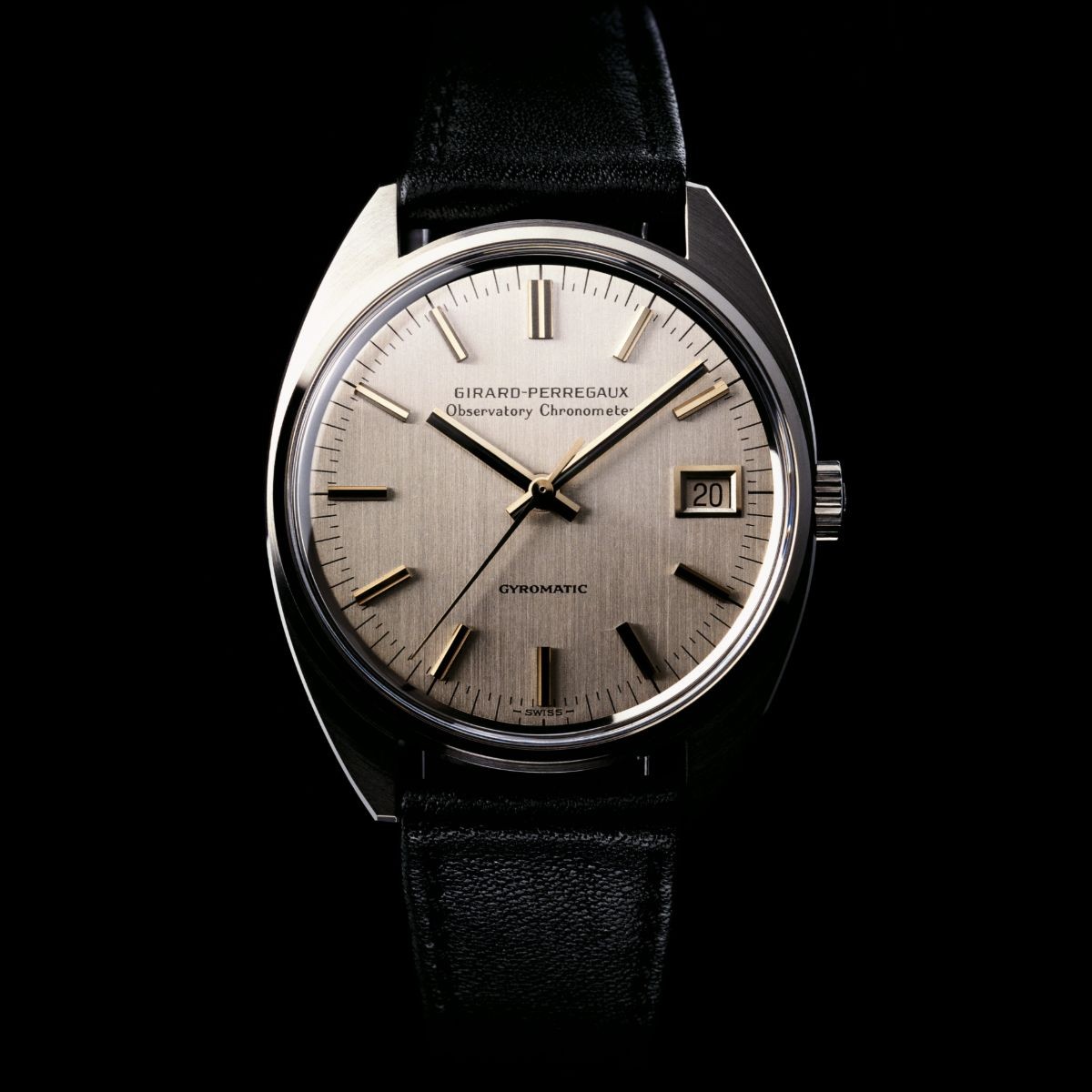
Gyromatic Observatory Chronometer
A Gyromatic chronometer from the 1960s, the earliest wristwatch the brand shows.
Popular Models
In the collection as of October 2026.
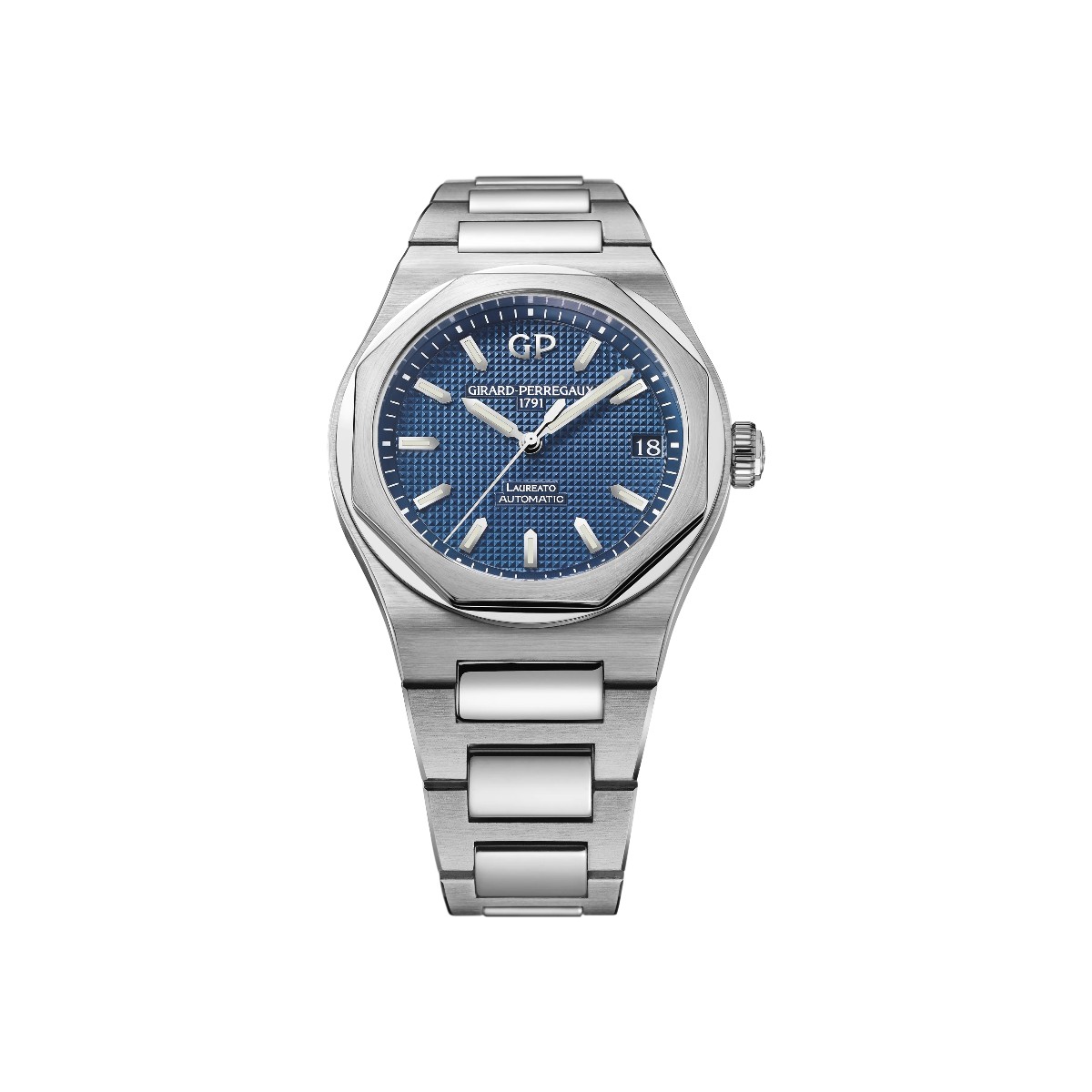
Laureato 42 mm
A 42 mm steel Laureato with a blue Clous de Paris dial; self-winding calibre GP01800.
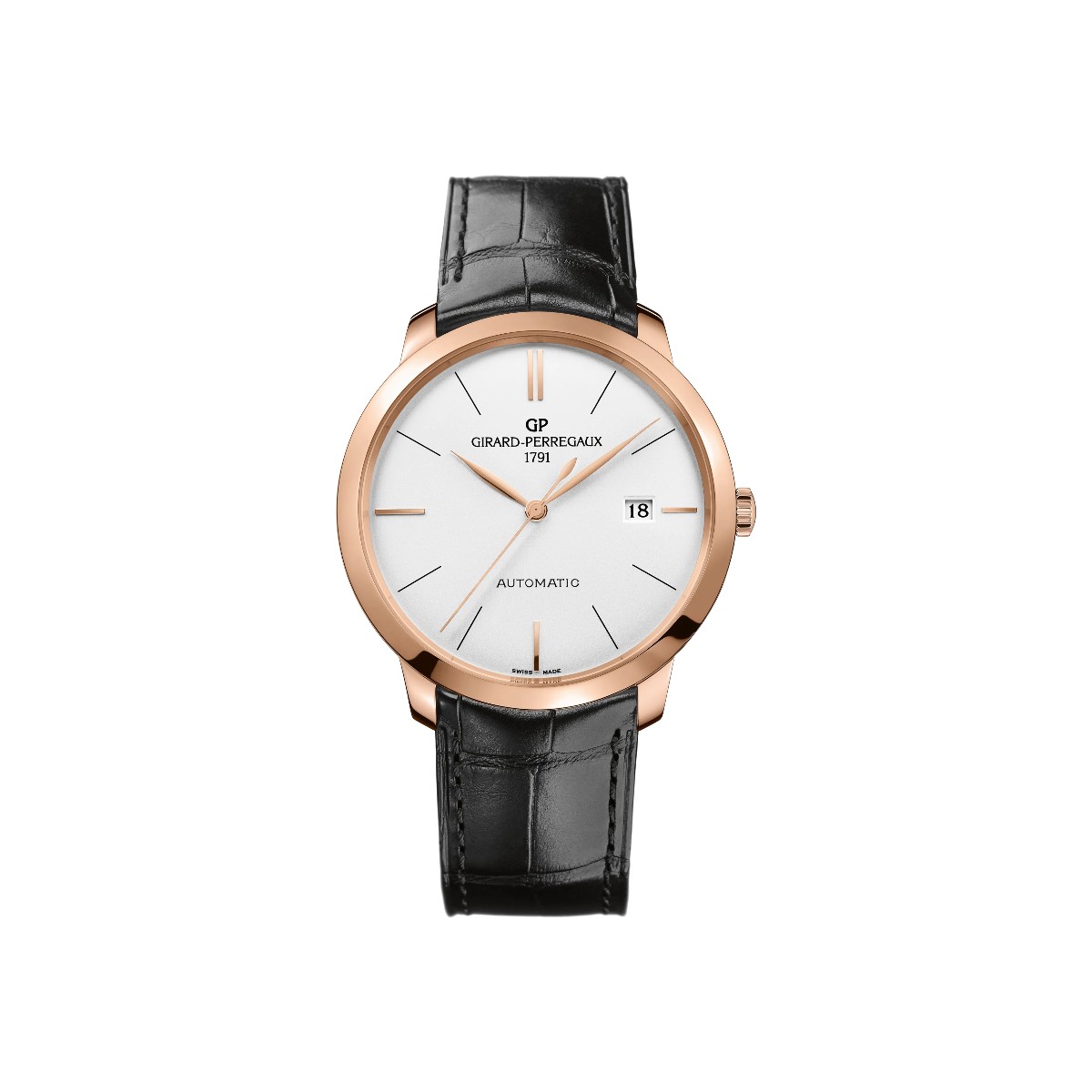
1966 40 mm
A 40 mm pink gold 1966 with a silver opaline dial and date; calibre GP03300.
Sourcesgirard-perregaux.com · Girard-Perregaux, Crafting history · Girard-Perregaux, A sense of innovation · Sowind Group and PPR, press release, 4 July 2011 (AMF filing) · Kering, press release, 24 January 2022 (AMF filing) · Girard-Perregaux, Laureato 42 mm 81010-11-431-11A · Girard-Perregaux, 1966 40 mm 49555-52-132-BB60 · Morgan Stanley and LuxeConsult, Swiss watch brand estimates, February 2026.