
Timex
- Group
- Timex Group.
- Headquarters
- Middlebury, Connecticut, United States.
- Founded
- 1854
- Known for
- Ironman (1986), Indiglo night light (1992), Weekender, Marlin, Q Timex.
Lineage and calibres
- 1901
Timex Group says the Waterbury Clock Company had made a dollar watch by 1901.Calibre
- 1928
Timex says it was one of the first watchmakers to work with other brands on collaborations, beginning in 1928.
- 1960s
Timex ran live televised 'torture tests' in the 1960s to show its watches could 'take a licking and keep on ticking'.
- 1960s
The Marlin, which Timex calls its 'mid-century icon', was a hand-wound dress watch. Timex reissued the 1965 version.Calibre
- 1979
The first Q Timex, a diver-style watch with a rotating top ring, gave Timex buyers quartz technology.Calibre
- 1988
Timex patented the electroluminescent dial it sells as INDIGLO.
- 2017
Timex began reissuing designs from its archives, starting a modern line of reissues.
Contributions to horology
- 1901
The dollar watch
Timex says its forerunner, the Waterbury Clock Company, made watches cheap enough to buy for a dollar by 1901. Timex claims it was the first to offer a $1 pocket watch.
- 1986
Timex Ironman
Timex says the Ironman was the first sports watch. Its five-button layout gives direct access to the timers, alarms and INDIGLO light.
- 1988
Electroluminescent dial (INDIGLO)
Timex's 1988 patent, for an invention by Ralph D. Alessio and Fredrik Olsen, covers an electroluminescent panel that serves as the dial of an analogue watch, with a central hole for the hands. Timex calls its INDIGLO backlight 'revolutionary'.
Popular Models
In the collection as of October 2026.
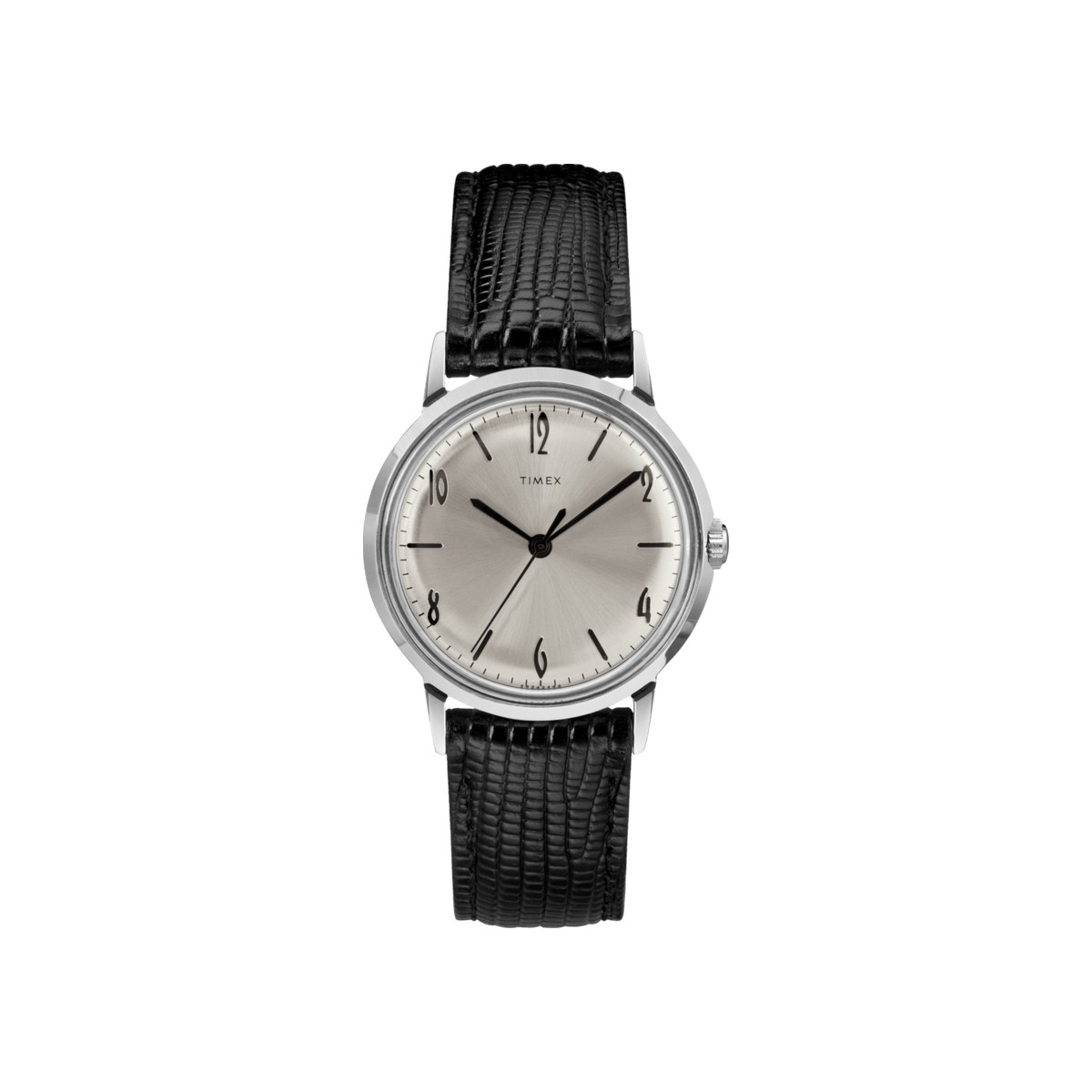
Marlin 1965 Reissue Hand-Wound 34mm
A 34 mm steel hand-wound Marlin with a silver dial and domed acrylic crystal.
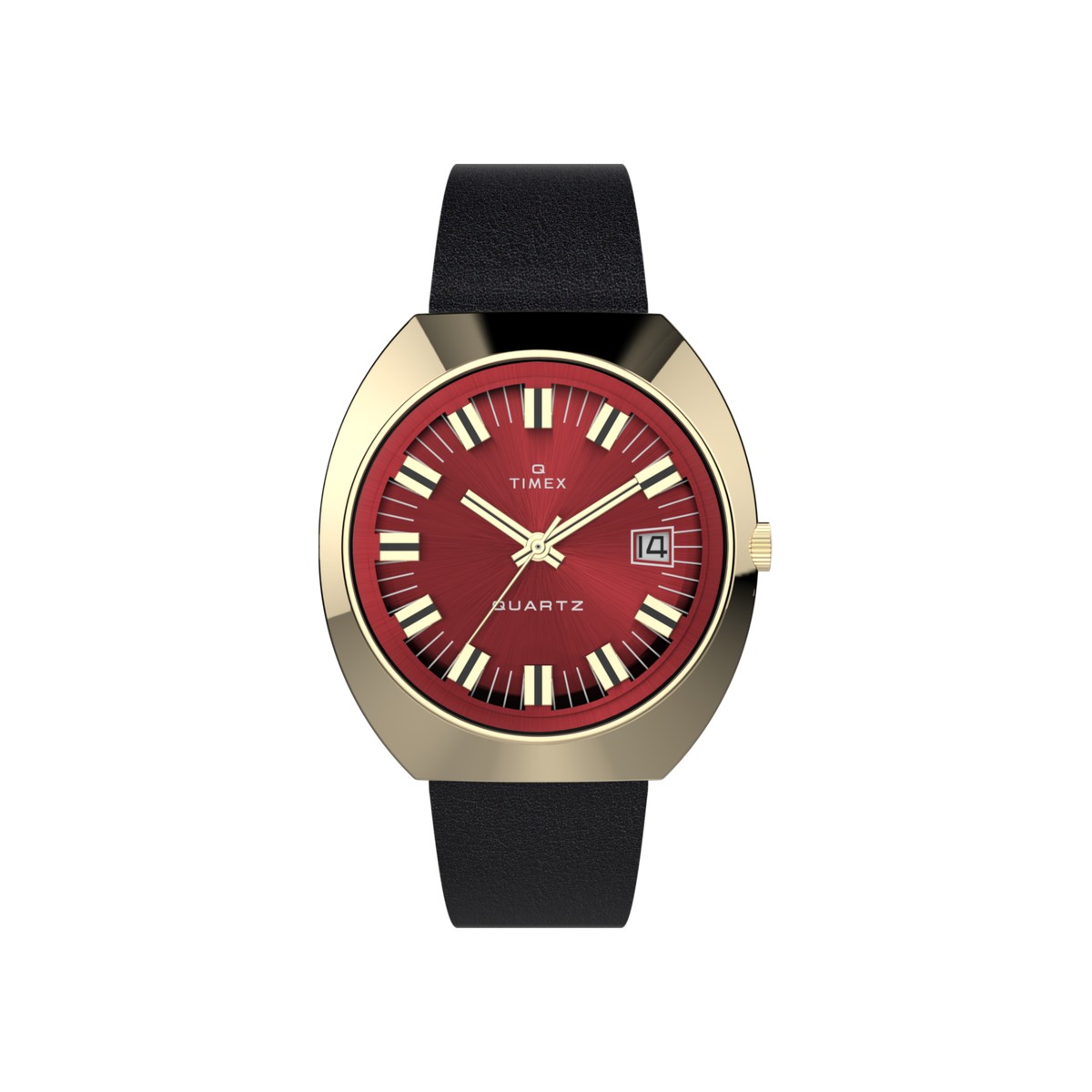
Q Timex 1972 Reissue
A 39 mm gold-tone tonneau Q Timex with a red dial; quartz.
Sourcestimexgroup.com · Timex, About Timex · Timex blog, ‘Timex: a true American icon’ (170th anniversary) · Google Patents, US4775964A ‘Electroluminescent dial for an analog watch’ (Timex Corp) · Timex, Marlin 1965 Reissue TW2R47900 · Timex, Q Timex 1979 Reissue TW2T80700 · Timex, Ironman Classic 30 T5E901 · Timex, Q Timex 1972 Reissue TW2V25400