Complications  /  GMT

GMT

Also known as — Second time zone, 24-hour hand, UTC

A fourth hand that turns once a day, read against a 24-hour scale, to show a second time zone on an ordinary dial; fixed by Rolex in 1955, and made convenient by an hour hand that jumps in one-hour steps, an idea first sold by Patek Philippe in 1958.
How it works

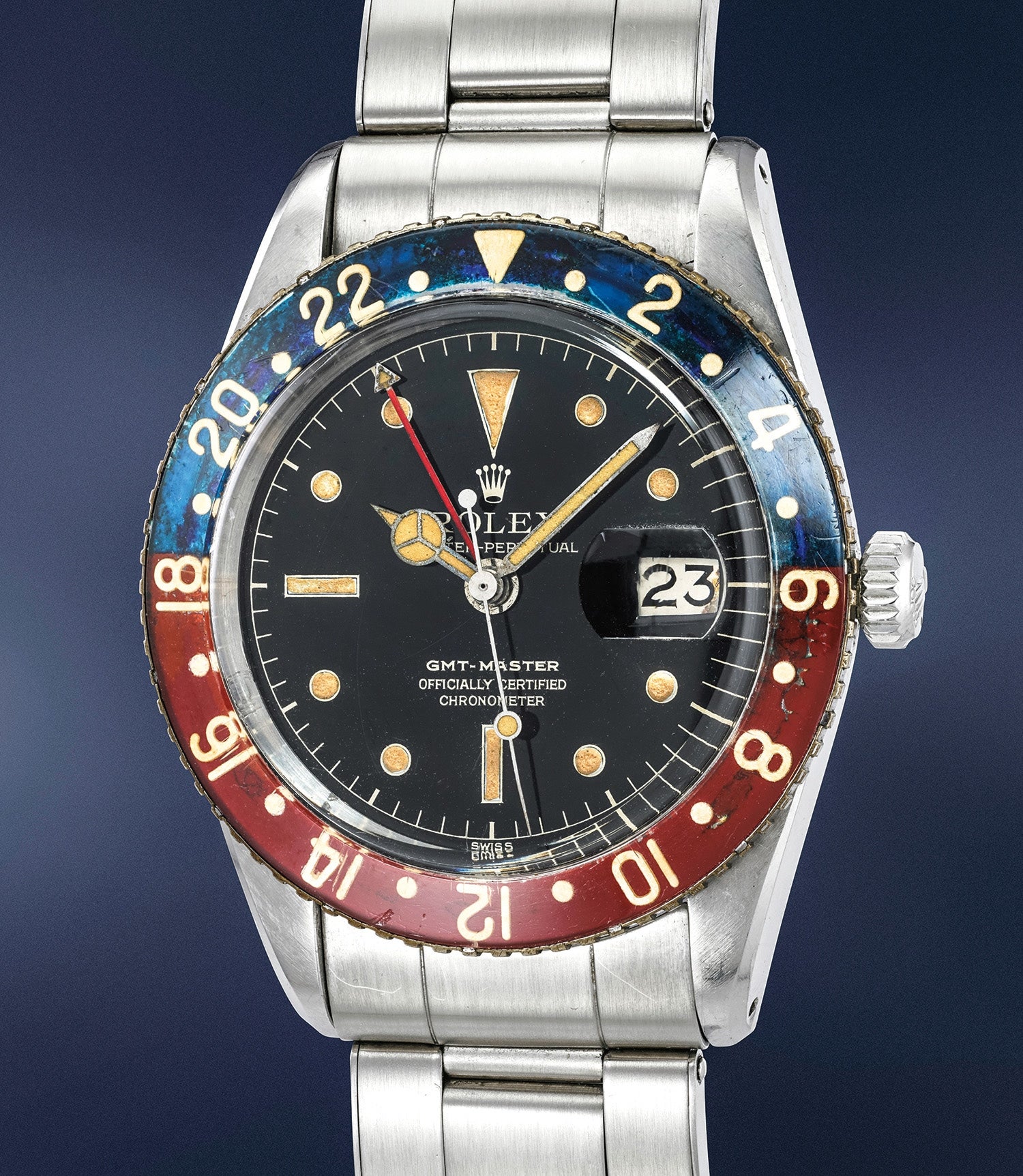
Rolex GMT-Master reference 6542, about 1955, with blue-and-red Bakelite bezel and red 24-hour hand
1955: GMT-Master, ref. 6542. The first GMT: a fourth hand turning once a day, read against a rotating 24-hour bezel. The 24-hour hand is locked to the hour hand, so the second zone is read only through the bezel.Photograph: Phillips, Geneva, June 2020, lot 179
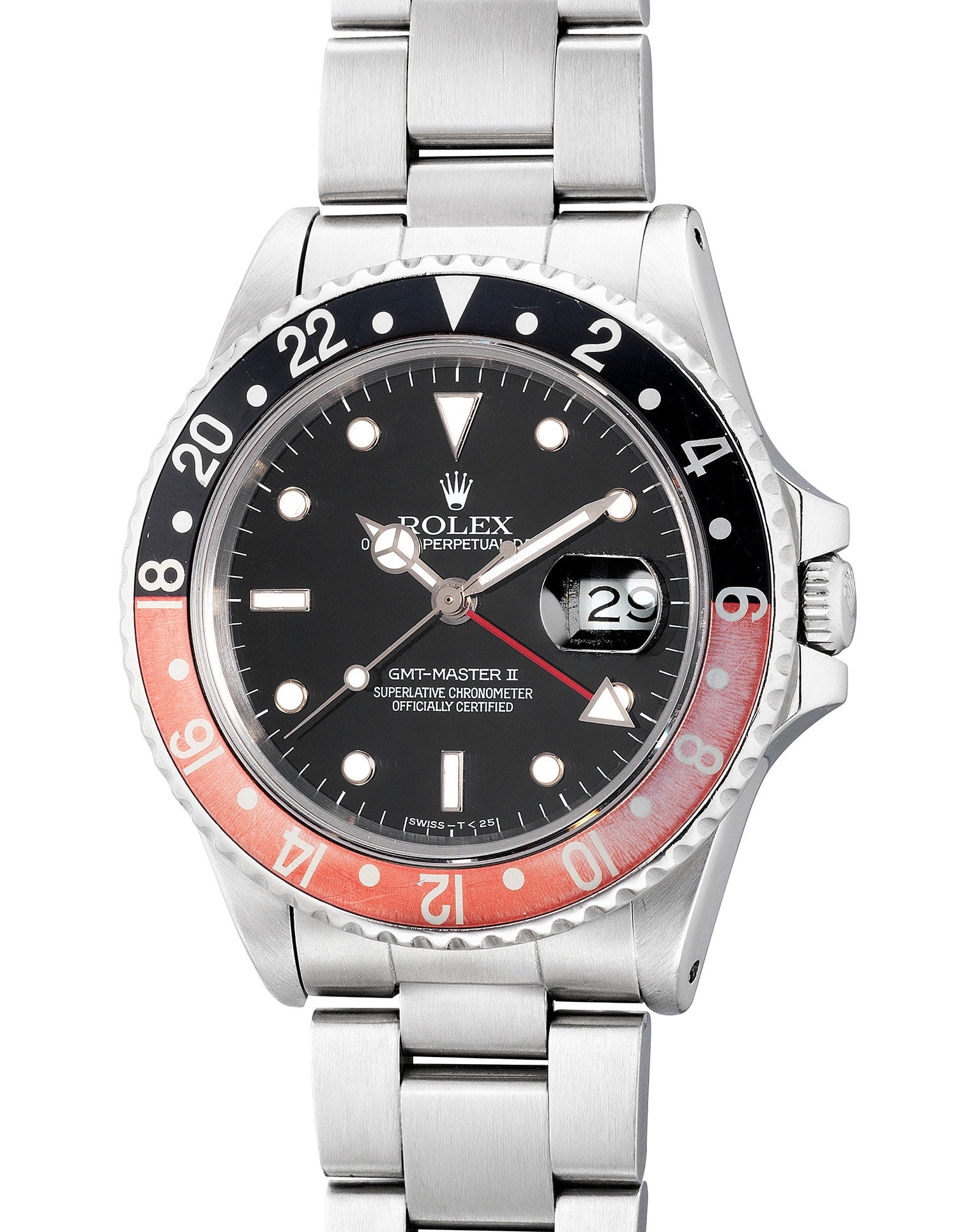
Rolex GMT-Master II reference 16760, 1986, with red-and-black bezel
1982: GMT-Master II, ref. 16760 (this example 1986). Same dial, new movement: the hour hand now jumps in one-hour steps on its own, the 24-hour hand stays on home time. The modern “true GMT”.Photograph: Phillips, Hong Kong, May 2020, lot 135

A watch shows the time where it is. A traveller, a pilot or anyone with a colleague in another zone needs a second time as well, and needs it readable at a glance rather than worked out from the first. A GMT watch adds that second time to an ordinary dial and leaves everything else alone. The name comes from Greenwich Mean Time, the reference against which the aviation and the shipping of the 1950s kept their schedules.

24 2 4 6 8 10 12 14 16 18 20 22 24-HOUR HAND one turn a day ROTATING 24-HOUR BEZEL night hours shaded LOCAL TIME 10:10 hour and minute hands SECOND ZONE 16:10 arrow hand read against the bezel
A GMT dial. The hour and minute hands show local time, ten past ten. A fourth hand with an arrow tip turns once a day and is read against a 24-hour bezel: here it points to 16, so the second zone is at ten past four in the afternoon. The dark half of the bezel marks the night hours, so a quick look tells whether it is a good time to call.

Rolex fixed the layout in 1955 with the GMT-Master, made for the crews of Pan American World Airways. A fourth hand is geared to the hour hand at half its speed, so it makes one turn in twenty-four hours, and it is read against a bezel marked 0 to 24 that can be turned by hand. Set the bezel with 24 at the top and the hand reads the hour in 24-hour form; turn it by the difference between two zones and the same hand reads the second zone. The first GMT-Master could not set that hand on its own: it was locked to the hour hand, so the watch showed home time through the hands and the other zone only through the bezel.
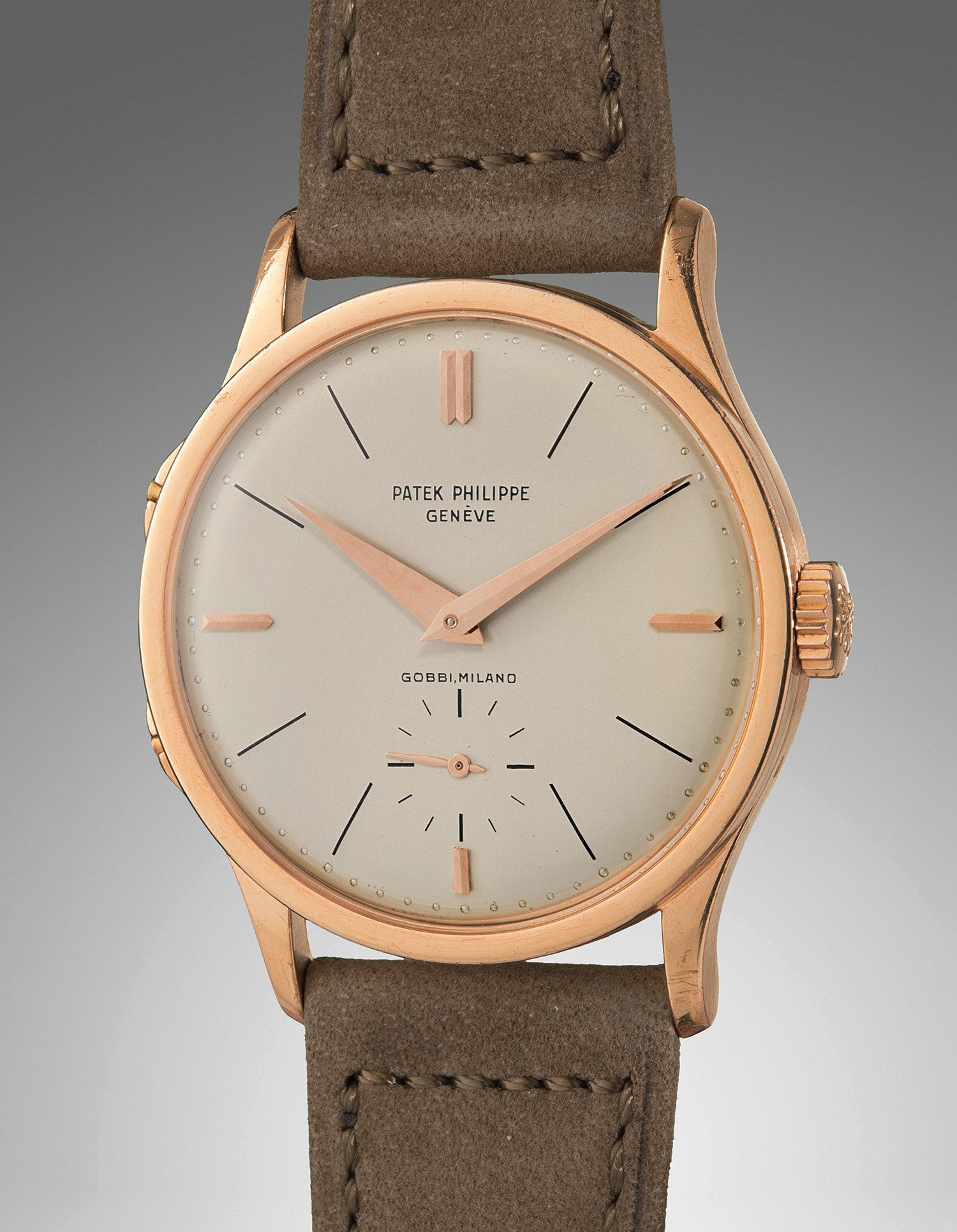
Patek Philippe reference 2597 in pink gold, 1959: a plain silvered dial with a single hour hand, and two pushers in the left side of the case
Not a GMT watch, but the origin of the mechanism inside every modern one. Patek Philippe reference 2597 of 1958, built on a Louis Cottier design: the two pushers in the left side of the case move the hour hand forward or back by exactly one hour while the minutes and seconds keep running. Change zone, press once, and the watch is right. Only one hour hand here; the 1962 series added a second one for home time.Photograph: Phillips, New York, 5 December 2018, lot 79

The mechanism that makes a GMT watch convenient was worked out for a watch that was not a GMT at all. In 1958 Patek Philippe released reference 2597, built on a Louis Cottier prototype of 1953, with an hour hand that jumps a whole hour at the press of a pusher while the minute hand, the seconds and the going train carry on undisturbed. About a hundred were made, most in yellow gold, and a second series of 1962 added a second hour hand to show the time left behind. That is the whole of the modern “true GMT” in one case: a local hour hand that can be moved in one-hour steps without stopping the watch, and a reference hand that stays put.

Rolex put the two ideas together in 1982. The GMT-Master II carried a new movement in which the hour hand is set independently of the 24-hour hand and the minutes: the traveller lands, clicks the hour hand round to local time, and the 24-hour hand goes on showing home. Most makers now build it this way, and the trade has names for the two kinds.

24 2 4 6 8 10 12 14 16 18 20 22 CALLER GMT the 24-hour hand is set Hour hand locked to the movement. Crown moves the 24-hour hand to the other zone. Rolex GMT-Master, 1955 24 2 4 6 8 10 12 14 16 18 20 22 FLYER GMT the hour hand jumps Hour hand jumps in one-hour steps, minutes undisturbed. 24-hour hand stays on home time. Patek Philippe 2597, 1958 (one hand) · Rolex GMT-Master II, 1982
Two ways to build a GMT. In a caller GMT the hour hand is locked to the movement and the crown moves the 24-hour hand to the other zone: fine for someone at home who wants to know the time abroad before telephoning. In a flyer GMT the hour hand jumps in one-hour steps while the minutes and the 24-hour hand keep running: made for the person who has just changed zones. The dials look identical; the difference is in what the crown does.

The limits are the limits of a 24-hour hand. It assumes whole-hour offsets, so the half-hour zones of India or Iran and the quarter-hour zone of Nepal cannot be read correctly from the bezel. One extra hand gives one extra zone; a third zone needs the bezel as well, and anything beyond that is a job for a world time watch, which shows all twenty-four at once at the cost of a much busier dial.

Recorded here

Milestones with this mechanism