Spring Drive
A mainspring drives the hands as in any mechanical watch, but the escapement is gone: a glide wheel turning eight times a second generates its own electricity and is braked magnetically against a quartz crystal; first sold by Seiko in 1999.
MechanicalA mechanical watch is powered by a mainspring and regulated by a balance. The escapement lets the spring’s energy out in small, equal steps, and every step is a tick.
QuartzA quartz watch is regulated by a crystal and powered by a battery.
Each has its weakness.
The weaknessesThe balance is disturbed by position, temperature and the state of wind, so a good mechanical watch still drifts by a few seconds a day. The quartz watch keeps time to a few seconds a month but stops when its cell is flat.
The ideaSpring Drive keeps the mainspring and the gears and replaces only the regulator.
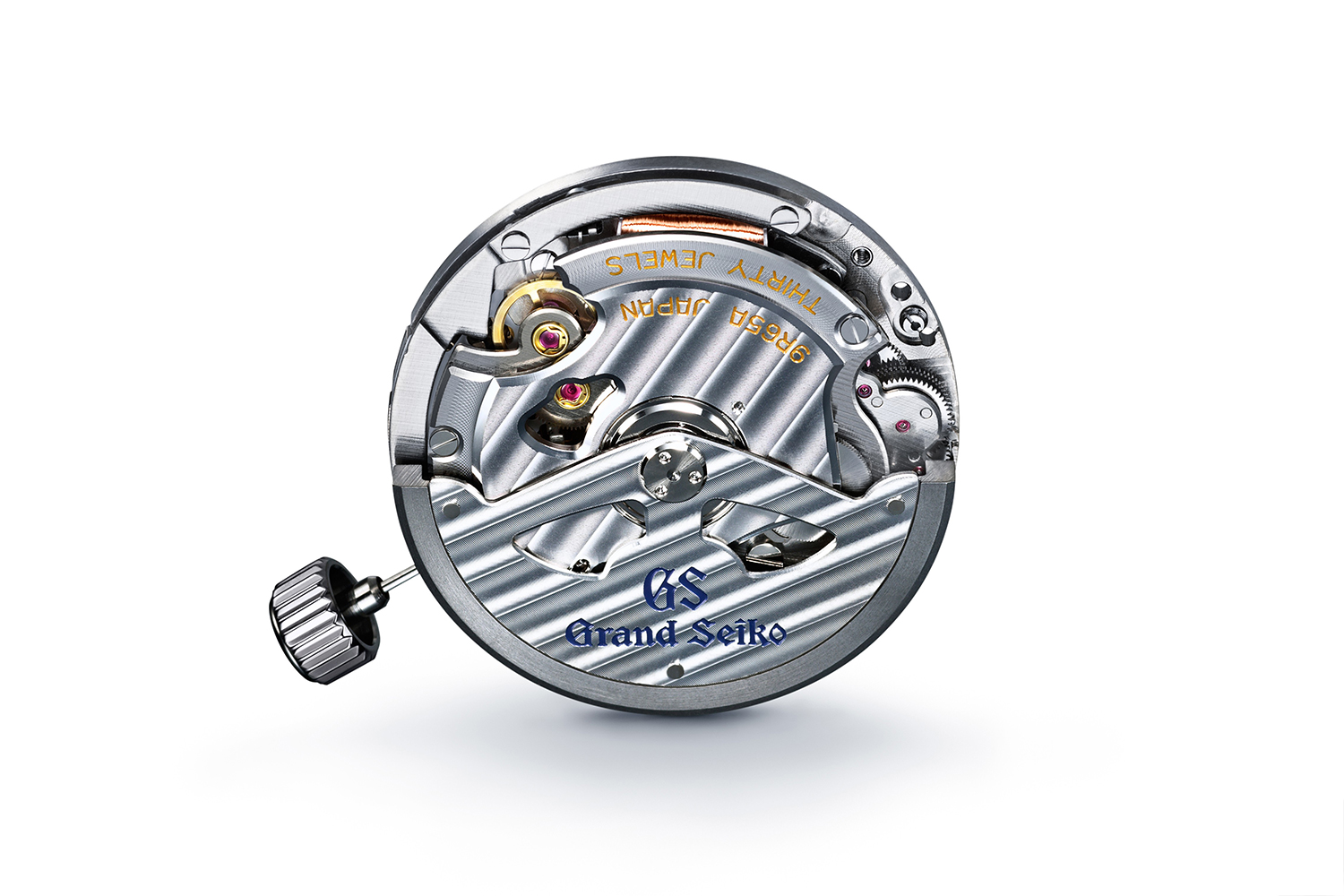
Glide wheelWhere an ordinary movement has its escapement and balance, Spring Drive has a small wheel that the gear train simply spins. This is the glide wheel, and it turns eight times a second.
GeneratorIt carries magnets and runs past coils, so it is also a tiny generator. The current it makes powers a quartz crystal vibrating at 32,768 times a second and an integrated circuit.
BrakeThe circuit compares the speed of the glide wheel with the crystal and, whenever the wheel runs fast, applies a magnetic brake to it.
SweepNothing ever stops and starts, so the seconds hand sweeps without a single tick.
Tri-synchro RegulatorSeiko calls the assembly the Tri-synchro Regulator, after the three kinds of energy it ties together. These are mechanical from the spring, electrical from the generator, and electromagnetic in the brake.
AkahaneThe idea came to Yoshikazu Akahane, an engineer at Suwa Seikosha, in 1977, and he applied for the first patent in 1978.
The problemThe difficulty was power. The mainspring had to drive the hands and run the electronics as well, with almost nothing to spare.
Three attemptsA first experimental model of 1982 ran for four hours. The project was dropped in 1983, revived with Seiko Instruments in 1993 and dropped again. The third attempt, from 1997, succeeded with a new low-leakage chip.
1998Akahane died in August 1998.
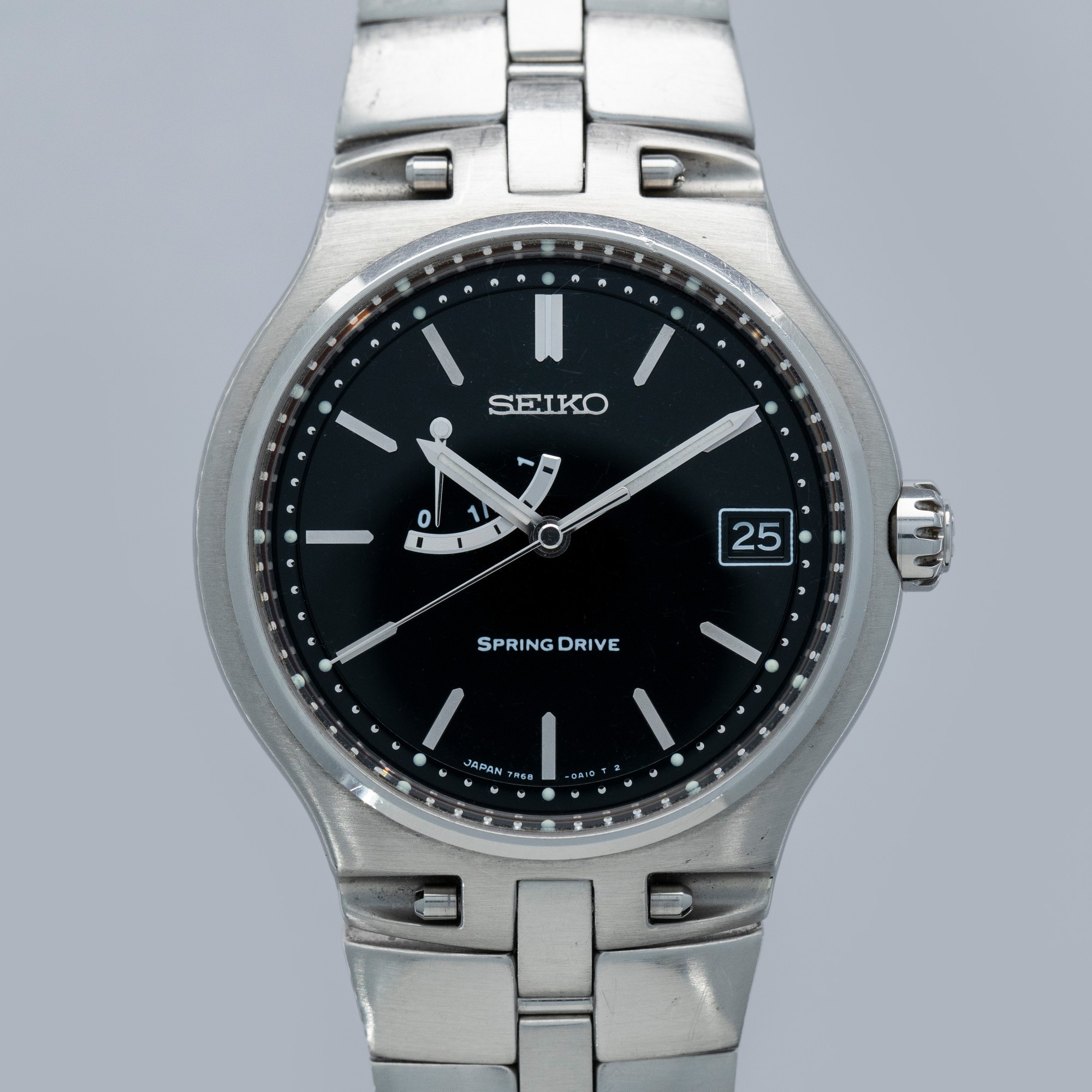
1999The first watch went on sale on 11 December 1999. It was the hand-wound calibre 7R68, rated at one second a day with 48 hours’ reserve.
2004The self-winding calibre 9R65 followed in Grand Seiko in 2004.
The hybrid has drawn its arguments.
In favourTo some it is the best of both worlds, a mechanical watch with quartz-like accuracy and no battery to change.
AgainstTo others it is neither one thing nor the other, since the regulation is electronic even if the power is not.
AccuracyIts rated accuracy is usually one second a day, about fifteen a month, and the best current calibres claim half that or better.