
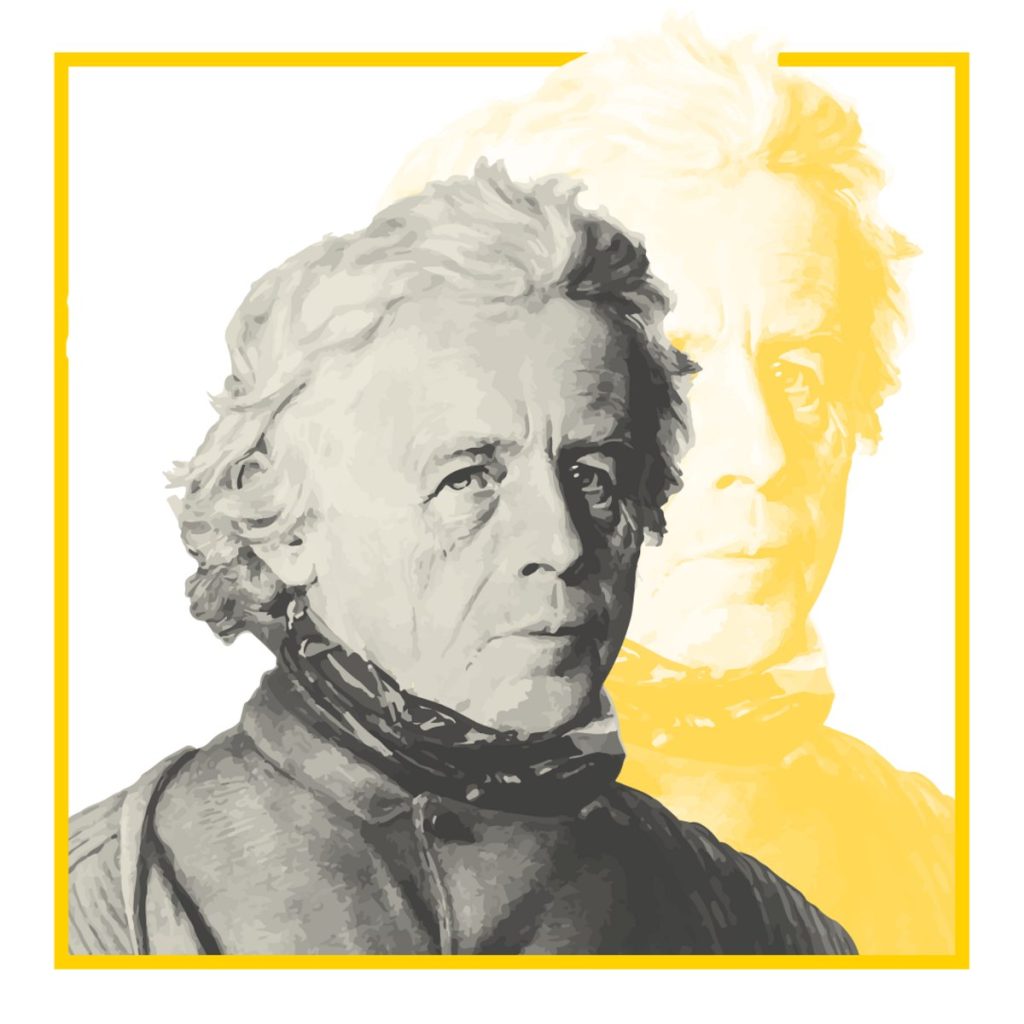
Beginnings
LeCoultre was born in 1803 at La Golisse, a hamlet of Le Sentier in the Vallée de Joux, where his father forged razors and the steel combs of music boxes. He learned metallurgy at the forge and taught himself the rest. In 1833 he turned the family barn into a workshop for making watch parts, with his brother Ulysse, and never left the valley.
What he changed
He began with machines rather than watches: a machine to cut pinions, then in 1844 the Millionomètre, an instrument that measured to a thousandth of a millimetre, the first of its kind, which let parts be made to a tolerance instead of fitted by hand. In 1847 he built a keyless mechanism that wound and set the watch from a single crown. In 1866 the workshop became the first in the valley to gather every craft under one roof; by 1870 it employed about five hundred people, and the manufacture it became is still in Le Sentier.
Why it matters now
The idea that a watch is made by measuring, not by filing to fit, is his, and every manufacture that calls itself one descends from the 1866 decision. Jaeger-LeCoultre, the name since 1937, has made more than 1,200 calibres on his site.
Worth knowingLeCoultre never met Edmond Jaeger, born in 1858; the two names were joined fifty-six years after his death.
Historian’s noteThe inventions and their dates come from the company’s own heritage material, and the keyless-winding priority belongs on the record to Adrien Philippe’s patent of 1845. The “gold medal” at the Great Exhibition of 1851 is doubtful: London awarded Council and Prize Medals that year, not gold.
SourcesFHH · Federation of the Swiss Watch Industry · Watch-Wiki