Beginnings
1720Lépine was born in 1720 at Challex, in the Pays de Gex between Geneva and the Jura.
He came to Paris at twenty-four and joined André-Charles Caron, watchmaker to the king.
1756In 1756 he married Caron’s daughter, which made him the brother-in-law of Beaumarchais.
1765He became a master in 1765.
Horloger du roiHe was horloger du roi from the 1760s and kept the title through Louis XVI and Napoleon.
1783In 1783 he handed the business to his son-in-law Raguet.
1814He died in Paris in 1814 at 93.
What he changed
Before himA watch of 1750 had its wheels sandwiched between two full plates, with a fusee and chain to even out the mainspring.
Lépine calibreBetween about 1764 and 1770 Lépine took the top plate away and held each wheel under its own bridge. He hung the barrel from the plate without a fusee and used a horizontal escapement that sat flat. The movement could be assembled, inspected and repaired piece by piece, and it was thin. That is the Lépine calibre.
The Metropolitan Museum’s watch of about 1766 already shows him squeezing the plates together.
Voltaire’s workshopsAround 1770 he directed Voltaire’s watch workshops at Ferney.
Why it matters now
In every movementOpen any modern watch and you are looking at Lépine’s idea: a main plate, separate bridges, a going barrel.
Ultra-thinThe thin dress watch, the skeleton watch and the Swiss ultra-thin calibres of the twentieth century all start here.
Basis for BreguetBreguet built on his architecture rather than Graham’s.
Worth knowingGouverneur Morris bought a Lépine watch in Paris for George Washington in 1789.
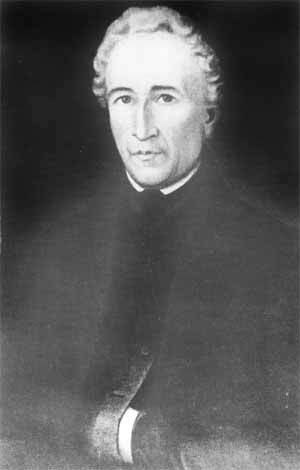
Historian’s noteThe portrait shown is the one traditionally reproduced as Lépine. Its origin is not recorded, and no authenticated likeness is known. The claim that Breguet was his apprentice is Chapiro’s opinion and unproven. The virgule escapement, which he claimed late in life, was disputed by Beaumarchais and Lepaute. The cylinder escapement he used was Graham’s. His appointment as horloger du roi is dated 1762 by Turner and about 1765 by the Metropolitan Museum.
SourcesFHH encyclopaedia · Founders Online, Morris to Washington, 1789 · Metropolitan Museum of Art, watch c. 1766 · Turner, Antiquarian Horology, 2022