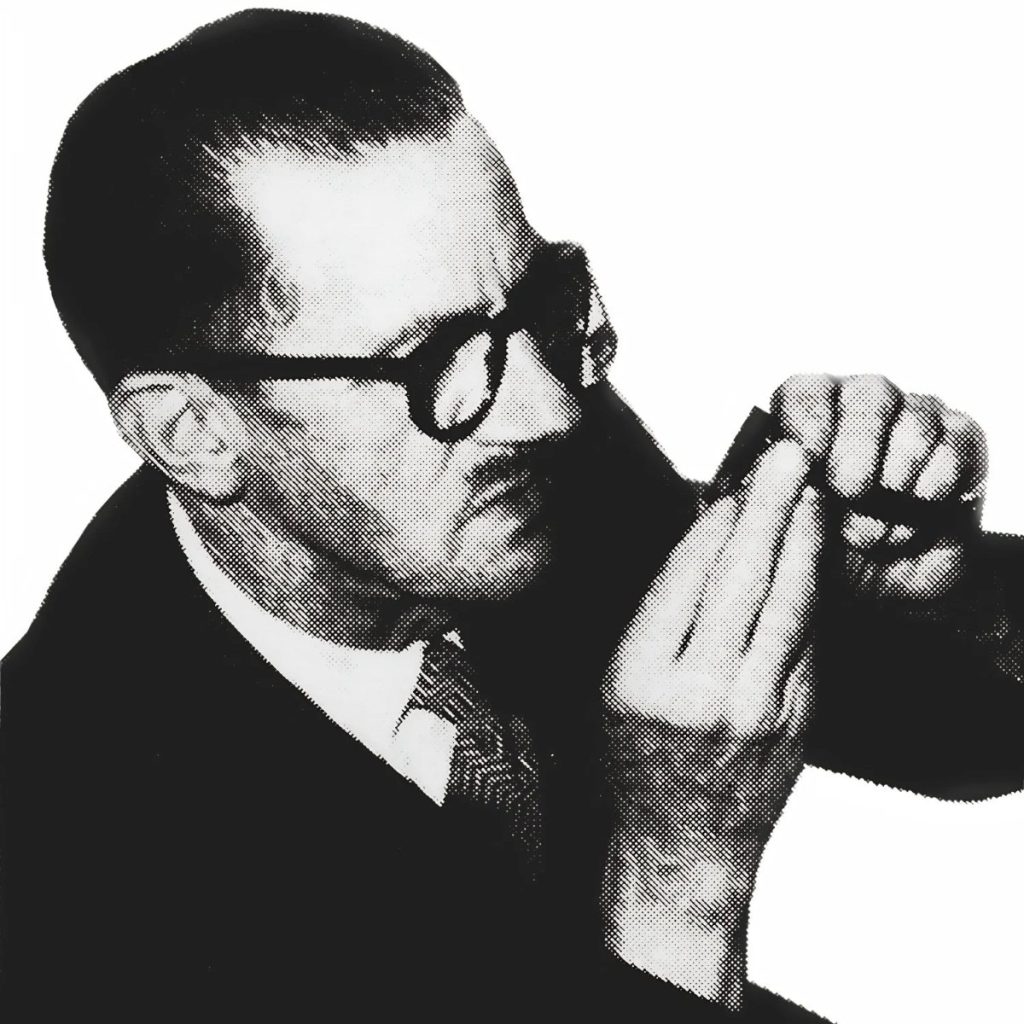
Beginnings
Repair benchHarwood was an English watch repairer, and the repair bench taught him the problem.
The problemDust and damp got in through the winding stem, and the watches that came to him were dirty inside.
The ideaA wristwatch with no stem would need to wind itself.
What he changed
Swiss patentWith his partner Harry Cutts he applied for a Swiss patent on 16 October 1923, granted as no. 106583 on 1 September 1924.
Swinging weightA weight inside the case swung through about 180 degrees against buffer springs and wound the mainspring.
Bezel settingThe hands were set by turning the bezel, so the case had no crown at all.
Series productionFortis of Grenchen put the design into series production and delivered the first watches on 13 July 1926. About 30,000 were made.
First self-winderIt is on the timeline as the first self-winding wristwatch.
Why it matters now
Rotor took overRolex’s Perpetual of 1931 replaced his bumper with a rotor that turns all the way round, and the automatic watch went that way.
Rolex’s correctionBut Rolex printed a correction in the Sunday Express on 10 June 1956. It acknowledged that Harwood had developed the self-winding wristwatch and Fortis had made it first.
SourcesFortis · Google Patents CH106583