
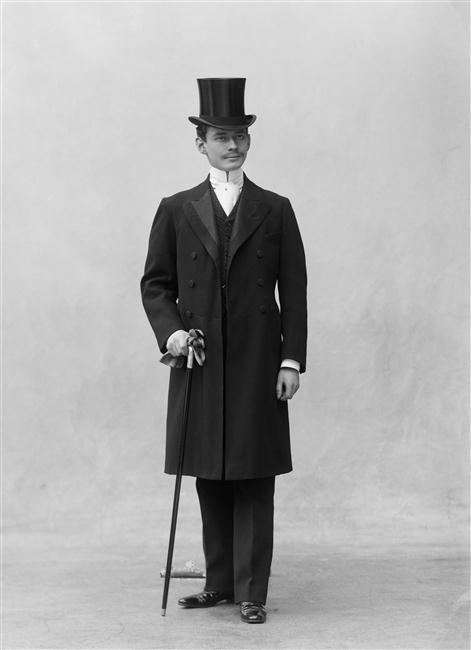
Beginnings
Louis Cartier was born in Paris in 1875, the eldest grandson of the firm’s founder. He joined the family business in 1898, married Andrée Worth, granddaughter of the couturier, the same year, and in 1899 moved the shop to 13 rue de la Paix, where it still is. His brothers took London and New York; Louis kept Paris, and the design.
What he changed
The story the house tells is that in 1904 the aviator Alberto Santos-Dumont complained that he could not read a pocket watch while flying, and Louis made him a flat square watch on a leather strap. The Santos went on sale in 1911 with movements from Edmond Jaeger, and it is the first wristwatch for a man made for a reason. In 1917 he drew the Tank, a rectangle whose sides run into the strap; the first were made in 1919, six of them, and it has never been out of production. He also commissioned the mystery clocks of Maurice Coüet and led the move to platinum settings.
Why it matters now
Before Cartier, a wristwatch was a small pocket watch with lugs. The Santos and the Tank are the first watches whose case was designed as a shape in its own right, and the design-led watch, from the Royal Oak to the Apple Watch, follows from that.
Worth knowingCartier left Europe for the United States in 1940 and died in New York two years later, months before the end of the war he never saw.
Historian’s noteNo Santos of 1904 has been found in the Cartier archives; the first recorded sale is 1911. The 1904 date rests on the house’s own tradition, and this site records the Santos accordingly.
SourcesWikipedia, with Brickell and the New York Times obituary · Monochrome · Rescapement