
Timeline / The first tourbillon
The first tourbillon
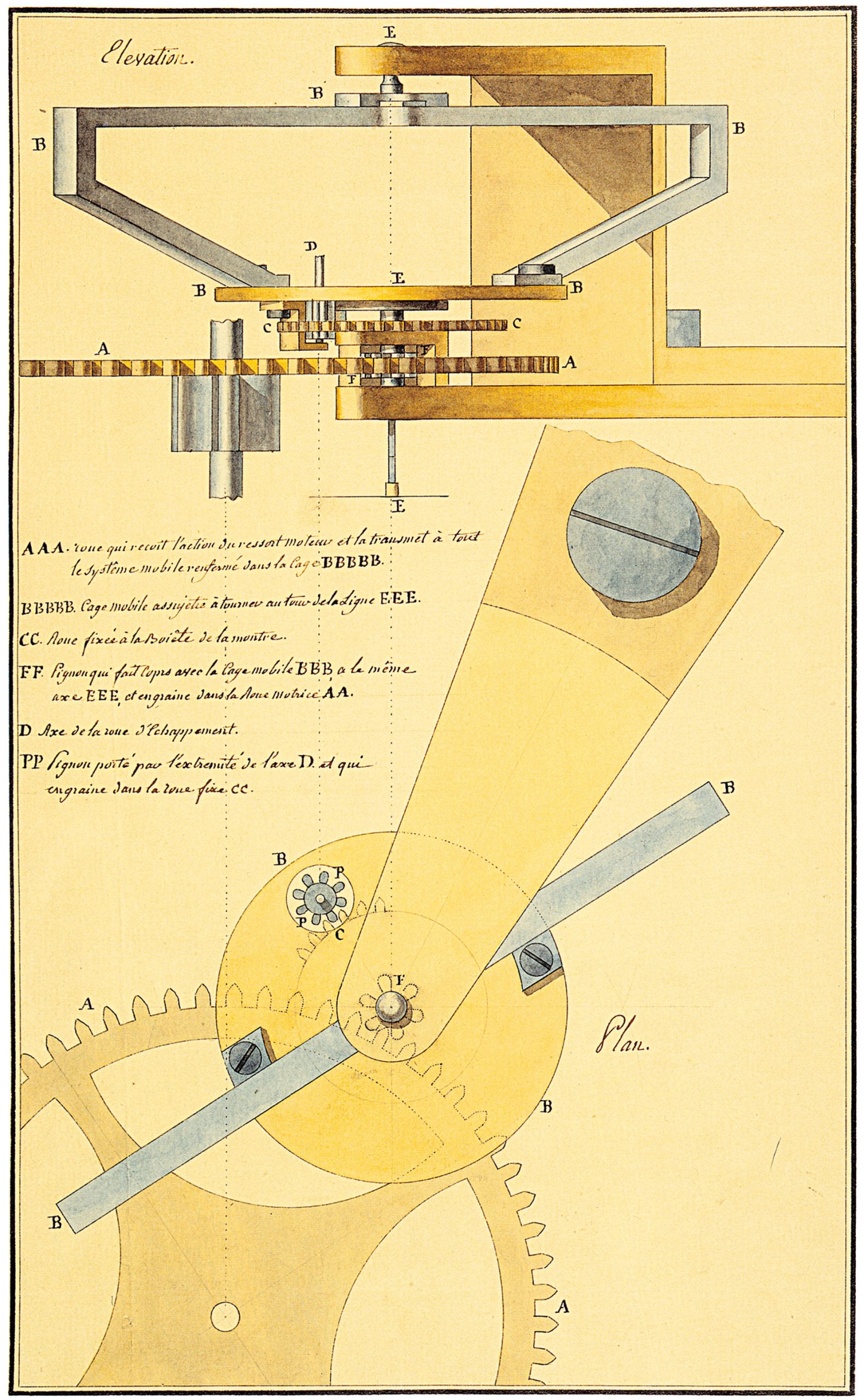
Abraham-Louis Breguet patented the tourbillon in 1801: the escapement turns inside a rotating cage, so gravity’s pull on it averages out.

- The need
- A pocket watch spends the day upright in a pocket. Gravity pulls the balance slightly off centre, and the watch runs at a different rate in each position.
- Made by
- Abraham-Louis Breguet, the Swiss-born watchmaker working in Paris. Patent granted on 26 June 1801, 7 Messidor Year IX in the revolutionary calendar, for ten years.
- What was new
- The balance and escapement are mounted in a cage that turns once a minute, so the positional errors cancel each other out over each turn.
- Worth knowing
- Breguet sold the first tourbillon watches in 1805 and made about thirty-five before his death in 1823. In a pocket watch, which hangs in one position all day, the idea made sense. On a wrist, which changes position constantly, the benefit is debated, and today the tourbillon is mainly a showpiece of fine watchmaking.
- Where it is now
- The patent drawing is kept by the French patent office in Paris. A few of Breguet’s tourbillon watches survive in museums and private collections.
SourcesBreguet
Suggest a correction
Thank you. Your note has reached the editor.