Heuer
- Group
- LVMH, since 1999.
- Headquarters
- La Chaux-de-Fonds, Switzerland.
- Founded
- 1860
- Founder
- Edouard Heuer
- Known for
- Carrera (1963), Monaco (1969), Autavia, Aquaracer, the Mikrograph (1916).
- Scale
- About 342,000 watches, CHF 656m in 2025; 11th among Swiss brands, as TAG Heuer (estimate).
Lineage and calibres
- 1860
Edouard Heuer founds his business in Saint-Imier, making mostly silver pocket watches. It moves to Brugg in 1864 and Bienne in 1867.
- 1962
The first Autavia wrist chronographs use bought-in Valjoux movements.Calibre
- 1964
Heuer buys Leonidas, a maker of stopwatches and chronographs.
- 1969
Calibre 11 goes on sale.Calibre
- 1985
After Jack Heuer sells in 1982, the TAG group takes over, and the firm becomes TAG Heuer.
- 1999
LVMH acquires TAG Heuer.
- 2010
Calibre 1887, which the brand calls its first in-house chronograph movement.Calibre
- 2016
The Heuer 02 movement, made at the Chevenez manufacture.Calibre
Contributions to horology
- 1869
Crown winding
Edouard Heuer’s first patent: a keyless winding system worked by the crown.
- 1887
Oscillating pinion
A patented pinion that lets a push-button start and stop a chronograph instantly. TAG Heuer says its Calibre 1887 of 2010 uses the same principle.
- 1908
Sphygmometer
A patented pocket chronograph with a pulse scale, so a doctor could read the pulse rate from a 20-second count.
- 1911
Time of Trip
A dashboard chronograph for cars and aircraft: time of day on the main dial, journey time on a small dial.
- 1916
Mikrograph
A mechanical stopwatch reading to 1/100 second, with the 1/50-second Semikrograph beside it.
- 1969
Calibre 11
An automatic chronograph movement from a joint venture led by Heuer: a Büren base movement with a Dubois-Depraz chronograph module.
From the archive
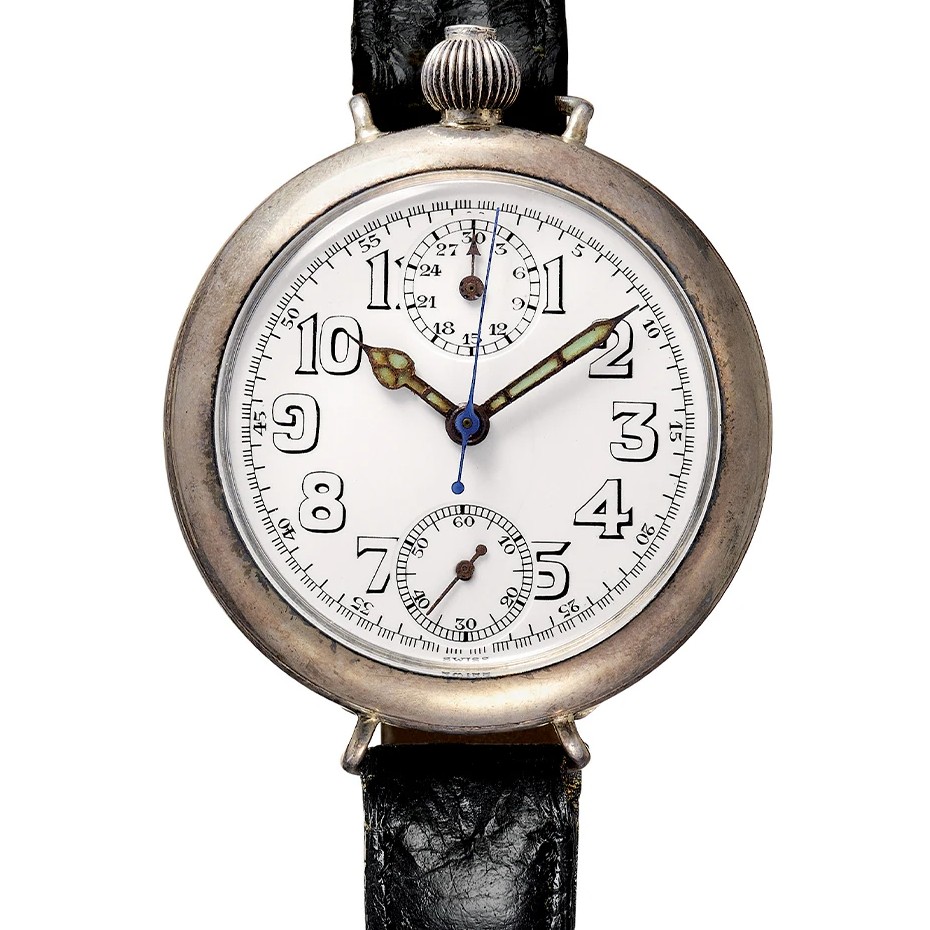
Wrist chronograph
Heuer’s 1914 catalogue called its wrist chronograph “unique on the market”.
Popular Models
In the collection as of October 2026.
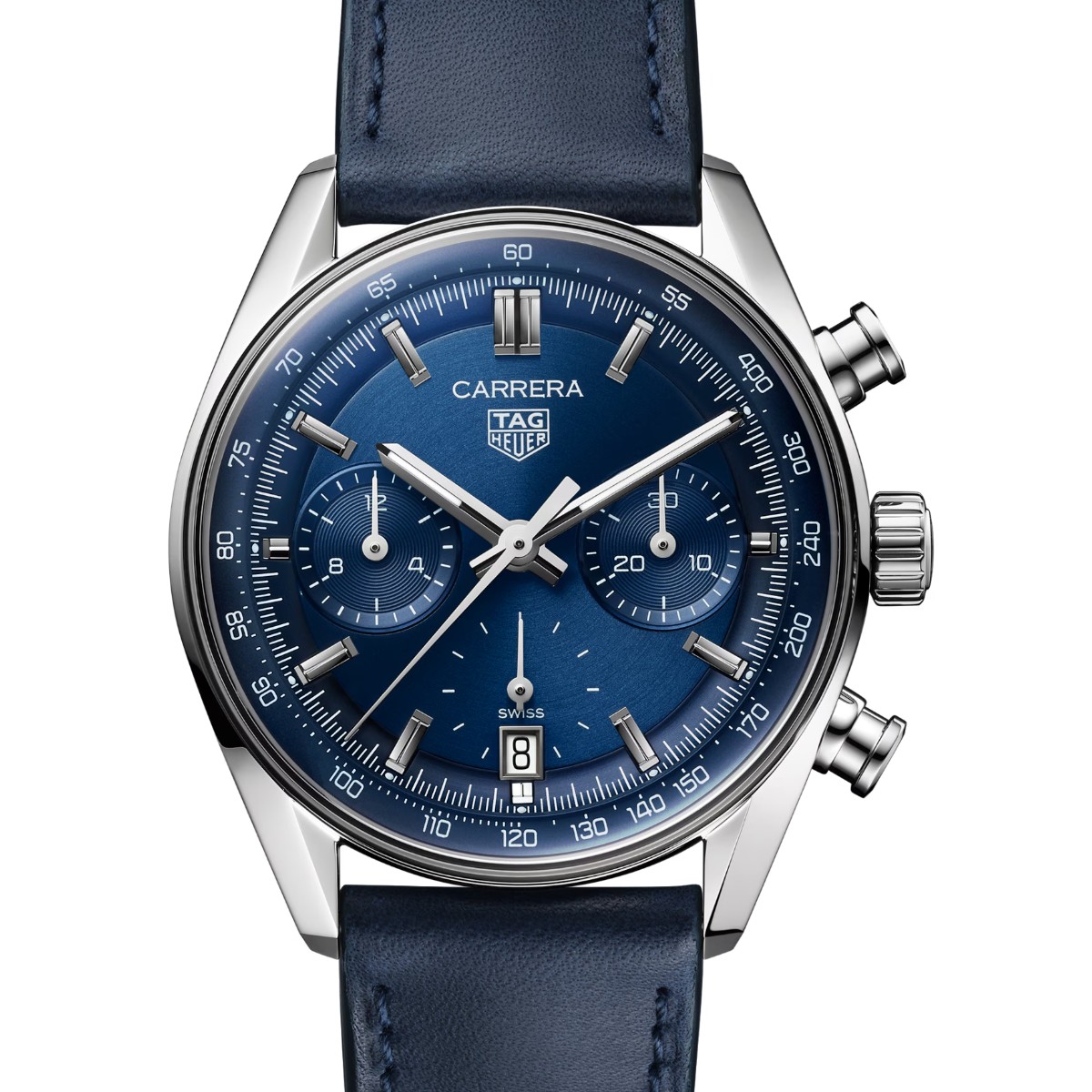
TAG Heuer Carrera Chronograph
A 39 mm steel chronograph with a blue reverse-tricompax dial; calibre TH20-00.
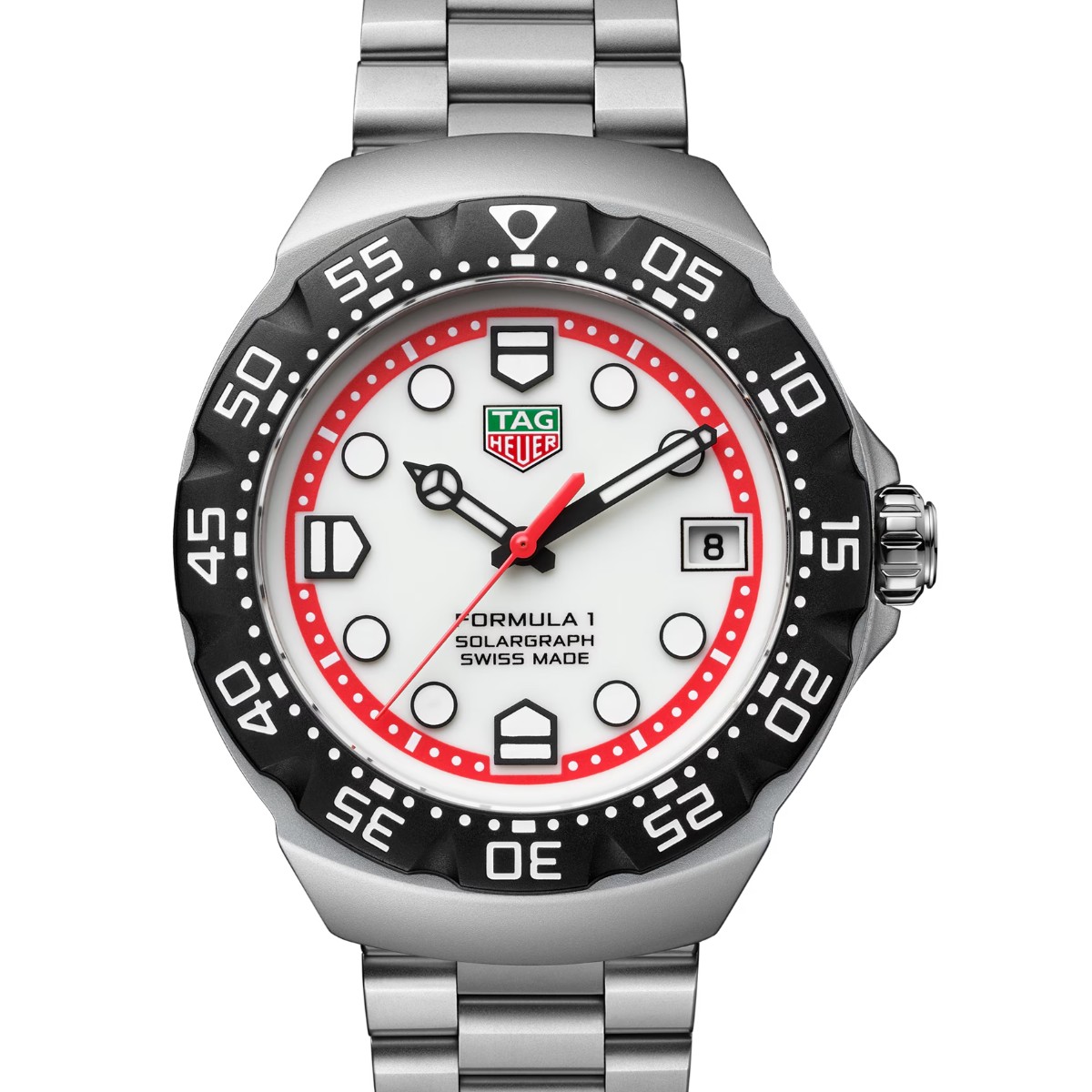
TAG Heuer Formula 1 Solargraph
A 38 mm steel Formula 1 with a white dial and red flange; solar quartz TH50-00.
Sourcestagheuer.com · TAG Heuer history · TAG Heuer vintage collection · Morgan Stanley and LuxeConsult, Swiss watch brand estimates, February 2026.
Milestones from Heuer