
Jaeger-LeCoultre
- Group
- Richemont, since 2000.
- Headquarters
- Le Sentier, Switzerland.
- Founded
- 1833
- Founder
- Antoine LeCoultre
- Known for
- Reverso (1931), Master Control, Polaris, Memovox, the Atmos clock.
- Scale
- About 78,000 watches, CHF 523m in 2025; 13th among Swiss brands (estimate).
Lineage and calibres
- 1833
Antoine LeCoultre founded his first workshop in the Vallée de Joux. He was a self-taught watchmaker who had already invented a machine for cutting pinions from steel in 1830.
- 1847
Antoine LeCoultre devised the ‘remontoir à bascule’.Calibre
- 1866
Antoine LeCoultre and his son Elie brought all the watchmaking crafts under one roof. This created what the Maison calls the first fully-fledged Manufacture in the Vallée de Joux.
- 1903
A meeting between the Paris watchmaker Edmond Jaeger and Jacques-David LeCoultre began a collaboration that combined French style with Swiss technique, starting with ultra-thin watches.
- 1907
The Manufacture made the ‘Knife’ pocket watch, with the calibre of the same name, which it calls the world’s thinnest pocket watch.Calibre
- 1929
The watchmakers miniaturised the Duoplan movement into Calibre 101, which Jaeger-LeCoultre describes as the world’s smallest manually wound movement.Calibre
- 1931
The Reverso patent application was filed in Paris. César de Trey registered the Reverso name in November.
- 1937
The long partnership between LeCoultre and Jaeger led to the creation of the Jaeger-LeCoultre name.
- 1951
The Futurematic was launched, and the Maison calls it the first wristwatch without a winding crown.Calibre
- 2000
Richemont agreed to buy Les Manufactures Horlogères SA from Mannesmann AG, which owned 60% of Jaeger-LeCoultre. Richemont bought the other 40% from the Audemars Piguet group.
Contributions to horology
- 1844
The Millionomètre
Jaeger-LeCoultre says Antoine LeCoultre’s Millionomètre of 1844 was the first instrument able to measure a micron. With his later machines it helped make parts interchangeable, and he won a gold medal at the 1851 Great Exhibition in London.
- 1847
Keyless winding and setting
LeCoultre’s ‘remontoir à bascule’ let the owner wind the watch and set the hands without a key. Jaeger-LeCoultre calls it the first simple and reliable keyless lever winding and time-setting system.
- 1928
The Atmos clock
Invented by Jean-Léon Reutter and developed by LeCoultre & Cie, the Atmos clock is powered by changes in temperature. By the Maison’s account a one-degree change keeps it running for two days.
- 1929
Calibre 101
A miniaturised version of the Duoplan movement, Calibre 101 is described by Jaeger-LeCoultre as the smallest mechanical calibre ever made. It is still used in the Maison’s jewellery watches.
- 1931
The Reverso
René-Alfred Chavot’s design for ‘a watch capable of sliding in its support and being completely turned over’ was filed for patent in Paris on 4 March 1931. César de Trey bought the rights in July and made it with Jacques-David LeCoultre. The first pieces were on sale less than nine months later.
- 2004
Gyrotourbillon
After a tourbillon calibre that won a chronometry competition in 1946 and a first tourbillon wristwatch in 1993, Jaeger-LeCoultre unveiled the Gyrotourbillon in 2004. It is a tourbillon rotating on two axes.
From the archive
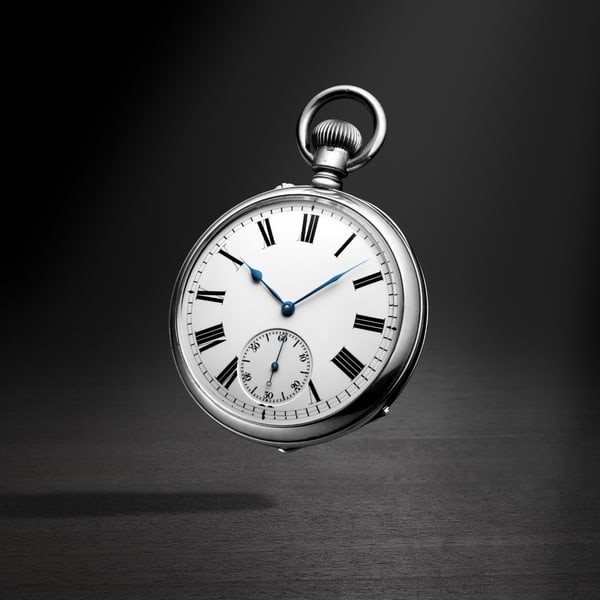
LeCoultre pocket watch, 1870
A LeCoultre pocket watch dated 1870, the oldest the Maison shows; not its first.
Popular Models
In the collection as of October 2026.
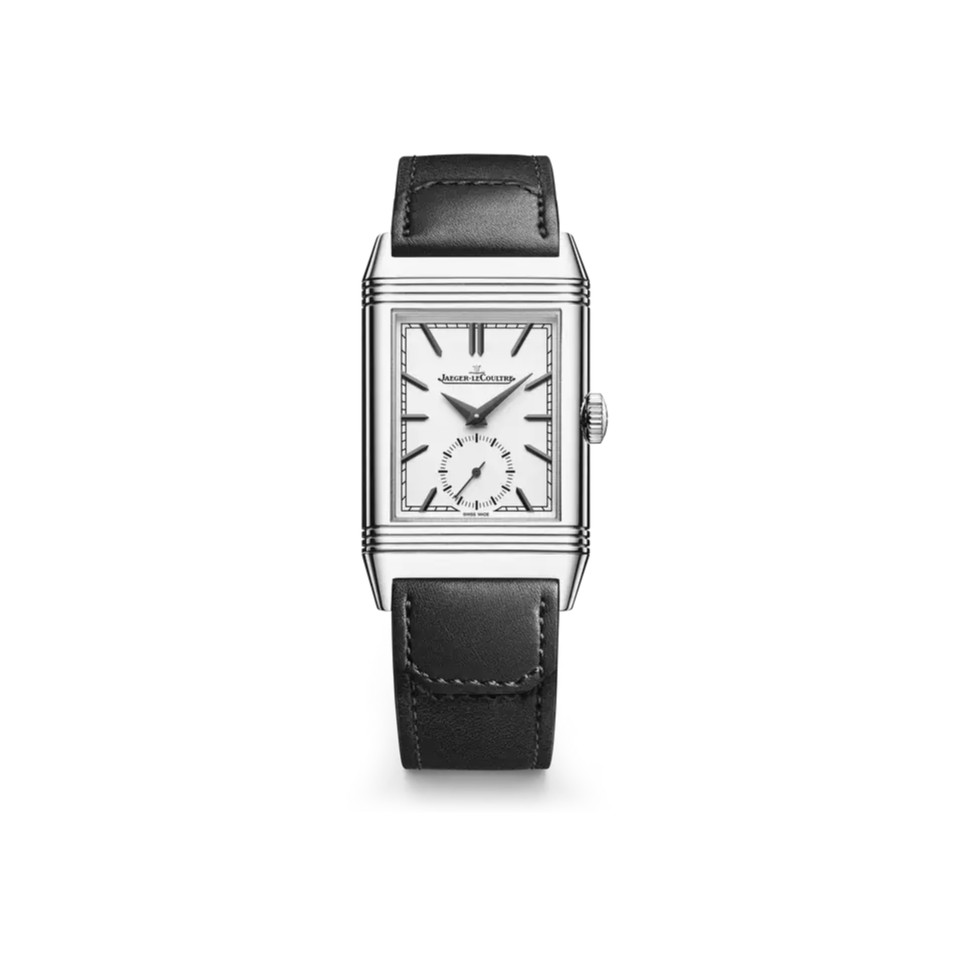
Reverso Tribute Monoface Small Seconds
A steel Reverso with a silvered opaline dial and small seconds; hand-wound calibre 822.
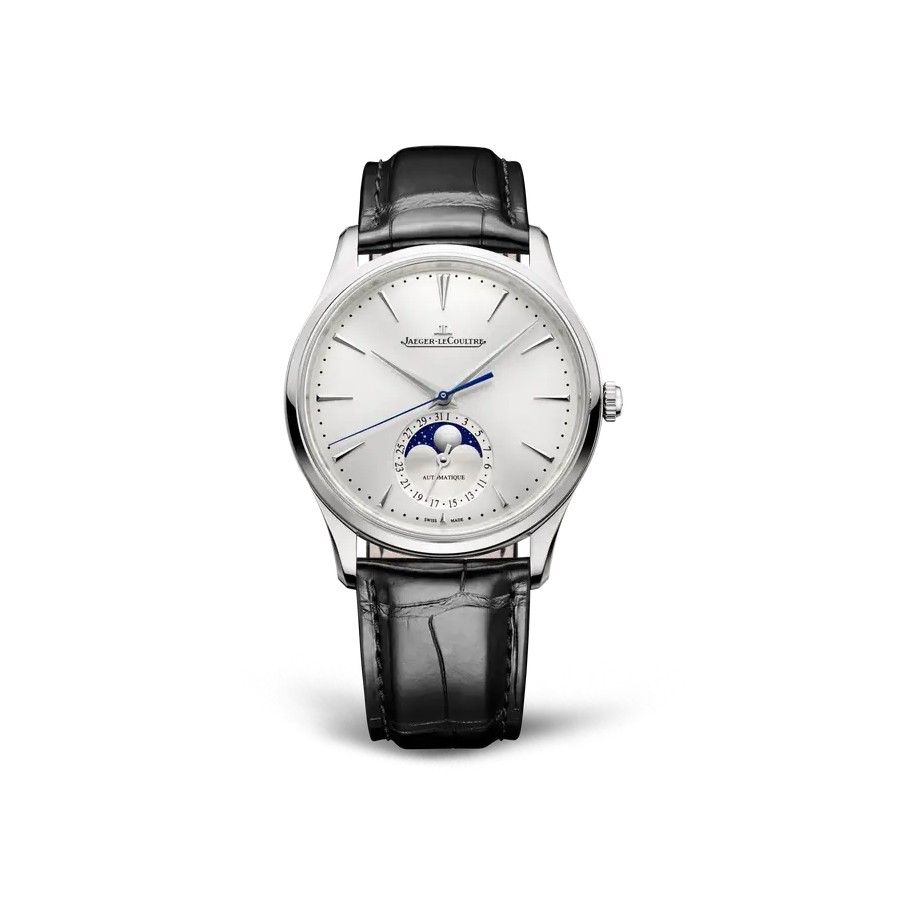
Master Ultra Thin Moon
A 39 mm steel Master Ultra Thin with moon phase and date; self-winding calibre 925.
SourcesJaeger-LeCoultre Press, The Genesis of Precision · Jaeger-LeCoultre, Masters of Complications · Jaeger-LeCoultre, History · Jaeger-LeCoultre, 190+ years · Jaeger-LeCoultre, Reverso history · Jaeger-LeCoultre, Futurematic (The Collectibles) · Jaeger-LeCoultre, Valley of Inventions · Jaeger-LeCoultre, The Precision Pioneer · Richemont, press release, 21 July 2000 · Jaeger-LeCoultre, Master Ultra Thin collection · Jaeger-LeCoultre, Reverso Tribute Monoface Small Seconds Q713843J · Jaeger-LeCoultre, Master Ultra Thin Moon Q1368430 · Morgan Stanley and LuxeConsult, Swiss watch brand estimates, February 2026.
Milestones from Jaeger-LeCoultre