
Timeline / The watch built to be dropped
The watch built to be dropped
Moment
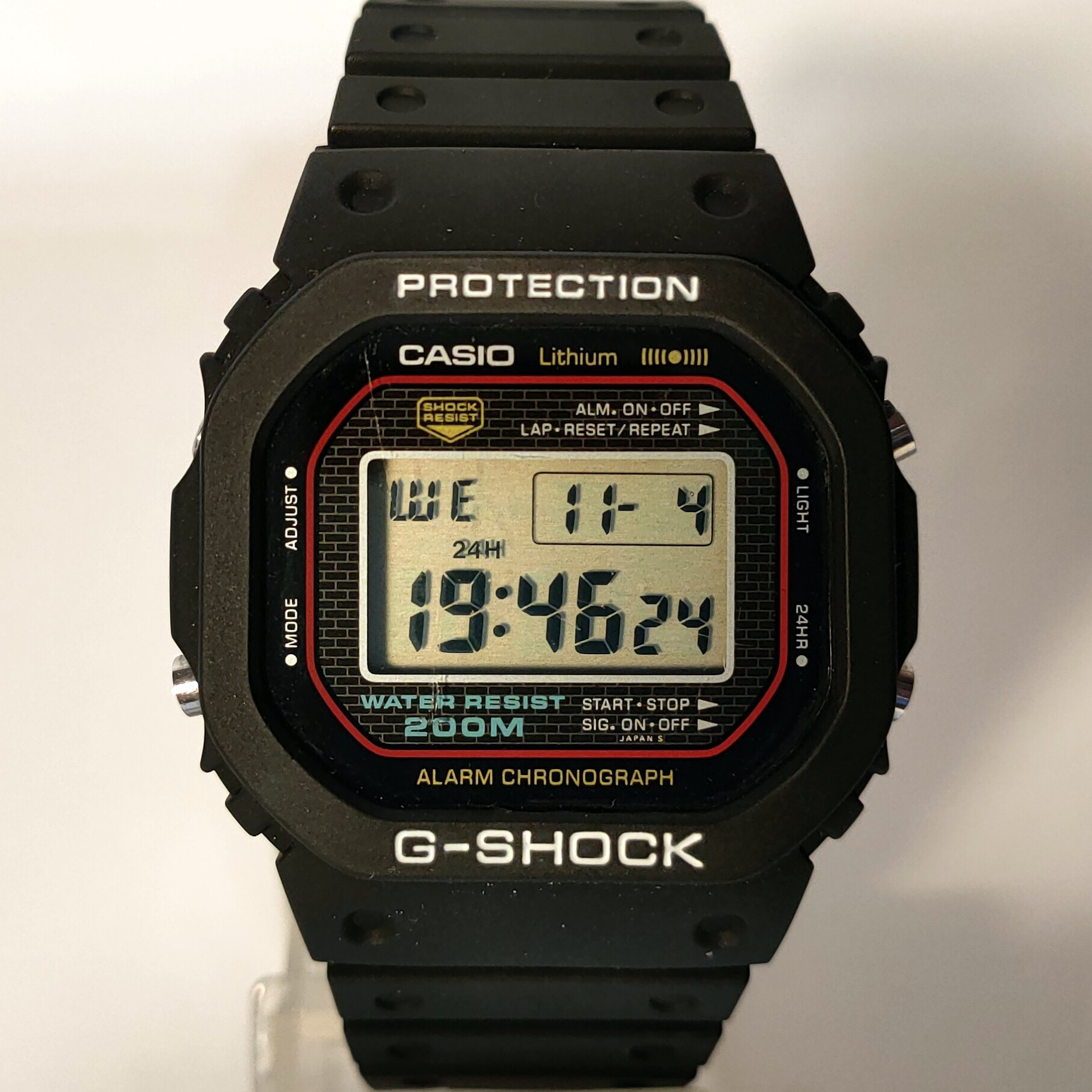
Casio’s first G-Shock, the DW-5000C of April 1983, was designed to survive a ten-metre fall and created the tough watch as a category.

- What happened
- In April 1983 Casio released the DW-5000C, a digital watch in a square resin case that could be dropped from a third-floor window and keep running. It sold slowly in Japan until a 1984 American television advertisement showed one being hit with a hockey stick.
- Who
- Casio Computer Co., Tokyo. The engineer Kikuo Ibe proposed a watch that would not break when dropped after smashing a watch his father had given him; his small team built about two hundred prototypes between 1981 and 1983.
- Why it mattered
- Shock protection had meant a spring-mounted balance since the 1930s. The G-Shock protected the whole watch, module, glass and buttons, and made toughness itself the selling point. Casio has sold well over a hundred million since.
- Worth knowing
- The module floats inside a hollow case on cushioning points, an idea Ibe took from watching a rubber ball bounce, with a urethane bezel standing proud of the glass. The design brief was called “triple ten”: a ten-metre drop, ten bar of water pressure and a ten-year battery. The watch beat the first two and managed seven years on the third.
- Where it is now
- Casio’s own archive; a faithful re-creation, the DW-5000R, was issued in 2024.
Historian’s noteCasio’s own history does not claim a first, and neither does this record: shock-resistant movements are half a century older. The G-Shock is here for the category it created.
SourcesCasio corporate history · G-Shock
Suggest a correction