
IWC Schaffhausen
- Group
- Richemont, since 2000.
- Headquarters
- Schaffhausen, Switzerland.
- Founded
- 1868
- Founder
- Florentine Ariosto Jones
- Known for
- Portugieser (1939, for two Portuguese merchants wanting pocket-watch precision), Pilot’s Watches (Big Pilot, Mark series), Ingenieur (antimagnetic, 1955; redrawn by Gérald Genta, 1976), Portofino, Aquatimer.
- Scale
- About 118,000 watches, CHF 573m in 2025; 12th among Swiss brands (estimate).
Lineage and calibres
- 1868
American watchmaker Florentine Ariosto Jones founded the International Watch Company in Schaffhausen to make high-quality pocket watch movements for the US market. He used Swiss craftsmen, modern machinery and hydropower from the Rhine.
- 1870
The first Jones calibres were made around 1870. Unlike Swiss movements of the time, they used three-quarter plates instead of finger bridges, and ‘Pattern H’ was the highest grade.Calibre
- 1880
Jones returned to America, and there was a short period under the American manager Frederick Francis Seeland. After that, the Rauschenbach family of Schaffhausen industrialists took over the whole company and began selling its watches worldwide.
- 1884
Under Johannes Rauschenbach-Schenk, IWC began making Pallweber pocket watches.Calibre
- 1915
IWC introduced calibres 75 (without seconds) and 76 (with small seconds), which it calls the first movements it designed specifically for wristwatches.Calibre
- 1929
Ernst Jakob Homberger, who had led the company since 1905, bought the shares of his brother-in-law Carl Gustav Jung and became sole owner.
- 1950
IWC launched the 85 calibre. It appeared in the first Ingenieur in 1955.Calibre
- 1978
The German instrument maker VDO Adolf Schindling AG acquired IWC and brought in Günter Blümlein. He encouraged head watchmaker Kurt Klaus to develop a mechanical perpetual calendar.
- 2000
Richemont took over IWC. The same year IWC introduced the extra-large 5000 calibre with a seven-day power reserve.
Contributions to horology
- 1884
Pallweber digital display
Johann Rauschenbach acquired the rights to Josef Pallweber’s system on 17 June 1884. After that, IWC made pocket watches that showed hours and minutes as jumping numerals on rotating discs instead of hands. About 20,000 were made in Schaffhausen before production ended in 1890.
- 1950
Pellaton automatic winding
Albert Pellaton, technical director from 1944, developed the 85 calibre, IWC’s first in-house automatic movement. Its pawl-winding system winds the mainspring with the smallest rotor movement in either direction.
- 1980
Titanium watch case
IWC says the Porsche Design Titanium Chronograph, Reference IW3700, of 1980 was the world’s first wristwatch in a titanium case. It developed the know-how for machining the metal with aerospace specialists.
- 1985
Da Vinci Perpetual Calendar
Kurt Klaus’s perpetual calendar module, with 82 parts and combined with a chronograph, made its debut in 1985 in the Da Vinci Reference IW3750. By IWC’s account it needs virtually no adjustment before 2499.
- 1986
Ceramic watch case
IWC’s timeline records 1986 as the year of its first watch in a black zirconium oxide ceramic case. It describes this as a first in watchmaking.
From the archive
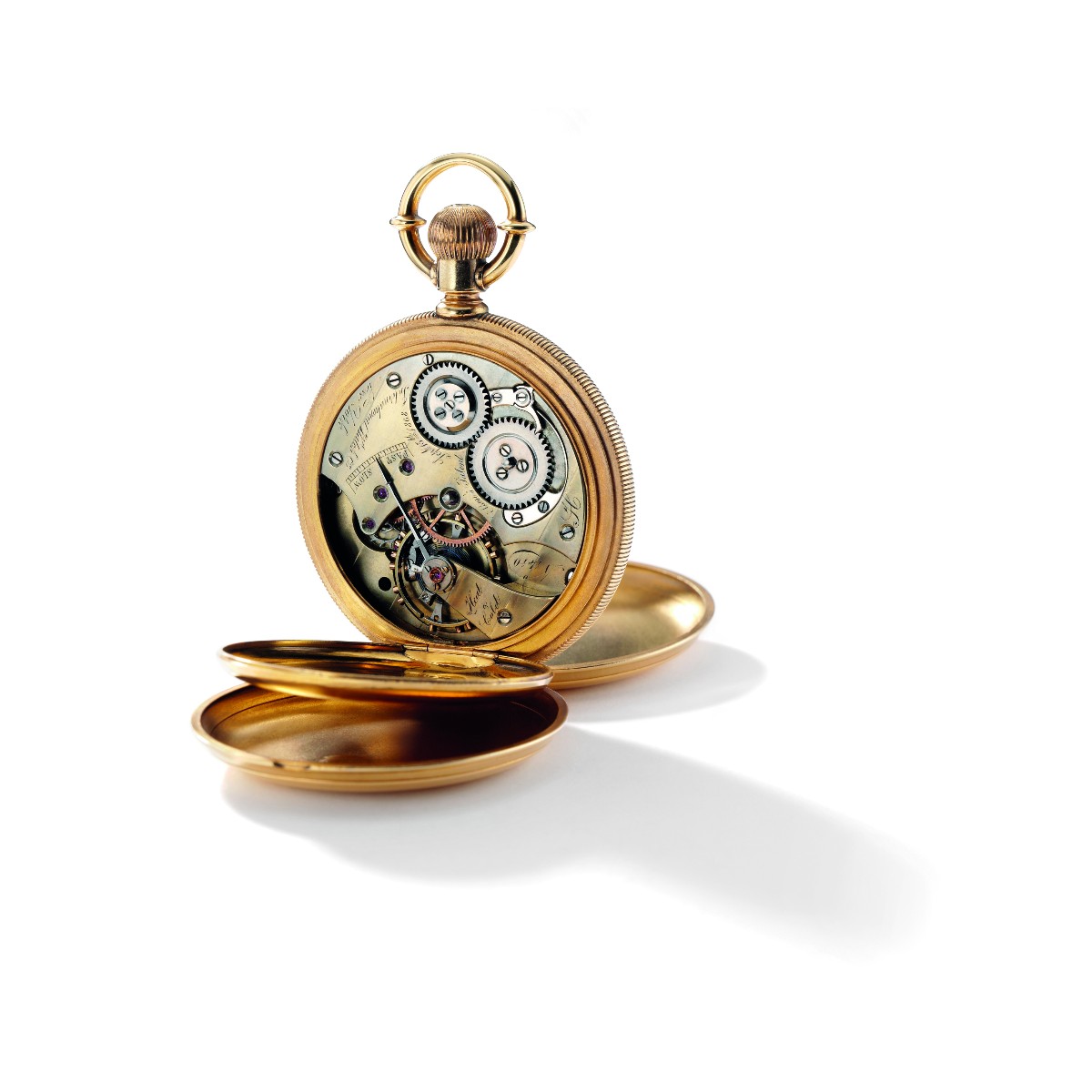
Jones pocket watch, Pattern H
A Jones pocket watch of about 1870, the oldest IWC shows in its history; not its first.
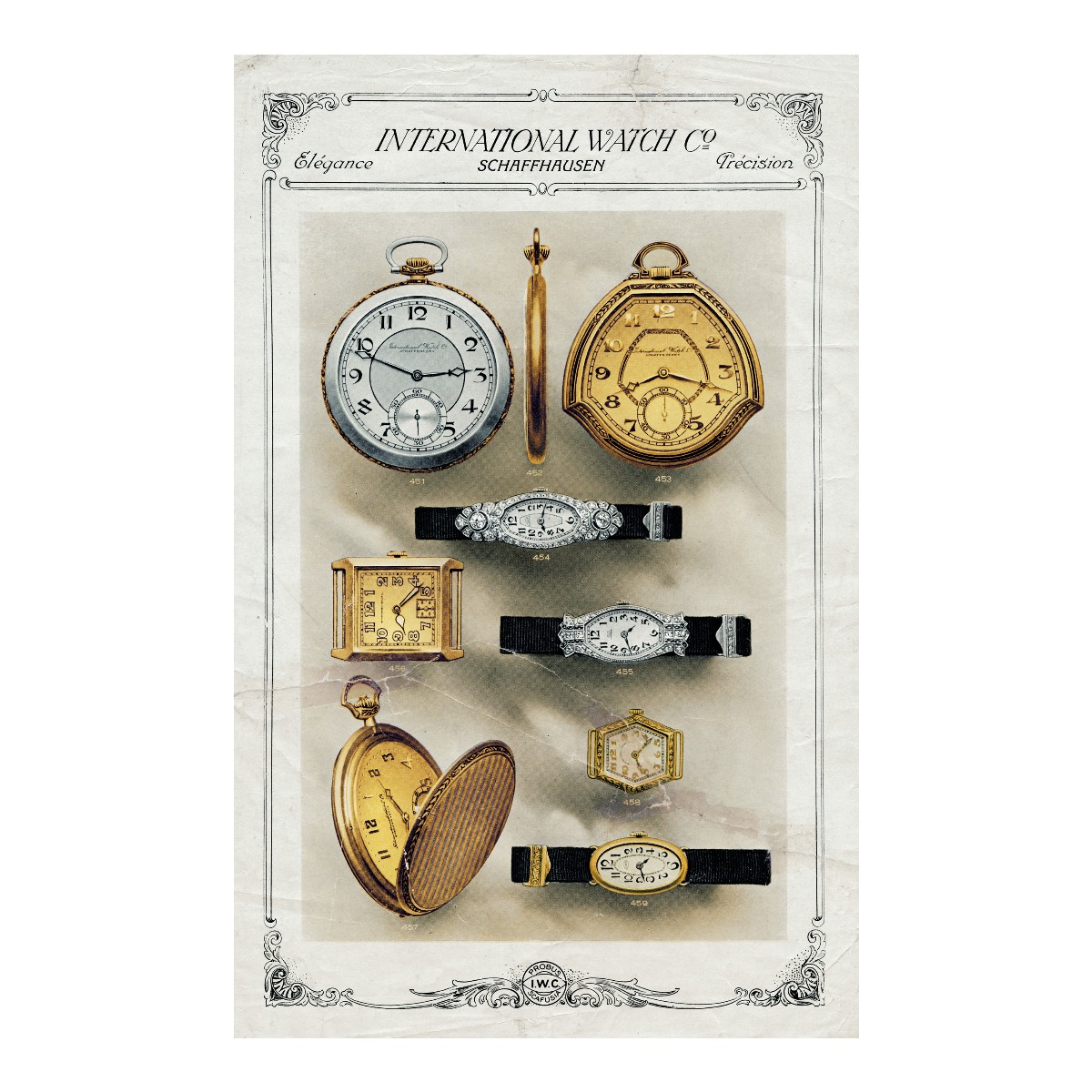
Catalogue page with early wristwatches
The oldest IWC wristwatches pictured in its history, from an early-1920s catalogue.
Popular Models
In the collection as of October 2026.
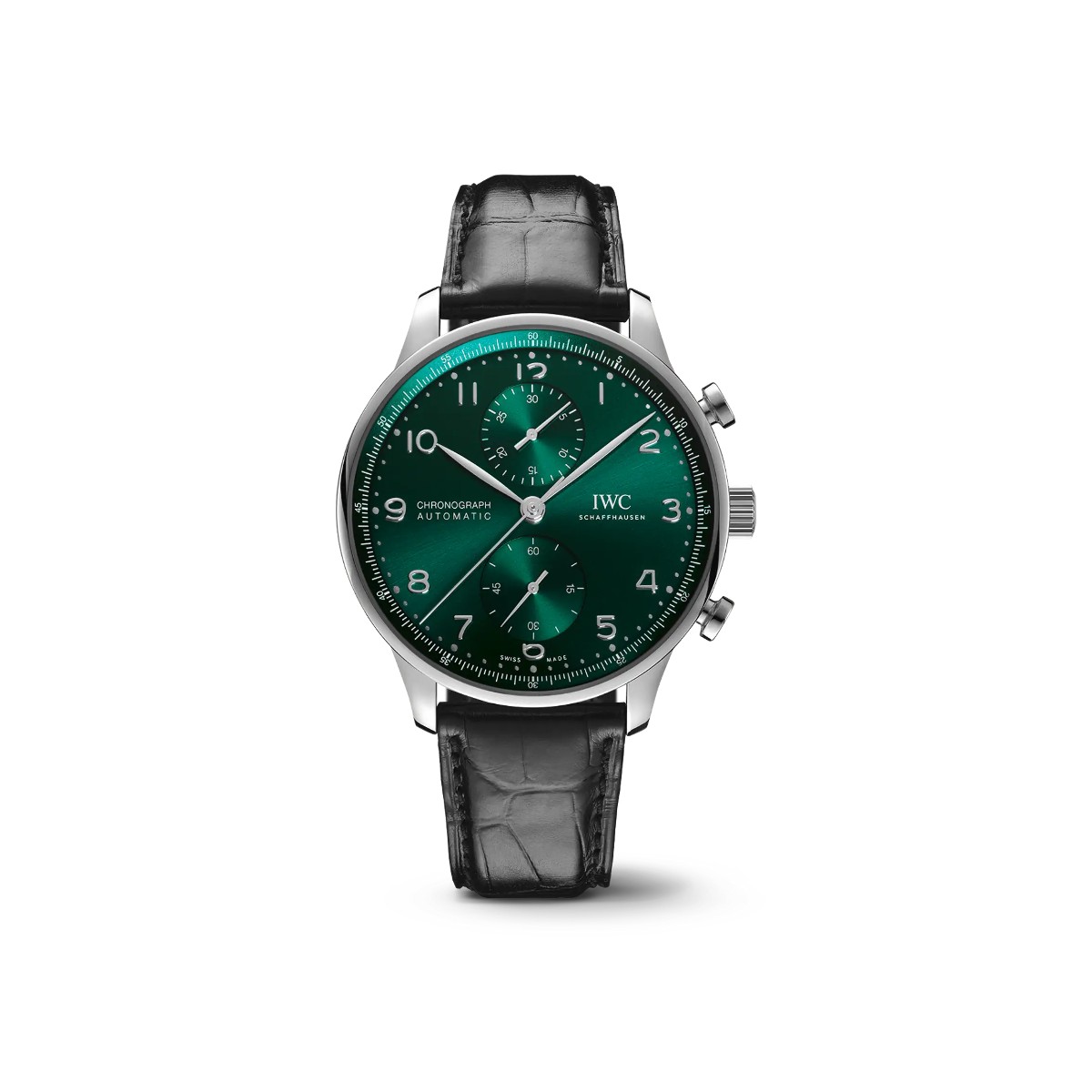
Portugieser Chronograph
A 41 mm steel chronograph with a green dial and two sub-dials; self-winding calibre 69355.
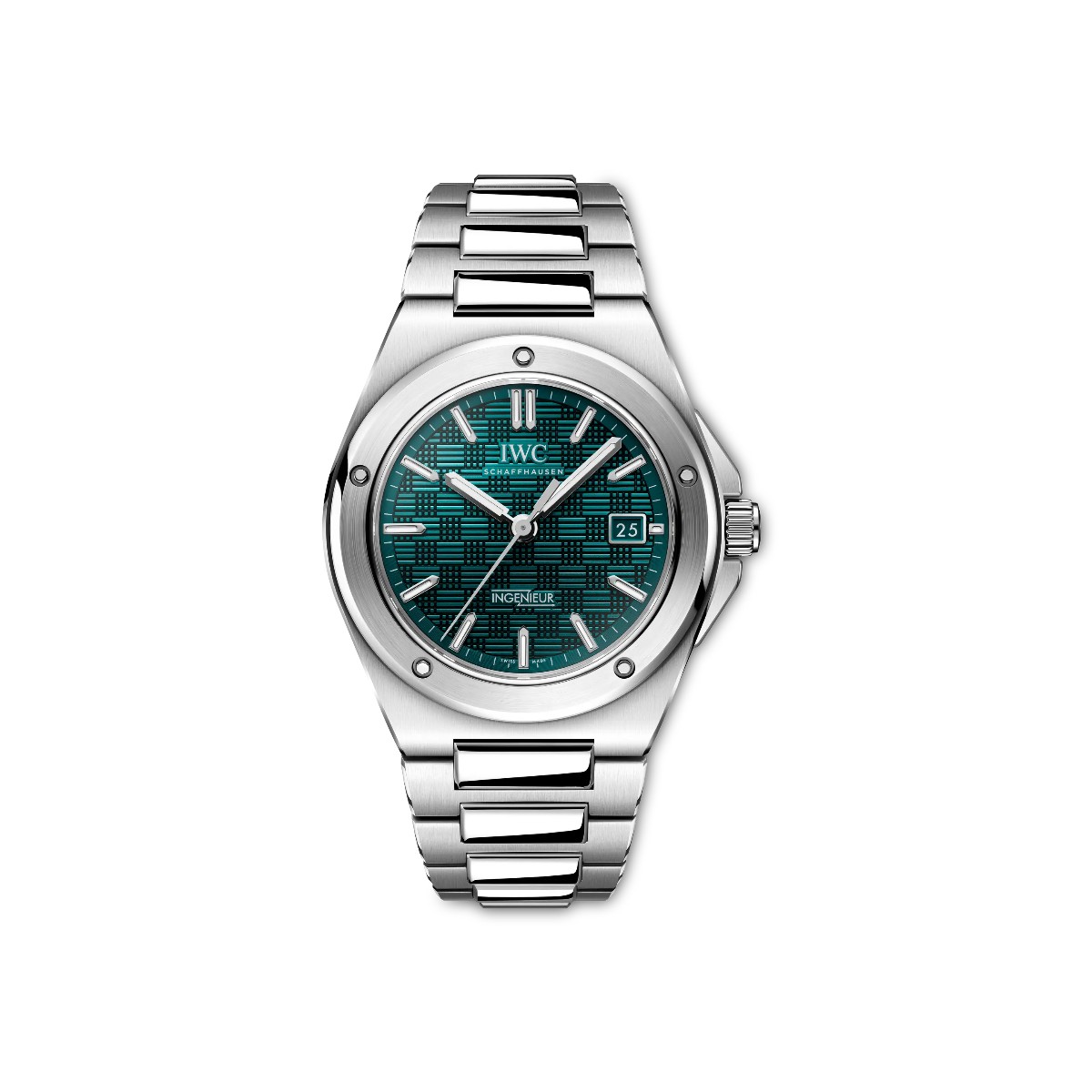
Ingenieur Automatic 40
A 40 mm steel Ingenieur with an aqua ‘Grid’ dial and integrated bracelet; calibre 32111.
SourcesIWC Press, Timeline · IWC Press, Time Machines · IWC, History · IWC Press, Portugieser Chronograph Reference 3716 (2020) · IWC, Portugieser Chronograph IW371615 · IWC, Ingenieur Automatic 40 IW328903 · Morgan Stanley and LuxeConsult, Swiss watch brand estimates, February 2026.