Beginnings
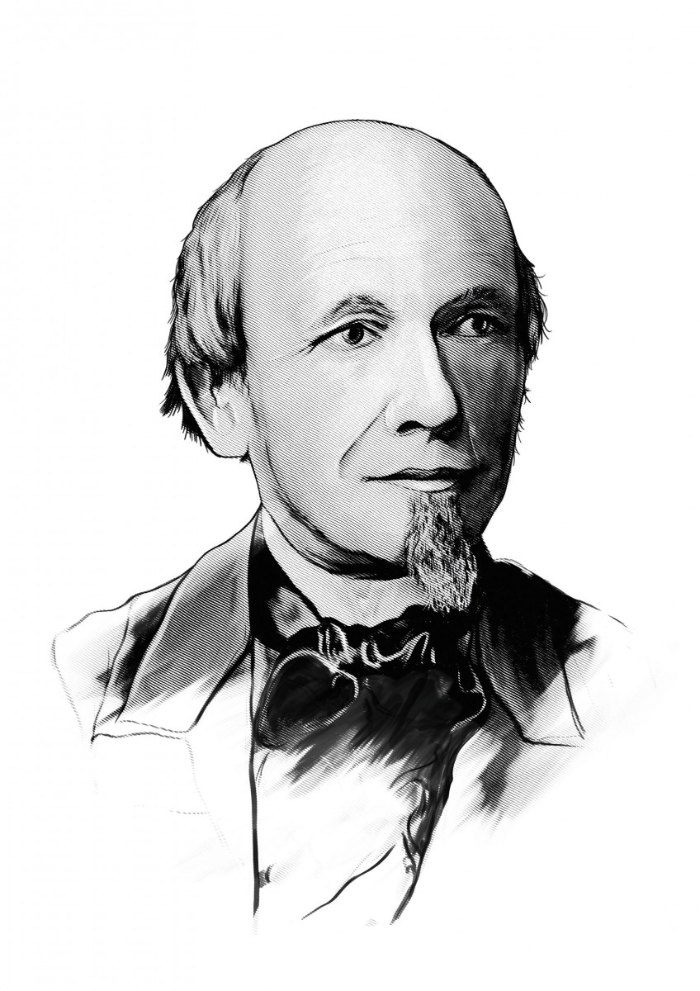
Lange was born in Dresden in 1815, the son of a gunsmith, and was apprenticed at fifteen to Johann Christian Friedrich Gutkaes, clockmaker to the Saxon court, while attending the city’s technical school. In 1837 he went to Paris to work under Joseph Thaddäus Winnerl, a pupil of Breguet, and travelled through Switzerland before coming home in 1841. He married Gutkaes’s daughter Antonie in 1842 and became his partner; the digital five-minute clock in the Semper Opera, started with the house on 12 April 1841, came out of that workshop.
What he changed
In 1845 he persuaded the Saxon government to lend him about 6,700 thalers to set up watchmaking in Glashütte, a worked-out mining town in the Erzgebirge, and on 7 December he took on fifteen apprentices, most of them straw-plaiters. He built the tools, trained the men, divided the work among specialist home workshops and measured everything in millimetres rather than the Paris ligne. About 1864 he settled the Glashütte movement’s signature, the three-quarter plate that holds the whole going train under one bridge. He was mayor of the town for nearly twenty years and sat in the Saxon parliament; his sons Richard and Emil joined the firm, which became A. Lange & Söhne in 1868.
Why it matters now
Every Glashütte watch, from Lange and Glashütte Original to NOMOS, is the descendant of that December morning, and the three-quarter plate, the hand-engraved balance cock and the Glashütte stripes are his house style made into a regional one. The Glashütte rate tolerance and the big date of the modern Lange 1 both look back to him, the second by way of the 1841 opera clock.
Worth knowingThe only known photograph of him is said to survive because the Russian imperial family asked for one.
Historian’s noteThe Semper Opera clock is Gutkaes’s; Lange worked on it as his partner, and the modern house’s claim of a share is not quantified anywhere. The loan is given as 5,580 thalers plus a 1,120-thaler subsidy, or 6,700 in total; the 7,820 sometimes quoted double-counts. “The first German watch factory” is a later framing: the Neue Deutsche Biographie stresses that Lange organised home work, not a factory.
SourcesNeue Deutsche Biographie · Saxon State Archives · Semperoper, the five-minute clock · A. Lange & Söhne