
Tutima
- Group
- Independent.
- Headquarters
- Glashütte, Germany; site in Ganderkesee.
- Founded
- 1927
- Founder
- Ernst Kurtz
- Known for
- Flieger chronograph (1941), Military Chronograph 798 (1984), Tempostopp.
Lineage and calibres
- 1920s
Tutima says Kurtz brought Glashütte's scattered independent watchmakers together under one factory roof at the end of the 1920s, with modern work structures.
- 1927
Dr Ernst Kurtz, a lawyer, chaired and ran both new Glashütte firms, the movement maker UROFA and the watch maker UFAG. He bet on the wristwatch rather than the pocket watch.
- 1941
The Tutima pilot's watch of 1941 appeared.Calibre
- 1945
An air raid hours before the end of the war destroyed the factory, and Soviet troops then occupied Saxony. Kurtz and some employees moved west shortly before the war ended.
- 1960s
In Ganderkesee, Lower Saxony, the business was carried on, from the 1960s under Dieter Delecate.
- 1984
NATO chose the Tutima Military Chronograph ref. 798, by Tutima's account.Calibre
- 2008
After German reunification Delecate set up a new factory in Glashütte's former railway maintenance depot, near the historic works. The factory started work on 14 May 2008, and the same year Ganderkesee produced the Grand Classic Alpha.
- 2011
Tutima presented the Hommage minute repeater.Calibre
- 2013
In April 2013 Tutima showed four new families, Saxon One, Grand Flieger, M2 and Patria, its first collection created in Glashütte for 68 years.
- 2013
Tutima's own hand-wound calibre 617, with 166 parts made on CNC machines and finished by hand, powers the Patria. Its barrel, gear train and oscillator are also used in the minute repeater.Calibre
Contributions to horology
- 1941
Glashütte pilot's chronograph
Tutima calls its 1941 pilot's watch legendary. Antiquorum describes one, signed Glashütte, as a nickel-brass and steel aviator's chronograph with a rotating bezel and a 30-minute counter. It also notes that the Glashütte factories made about 30,000 numbered chronographs for military use.
- 1984
Titanium NATO chronograph
The Military Chronograph ref. 798 was chosen as NATO's official pilot's watch, Tutima says. Tutima adds that its titanium case made it one of the first watchmakers to use the metal.
- 2011
Hommage minute repeater
Tutima calls the Hommage, presented on 12 May 2011 and dedicated to Ernst Kurtz, the first minute repeater developed and produced entirely in Glashütte.
- 2017
Tempostopp calibre 659
Tutima's hand-wound calibre 659 chronograph adds the times stopped (additive stopping) and has a flyback function and a jumping 30-minute counter, under the old name Tempostopp.
From the archive
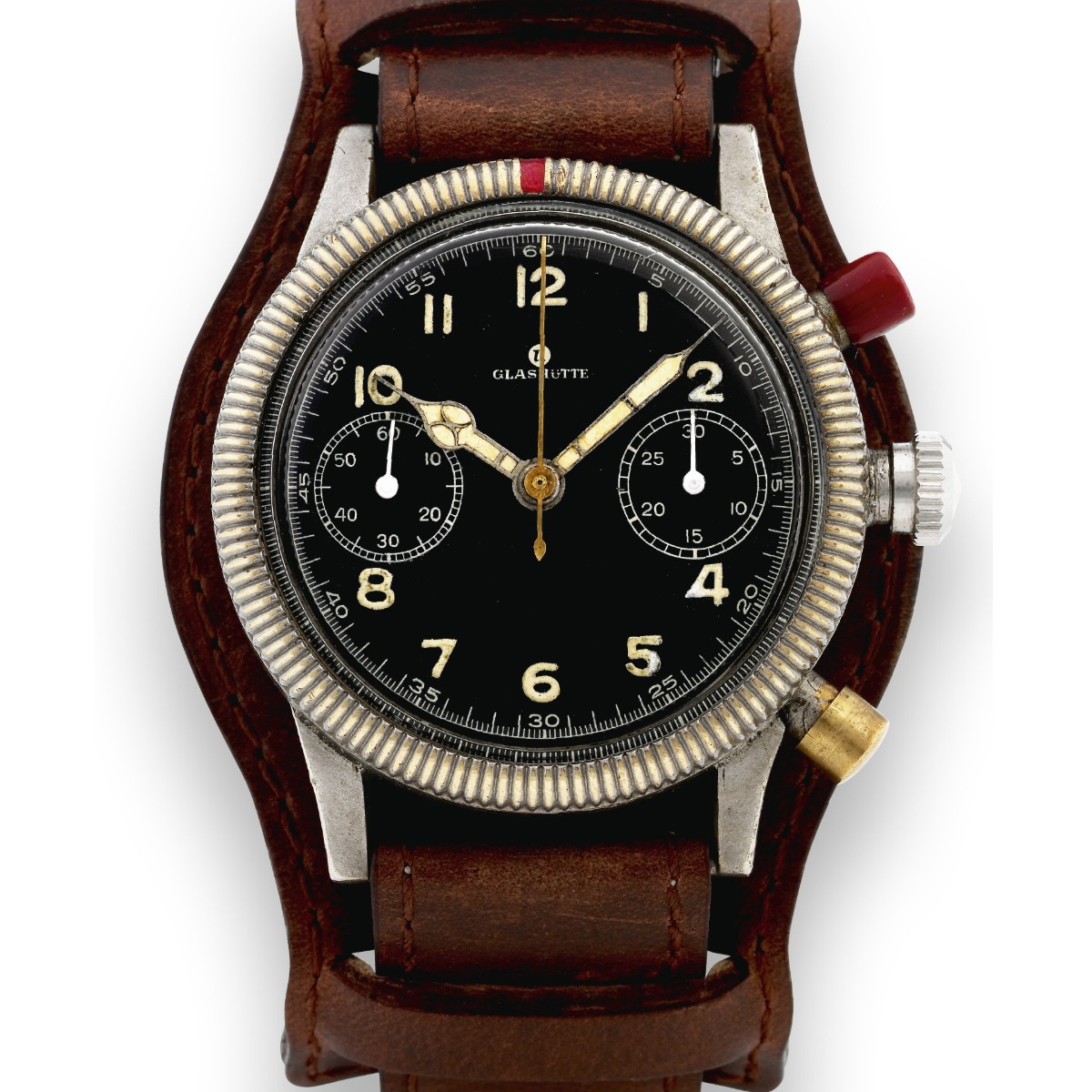
Tutima Glashütte pilot's chronograph
A Glashütte pilot's chronograph of about 1940, sold by Antiquorum.
Popular Models
In the collection as of October 2026.
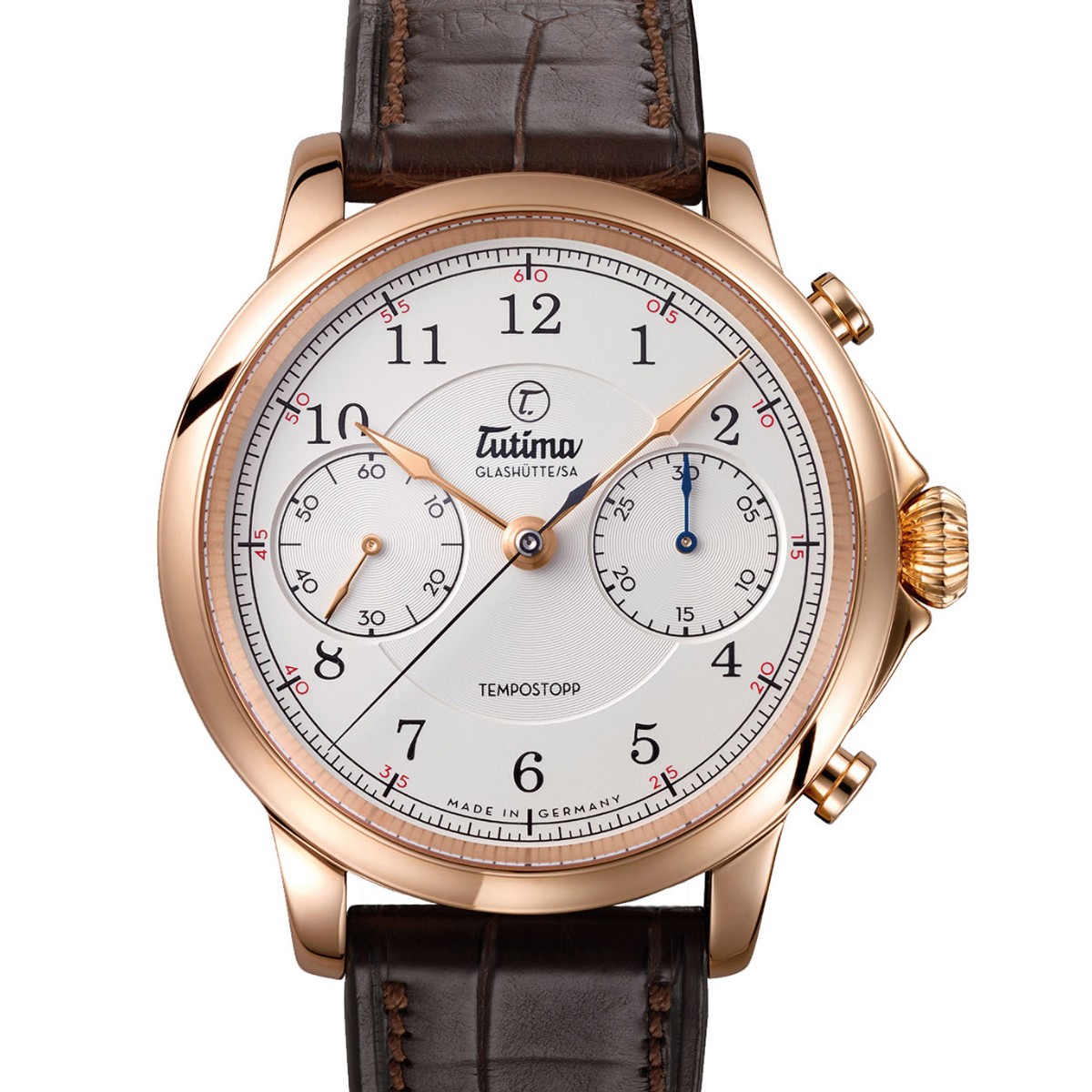
Tempostopp
A 43 mm rose-gold flyback chronograph with a silver dial; hand-wound calibre 659.
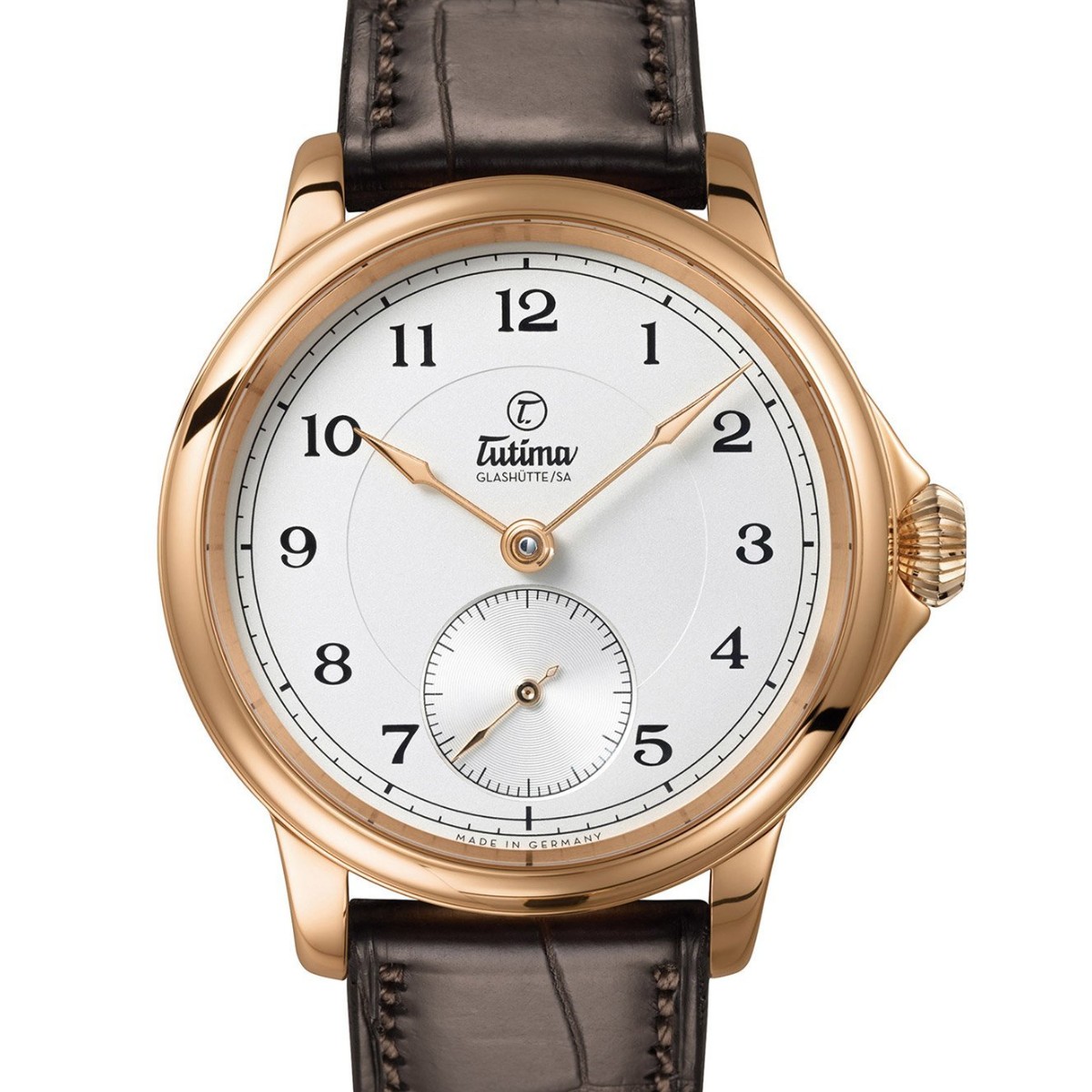
Patria Small Second
A 43 mm rose-gold dress watch with a silver dial; hand-wound calibre 617.
Sourcestutima.com · Tutima, Glashütte: The birth of a brand · Tutima, Glashütte: The roots of perfection · Tutima, Glashütte: The first Saxon era · Tutima, Glashütte: Saxony becomes Lower Saxony · Tutima, Glashütte: The circle begins to close · Tutima, Glashütte: Time needs time · Tutima, Glashütte (history overview incl. 2011 and 2013) · Antiquorum, New York 11 June 2009, lot 278: Tutima Glashütte aviator’s chronograph, c. 1940 · Antiquorum, New York 10 March 2010, lot 390: Tutima Glashütte aviator’s chronograph, c. 1940 · Tutima, Flieger Legacy T5 6405-01 · Tutima, Tempostopp 6650-01 · Tutima, Patria Small Second 6600-01