Dual time
A second time zone given a display of its own, an extra hour hand, a window, a second dial or a second set of hands, so local time and home time can be read side by side.
A dual-time watch shows two times on one wrist: the time where you are and the time at home. It is the cousin of the GMT, and the difference is in how the second time is shown. A GMT adds a single hand that turns once a day and is read against a 24-hour scale. A dual-time watch gives the second zone a display of its own, an extra hour hand, a window, a second dial or a whole second set of hands, so that it can be read as easily as the first.
Second hour hand
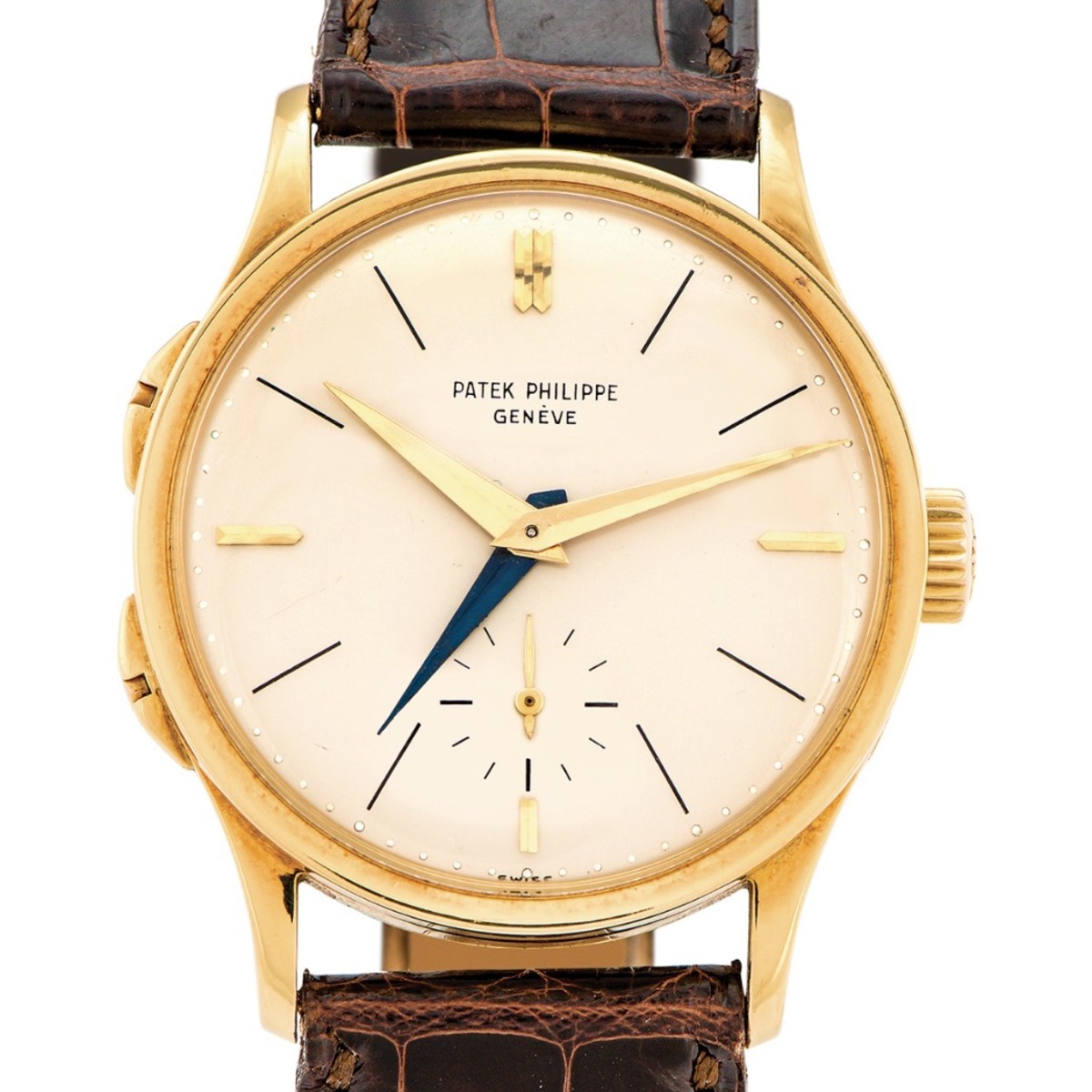
Two hour hands share the centre. The pushers move the local hand an hour at a time; the home hand and the minutes stay where they are.Patek Philippe 2597 (1962) and Travel Time
Home time in a window
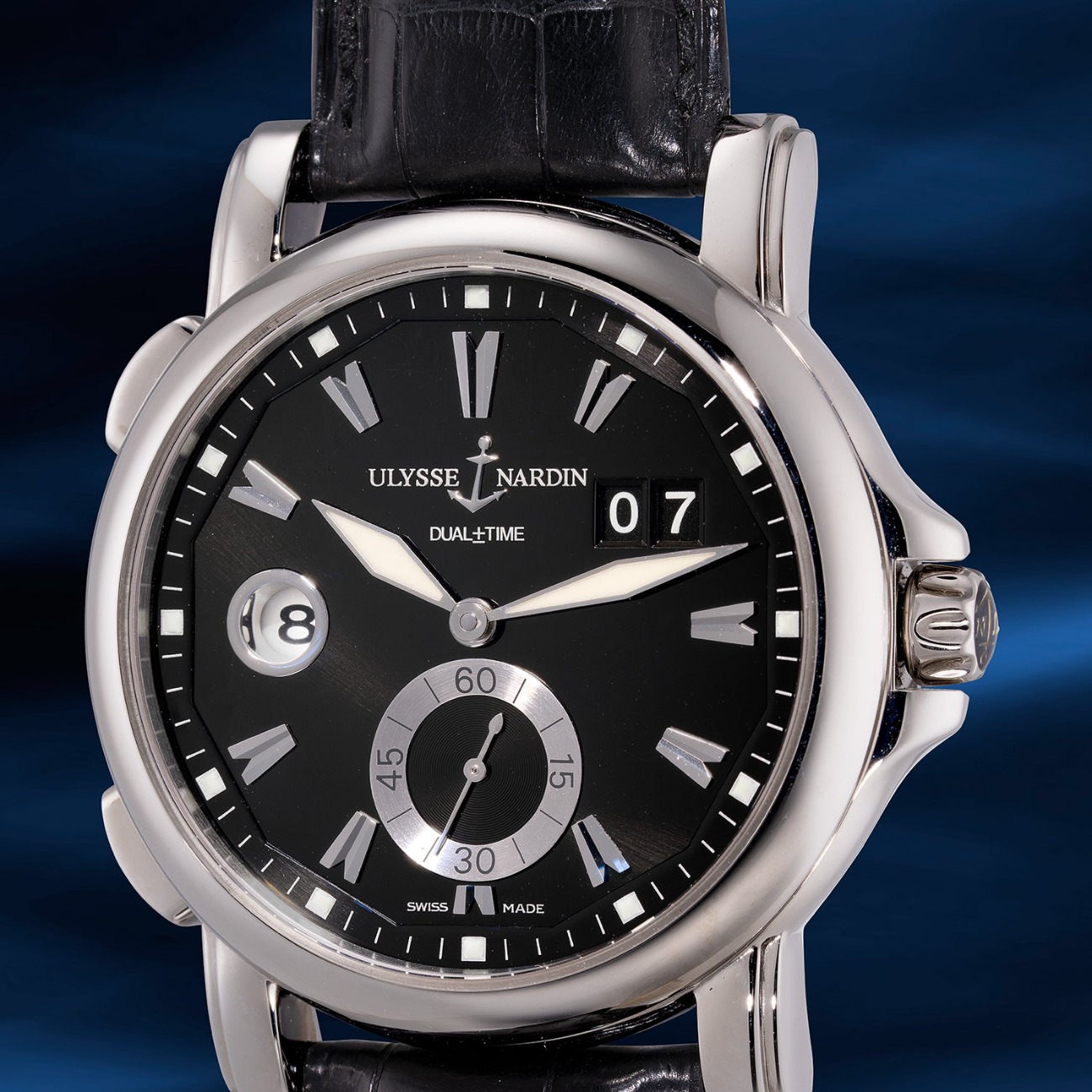
The main hands show local time and are set with pushers on the side of the case; home time stays in a small window, here in twenty-four-hour figures.Ulysse Nardin Dual Time
Two dials, one movement
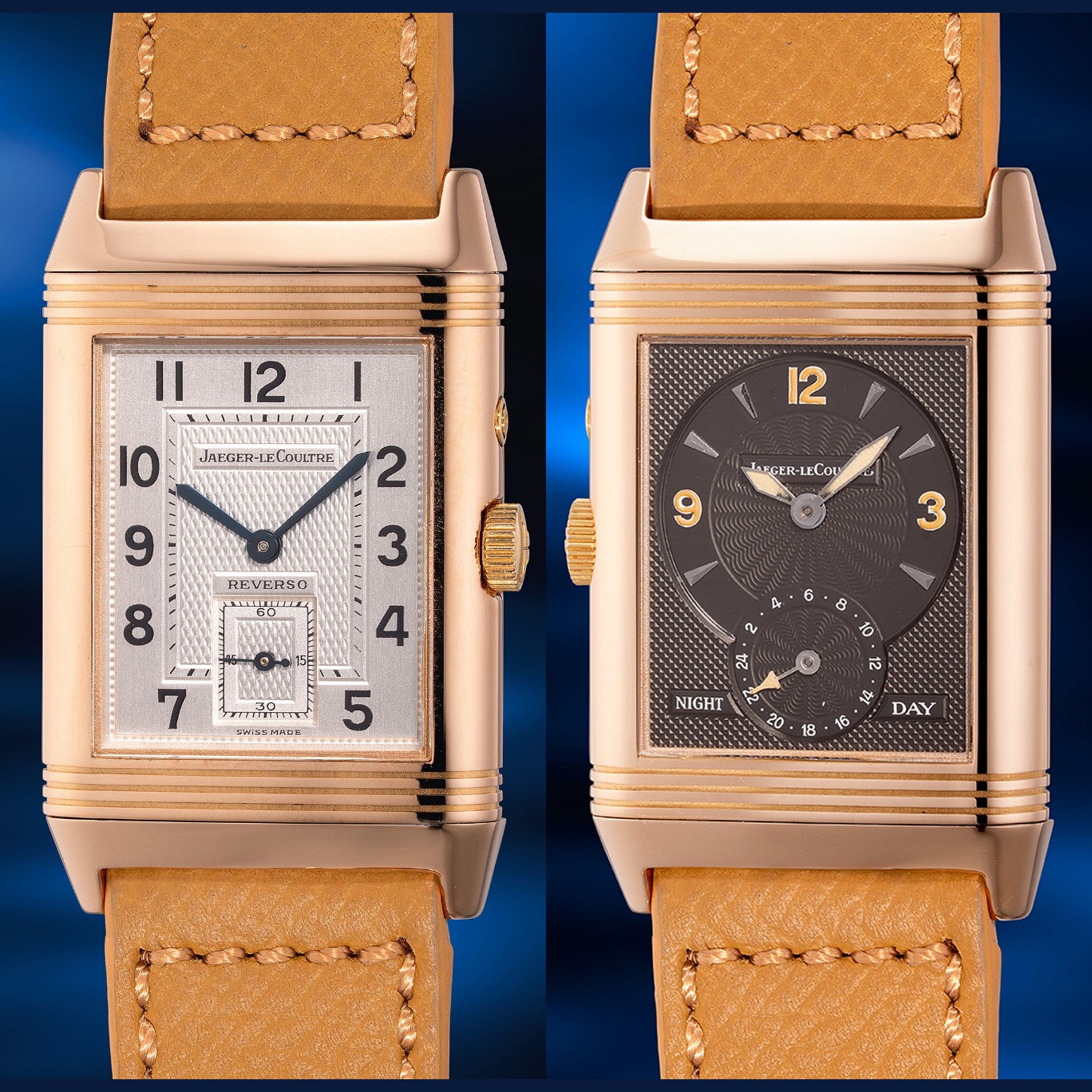
One movement drives a dial on each side of a reversible case. Turn the case over to read the second zone.Jaeger-LeCoultre Reverso Duoface, 1994
Two full sets of hands
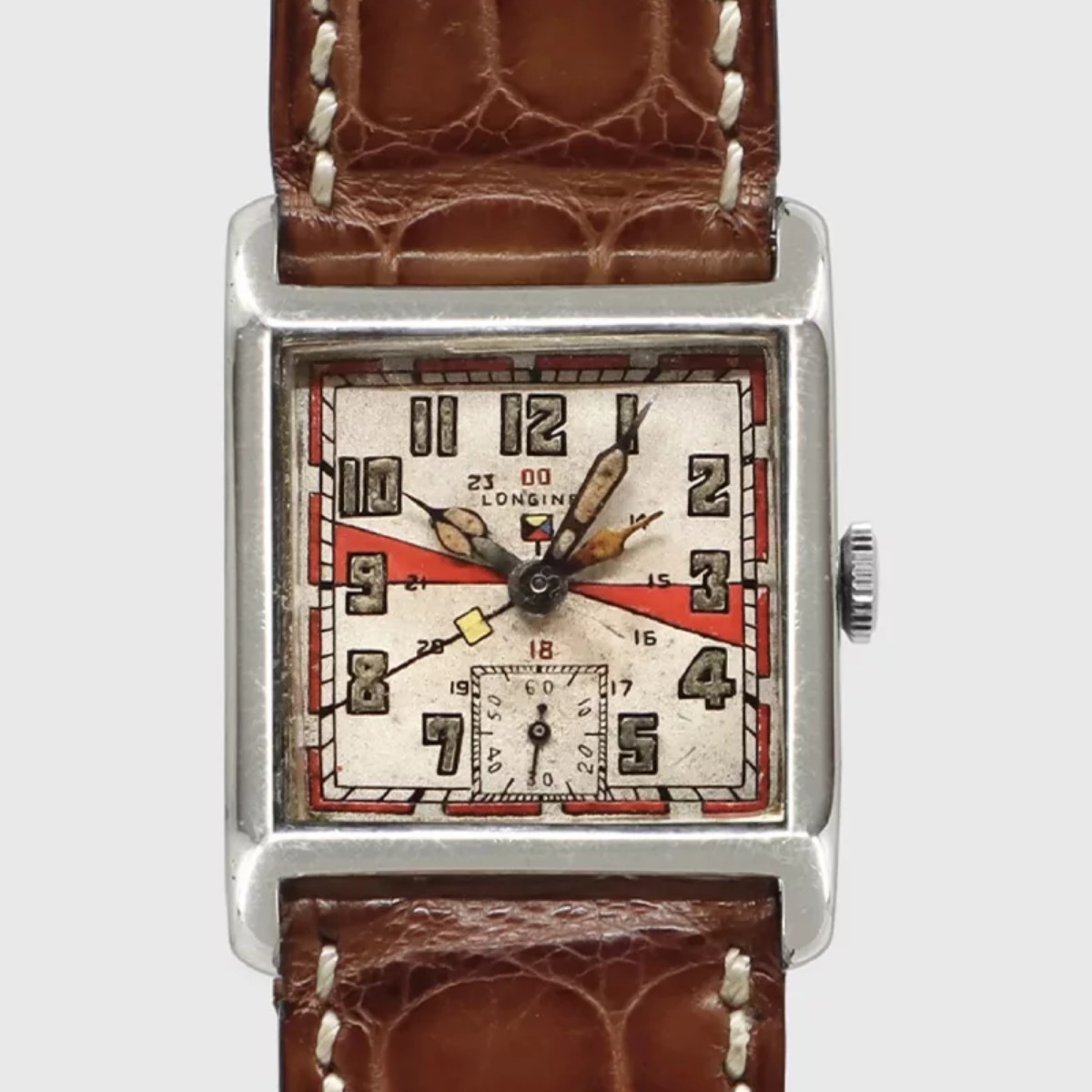
Each zone has its own hour and minute hand, with the seconds on a small dial. The only layout that can show a zone half an hour away.Longines, 1925
Longines made the first of them, by its own account, in 1925: a square wristwatch with a second, coloured set of hands for Greenwich time and the seconds moved to a small dial, meant for people who worked by the time at sea or in the air. Longines had made dual-time pocket watches before that, the Turkish watches of 1908, but the wristwatch put the second time where a navigator could read it without reaching into a pocket.
The idea came back in a refined form after the war. Patek Philippe released reference 2597 in 1958 with a single hour hand that two pushers move forward or back by exactly one hour, while the minutes and seconds keep running. From 1962 a second, blued hour hand stayed behind on home time. Patek still builds its Travel Time watches that way: the solid hand shows local time and is moved by the pushers, an open hand shows home time, and when the two times agree the hands lie one on top of the other. Small apertures marked local and home, white by day and blue by night, answer the question the twelve-hour dial leaves open.
Other makers found other routes. Jaeger-LeCoultre gave the Reverso a second face in 1994: one movement drives a dial on each side of the reversible case, so the wearer turns the watch over to read the other zone. Ulysse Nardin’s Dual Time keeps home time in a small window, in twenty-four-hour figures, and sets the hour with pushers on the side of the case.
The limits follow from the display. A second time read in twelve-hour form needs a day and night indicator or it is ambiguous, and with only an extra hour hand the minutes are shared, so zones that differ by half an hour or a quarter cannot be shown. A second complete set of hands solves that at the cost of a crowded dial; for more than two zones the answer is a world time watch.