Monopusher chronograph
A chronograph run by a single pusher, usually in the crown, that always does the same three things in the same order: start, stop, return to zero; the layout of the first wrist chronographs of the 1910s.
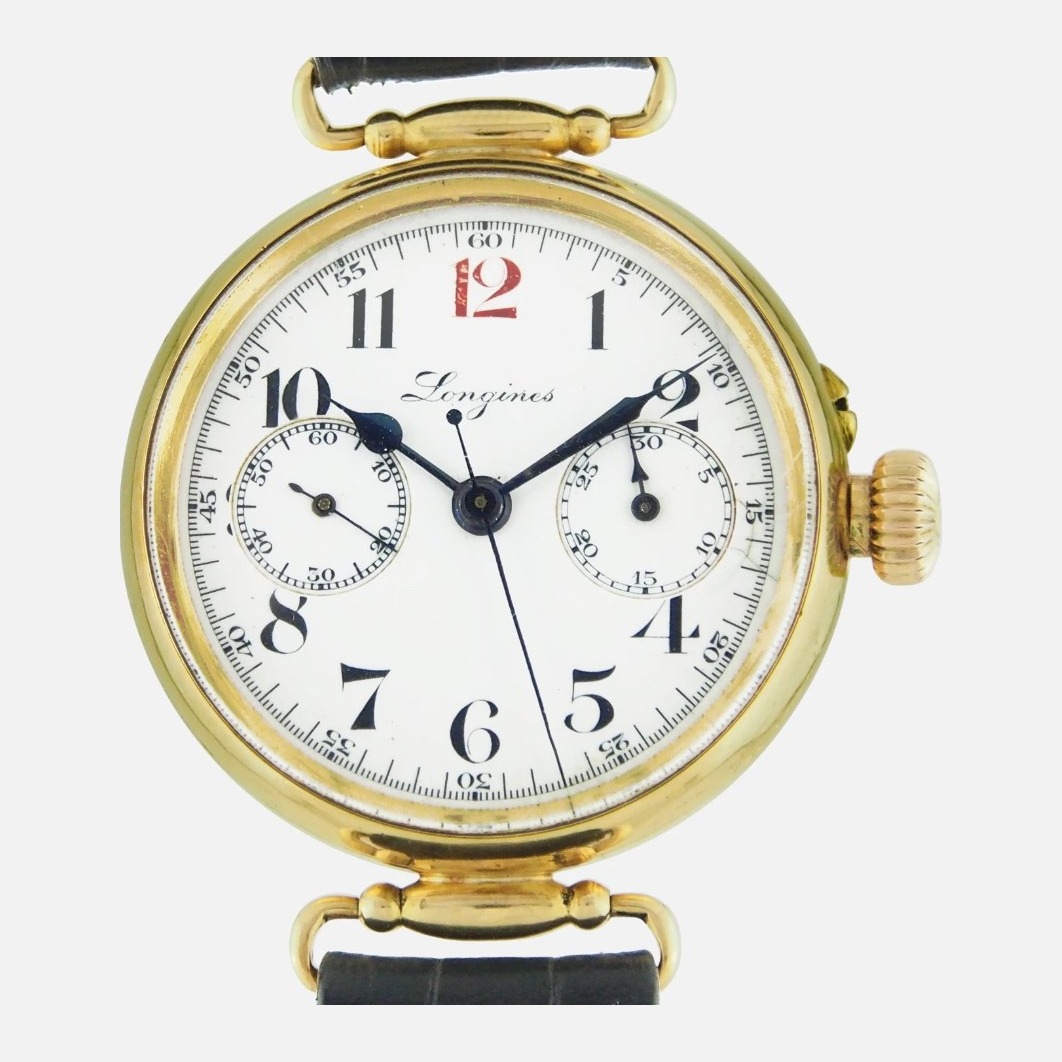
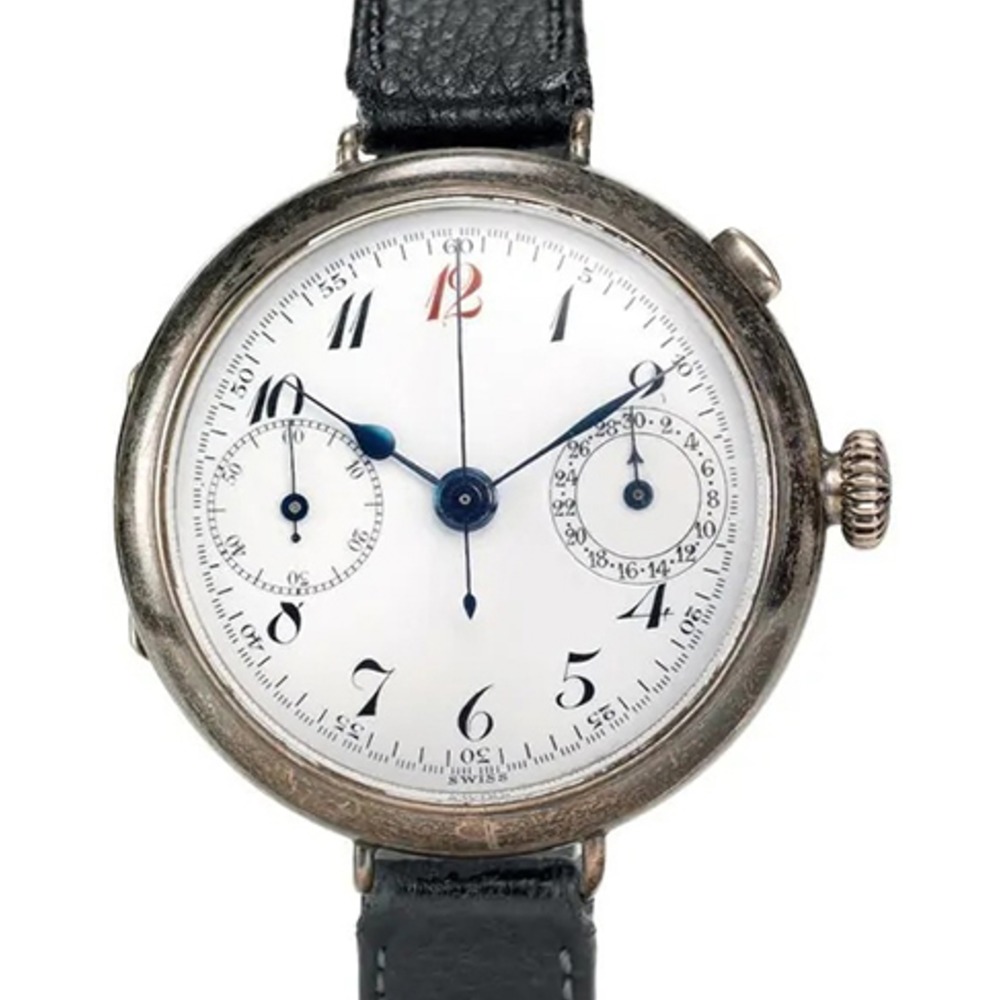
One controlThe first chronographs had one control. Most pocket chronographs of the nineteenth century worked their start, stop and reset through a single push-piece, usually in the crown. When the chronograph went onto the wrist in the 1910s, it took the arrangement with it.
MonopusherA watch with one pusher is a monopusher, or mono-poussoir, and for a generation it was simply what a chronograph was.
Column wheelThe mechanism is the same column wheel that runs any classic chronograph, advanced one tooth by every press. Its columns are arranged so that each step sets the levers in the next state. These states are clutch engaged and brake lifted, then clutch out and brake on, then the hammer dropped onto the heart cams.
Fixed orderWith one lever driving one wheel, the watch has no way of knowing what the wearer wants. It only knows what comes next.
The limitThat is the limitation. A monopusher cannot stop and then carry on. Once the hand is stopped, the next press sends it back to zero. So a timing interrupted for a pit stop or a hold on the runway is lost.
The cureThe cure was a second pusher, one for start and stop and another for reset only, which lets a timing be paused and resumed.
Out of the crownBreitling first moved the single pusher out of the crown, in a watch it dates to 1915.
1934Breitling added the second pusher in 1934. Two pushers soon became the norm.
RefinementThe monopusher survived as a refinement rather than a tool. A case with nothing but the crown is cleaner and has fewer openings. Making one lever do three jobs reliably is also harder than it looks. For both reasons, fine watchmakers have kept it in their catalogues.
Wrong instrumentFor anyone who needs to add up intervals, though, it remains the wrong instrument.