
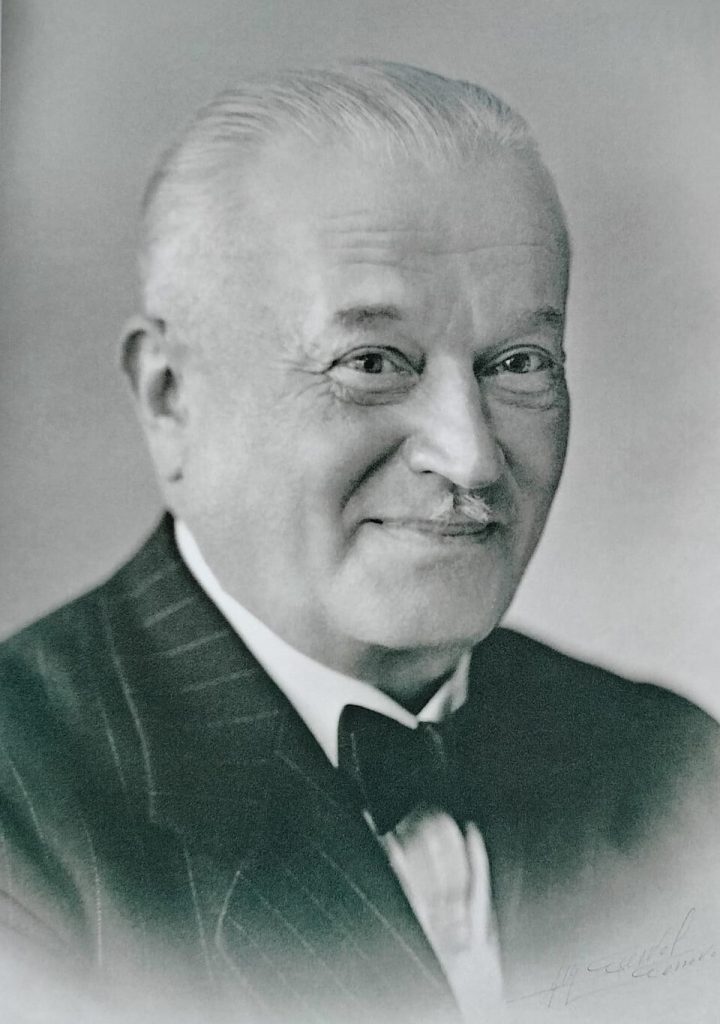
Beginnings
Wilsdorf was born in Kulmbach in 1881 and orphaned at twelve. He learned languages at school in Coburg, went to work for a pearl exporter in Geneva, then in 1900 joined the watch exporter Cuno Korten in La Chaux-de-Fonds as English correspondent. In 1903 he moved to London, and on 22 June 1905, with his brother-in-law Alfred Davis, founded Wilsdorf & Davis at 83 Hatton Garden, importing Swiss movements from Aegler of Biel and casing them for the British market.
What he changed
He registered the name Rolex in 1908 and spent the next fifty years making it mean something. In 1910 an Aegler movement for Rolex earned a first-class rating certificate at Bienne, and in 1914 another won a Kew Class A certificate with 77.3 marks, the first for a wristwatch, at a time when the serious watch was still a pocket watch. In 1926 he bought the patent of Perregaux and Peret for a screw-down crown and case and called it the Oyster; in 1927 he put one on the wrist of the swimmer Mercedes Gleitze and the story on the front page of the Daily Mail. In 1931 Rolex patented the Perpetual rotor, and in 1945 the Datejust arrived. In 1945, the year after his wife died, he put all his shares into the Hans Wilsdorf Foundation, which owns Rolex to this day.
Why it matters now
Wilsdorf was not a watchmaker; Aegler made the movements and stayed independent until 2004. What he invented was the idea that a wristwatch should be certified, sealed and advertised, and the whole modern industry sells watches his way.
Worth knowingHe said the name Rolex came to him on the top deck of a horse-drawn omnibus in Cheapside, whispered by a genie. The company still tells the story.
Historian’s noteRolex says the 1910 watch was the first wristwatch to receive a Swiss chronometer certificate; the researcher David Boettcher shows the 1910 advertisement speaks of a montre, not a wristwatch, tested in pocket-watch positions. Gleitze’s successful Channel swim of 7 October 1927 was made without the Oyster; she wore it on the unsuccessful “vindication swim” a fortnight later. The rotor Rolex patented in 1931 followed Harwood’s automatic of 1924, as Rolex itself acknowledged in print in 1956.
SourcesBoettcher, Rolex · Rolex · SJX · Hans Wilsdorf Foundation