Timeline / The first two-pusher chronograph
The first two-pusher chronograph
First
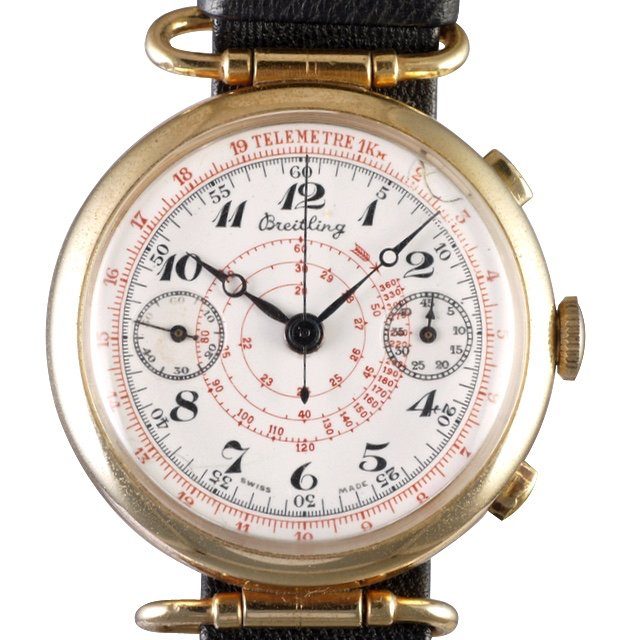
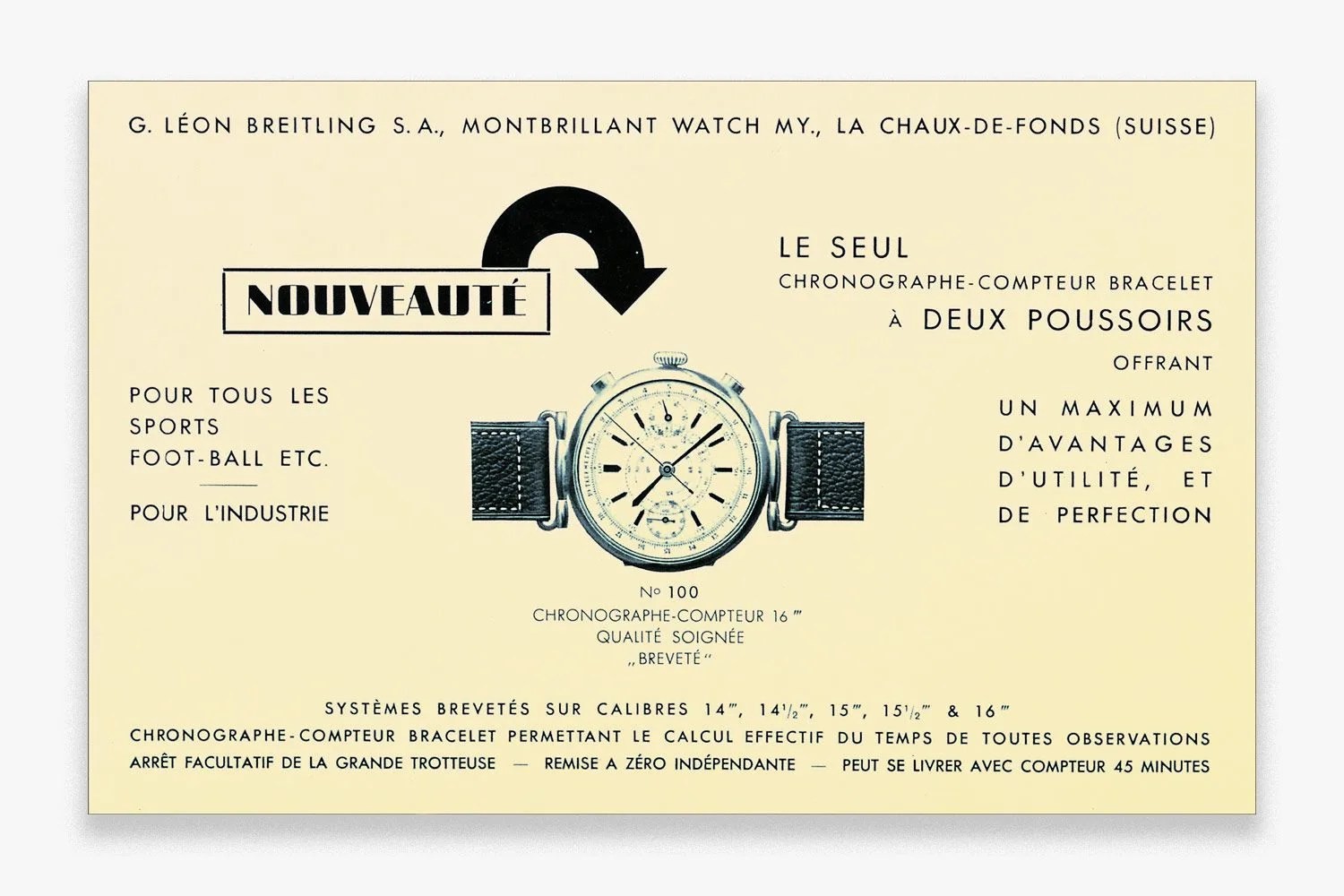
Breitling gave the chronograph a second push-piece, so that stopping and resetting became separate controls.
- The need
- With a single pusher the sequence is fixed: start, stop, reset. A timing cannot be stopped, read and then continued.
- Made by
- Breitling, under Willy Breitling.
- What was new
- Start and stop on the pusher at two o’clock; return to zero on a new pusher at four o’clock.
- Worth knowing
- It made adding up several intervals possible, a pilot timing the legs of a flight, for example. Nearly every mechanical chronograph since uses this layout.
Historian’s noteBreitling’s Swiss patent CH 172129 for a wrist chronograph with two independent pushers was filed on 6 October 1933 and published on 30 September 1934. This fixes the date. Longines 13.33Z watches of about 1929 with two pushers and a flyback have been identified. That would put the layout several years earlier. The patent shows what Breitling did first, not necessarily who did it first.
SourcesBreitling · Swiss patent CH 172129
Suggest a correction