Timeline / Watchmaking comes to Glashütte
Watchmaking comes to Glashütte
Moment
On 7 December 1845 Ferdinand Adolph Lange took on fifteen apprentices in Glashütte with a loan from the Saxon state, and a worked-out mining town became the centre of German watchmaking.

- The need
- Glashütte’s silver mines were exhausted and the town was poor; the Saxon government wanted an industry for the Erzgebirge, and Lange wanted to make watches on a system, not one at a time.
- Made by
- Ferdinand Adolph Lange, with his partner Adolf Schneider; the state lent about 6,700 thalers for tools and training.
- What was new
- Watchmaking organised as a chain of specialist trades, each in its own home workshop, with Lange building the tools, training the workers and measuring every part in millimetres instead of the Paris ligne. The three-quarter plate, settled about 1864, became the Glashütte signature.
- Worth knowing
- The apprentices were mostly straw-plaiters. Lange was mayor of the town for nearly twenty years, and his sons made the firm A. Lange & Söhne in 1868. The Soviet administration expropriated it in 1948; Walter Lange re-registered it on the same date, 7 December, in 1990.
- Where it is now
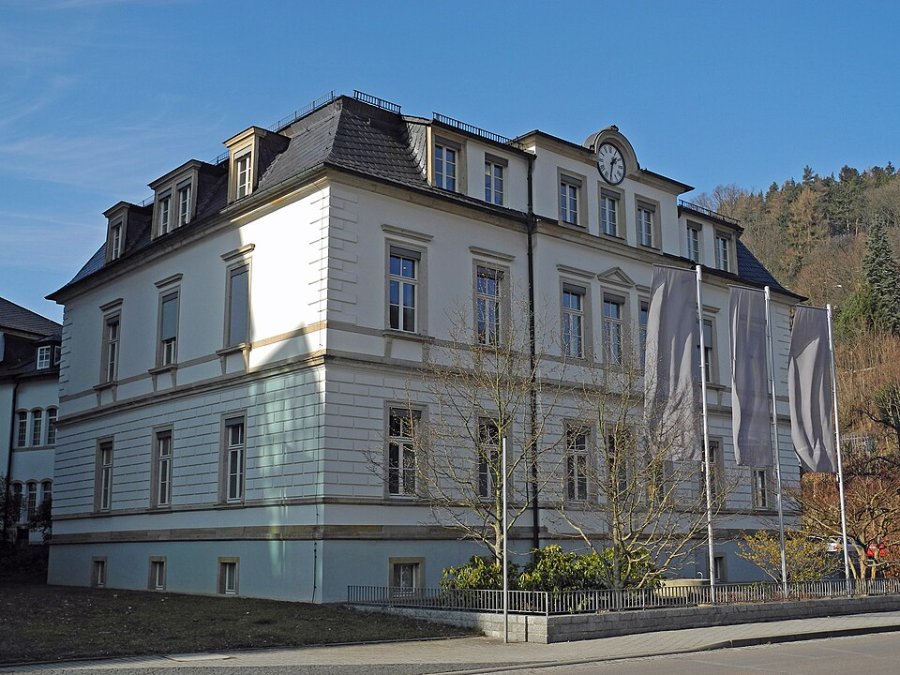
- Glashütte, Saxony: A. Lange & Söhne, Glashütte Original, NOMOS and others, and the Deutsches Uhrenmuseum in the old watchmaking school.
Historian’s note“The first German watch factory” is a later phrase; the Neue Deutsche Biographie stresses that Lange ran a system of home workshops, not a factory. The loan is variously given as 5,580 thalers plus a 1,120-thaler subsidy, 6,700 in all, or 7,820, which double-counts. See the page on Ferdinand Adolph Lange.
SourcesNeue Deutsche Biographie · Saxon State Archives · glashuetteuhren.de
Suggest a correction