Timekeeping / A float and a gear
A float and a gear
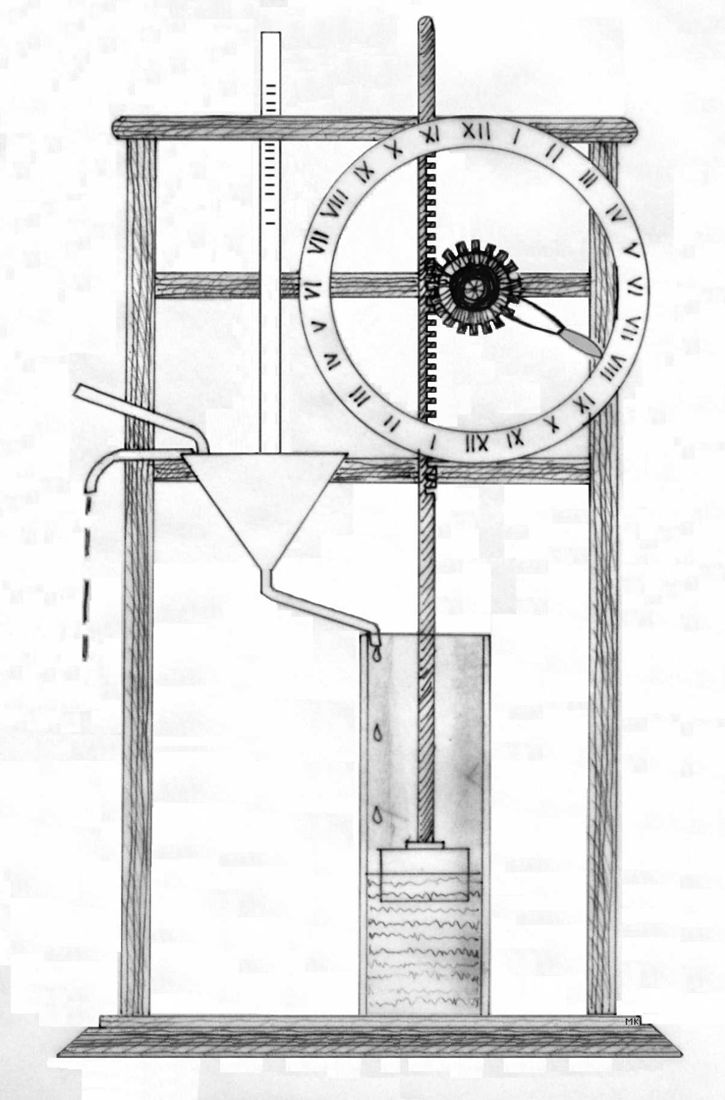
Ctesibius lets water lift a float; a rack turns a toothed wheel and a figure points to the hour.
- The need
- A draining bowl only sinks; nothing on it points to the hour. Vitruvius tells us that Ctesibius, the son of a barber in Alexandria, worked out the principles of the water clock.
- How it worked
- Water enters through a hole drilled in gold or a gem, so that it never wears or clogs. The steady inflow lifts an inverted bowl, the float. A toothed rod on the float turns a toothed drum, and a small figure rising with it points a rod at the hours marked on a column. Vitruvius mentions no dial; the clock face with a hand, as in the engraving, is a later way of showing the same idea.
- What it changed
- For the first time flowing water is turned into rotary motion that can drive a pointer, and also figures, falling pebbles and trumpets. Every geared clock display descends from this idea.
- Where it is now
- No ancient example survives. The description is in Vitruvius, On Architecture, book 9; the date rests on a Greek epigram that places a device by Ctesibius in the shrine of Arsinoe, about 270 BC.
SourcesVitruvius, De architectura 9.8 (Morgan translation) · Athenaeus 11.497 (Hedylus’ epigram) · Kenny, “The Date of Ctesibius”, Classical Quarterly 26 (1932)