Timekeeping / The gift from Baghdad
The gift from Baghdad
In 807 the caliph Harun al-Rashid sent Charlemagne a brass water clock that rang the hours.
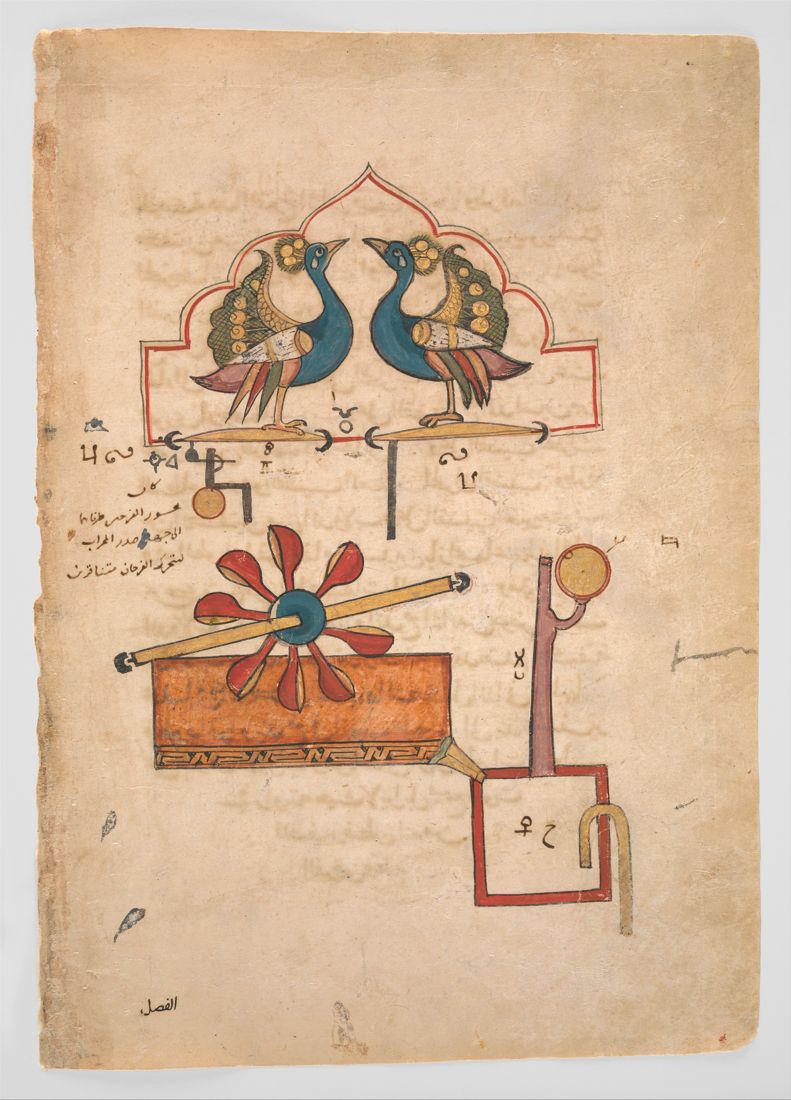
- The need
- In 807 the caliph of Baghdad, Harun al-Rashid, sent envoys to the Frankish emperor Charlemagne at Aachen. Gifts between courts advertised a ruler’s wealth and skill; the Frankish annalist lists tents, silks, perfumes and balsam before dwelling on the clock.
- How it worked
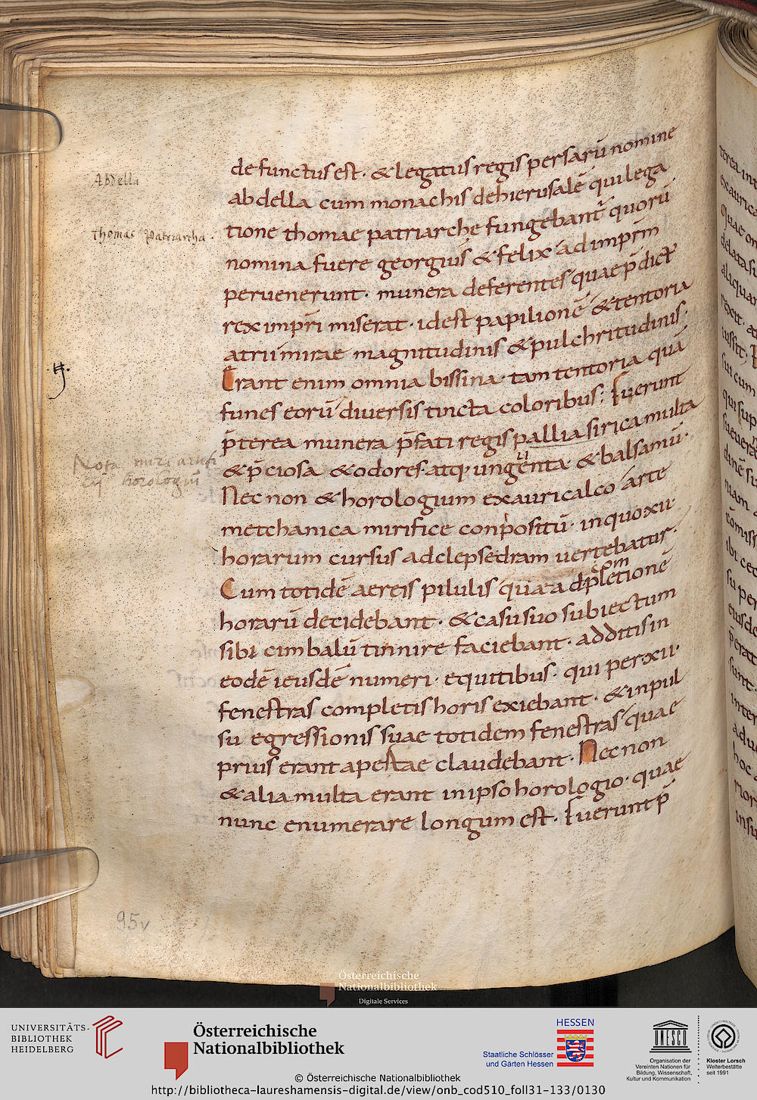
- The annal describes it: a clock of brass, made with wonderful mechanical art, in which the course of the twelve hours moved by a water clock. Twelve small bronze balls fell at the completion of each hour and rang a cymbal beneath; twelve horsemen came out of twelve windows at the hours and shut the windows behind them. There were many other things in it, the annalist adds, too long to list.
- What it changed
- The earliest Western description of a striking clock with moving figures, and a glimpse of the Islamic world’s water-clock tradition that al-Jazari would write down four centuries later.
- Where it is now
- The clock is lost. The account survives in the Royal Frankish Annals; the page shown is from a copy of about the year 1000 in the Austrian National Library, Vienna.
SourcesAnnales regni Francorum a. 807, ed. Kurze (MGH 1895), pp. 123–124 · ÖNB Cod. 510, fol. 95v