Timekeeping / Twelve hours of night
Twelve hours of night
Star tables inside Egyptian coffins split the night into 12 hours by the rising of decan stars.
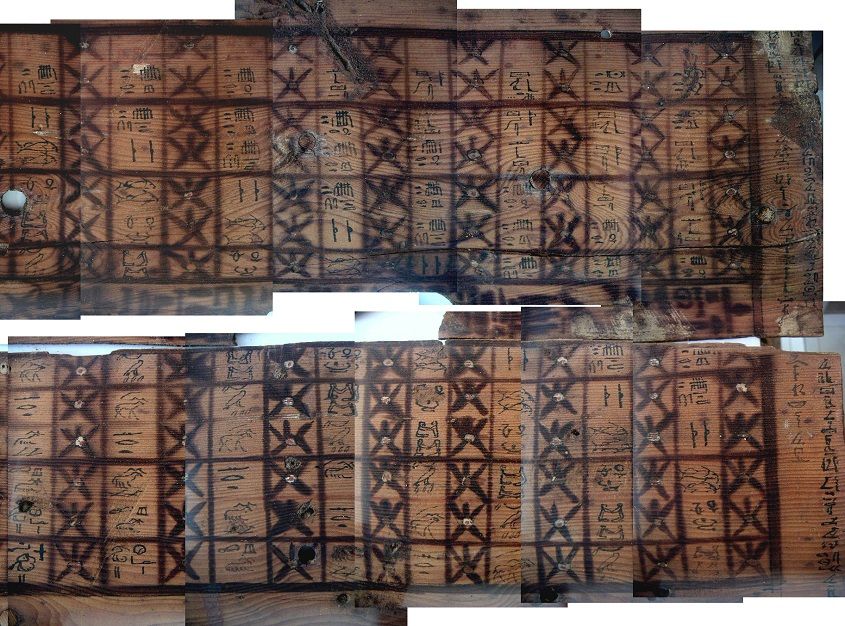
- The need
- The Egyptians wanted to know the hours of the night, for temple rites and for the dead, who were thought to travel with the sun through the night sky. The tables were painted where only the dead could see them: inside the lid of the coffin.
- How it worked
- Thirty-six bright stars or star groups, the “decans”, rise one after another along the eastern horizon, each about ten days after the last. In any one night twelve of them rise. The table is a grid: pick the column for the date, read down, and the decan just rising tells you which hour of the night it is, first to twelfth.
- What it changed
- This is where the twelve-hour night comes from. The oldest tables, from Asyut, are about 2150 BC. Daylight was at first counted as ten hours plus two of twilight; in the New Kingdom it too became twelve, and the day of 24 hours was born.
- Where it is now
- Museo Egizio, Turin (S. 15744/01), one of the few star tables found outside Asyut. The museum’s own photographs show the coffin’s side boards; the lid is recorded by the Ancient Egyptian Astronomy database at McMaster University.
SourcesSymons, Ancient Egyptian Astronomy (Leicester 1999) · McMaster AEA, T7 – G1T · Museo Egizio, S. 15744/01