Timekeeping / The courtroom timer
The courtroom timer
Athenian courts timed speeches by water jar: equal shares, and bigger cases got more water.
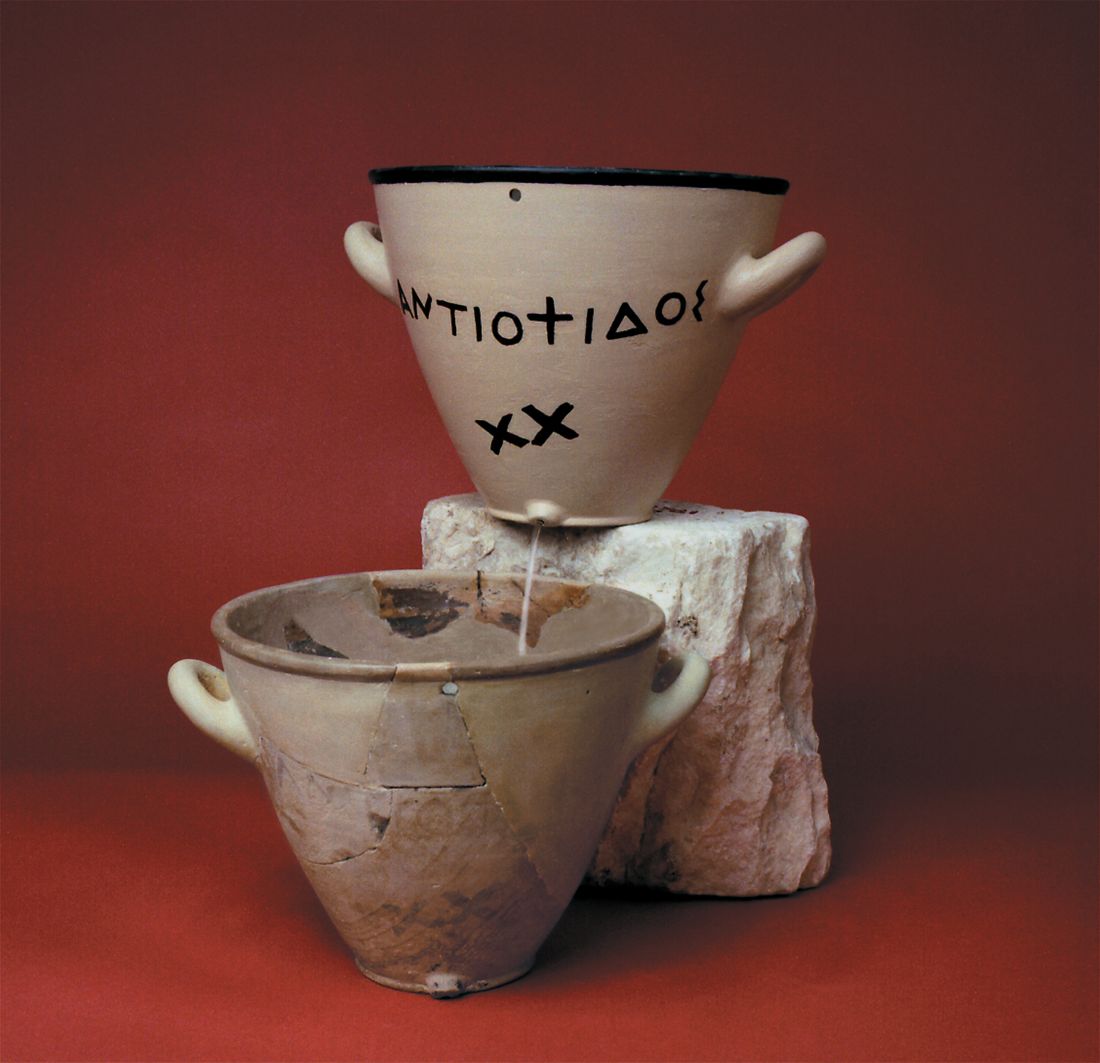
- The need
- Athenian juries heard several private suits a day, so each speaker had to be limited and seen to be treated fairly. Aristotle’s Constitution of the Athenians sets out the rule: water allotted by the value of the suit, and the same measure for each side.
- How it worked
- Unlike the Karnak clock this jar has no scale. It is filled to a hole marking two choes, about 6.4 litres, and empties through a bronze tube near the base in about six minutes. An official put his hand over the tube while documents were read out, so that reading time was not charged against the speaker.
- What it changed
- A simple, portable way to measure a fixed interval rather than tell the hour, the same job the sand glass would do in the Middle Ages. It is the physical counterpart of the written court rules.
- Where it is now
- Found in 1933 in a well beside the Tholos in the Athenian Agora; Agora Museum, Athens.
SourcesAristotle, Constitution of the Athenians 67 · Young, “An Athenian Clepsydra”, Hesperia 8 (1939) · Agora Excavations, P 2084