Timeline / The first watch on the Moon
The first watch on the Moon
Moment
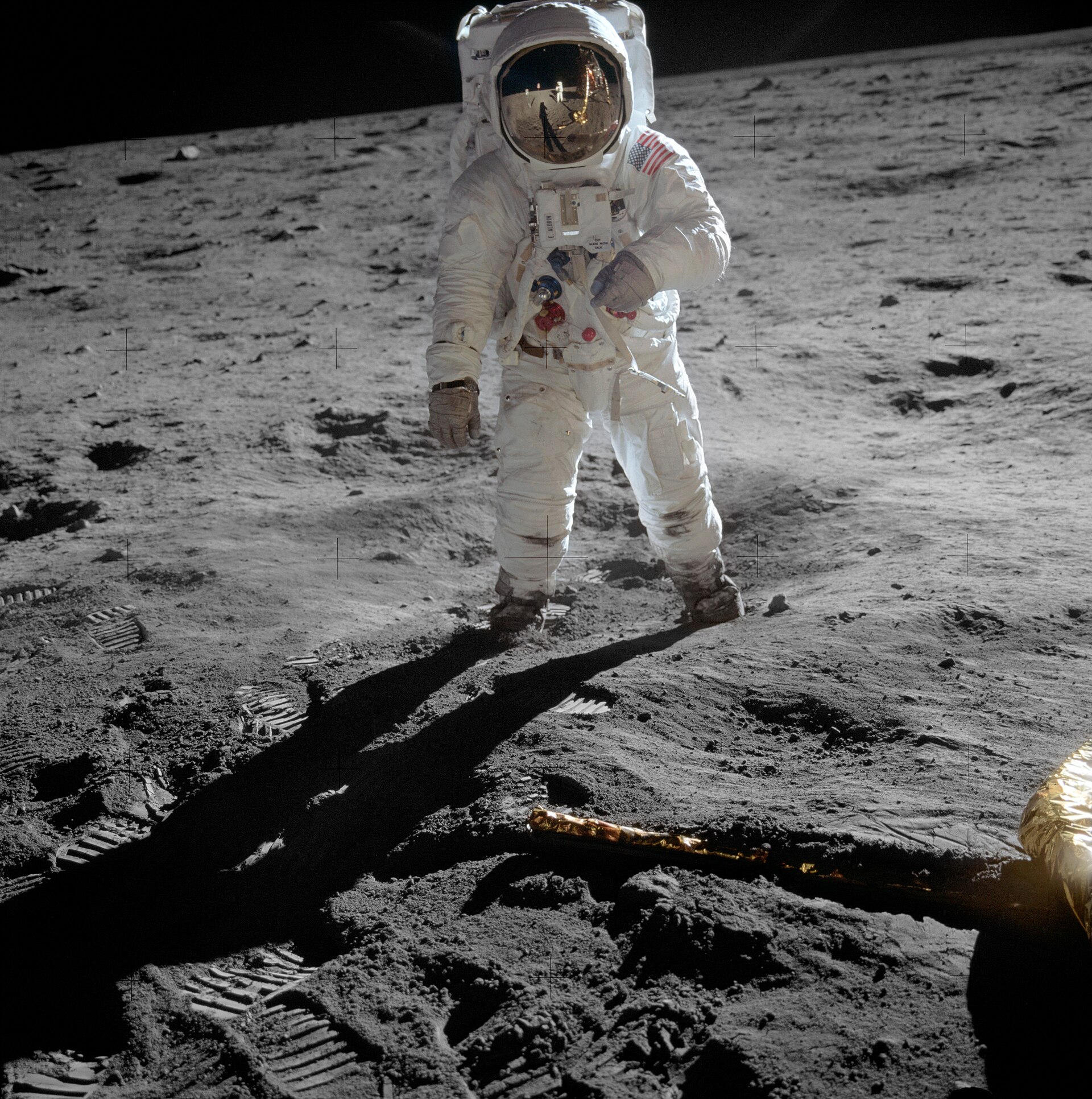
On 21 July 1969 Buzz Aldrin stepped onto the Moon wearing an Omega Speedmaster; Neil Armstrong had left his in the lunar module.


- What happened
- At 02:56 UTC on 21 July 1969 Neil Armstrong stepped onto the Moon, and nineteen minutes later Buzz Aldrin followed him. Aldrin was wearing his NASA-issued Speedmaster. Armstrong had left his inside the lunar module, as a back-up for the cabin timer, which had failed.
- Who
- Omega, Biel, Switzerland, made the watch; NASA chose it. In late 1964 NASA asked several makers for chronographs and tested them from October 1964 to March 1965 for heat, cold, vacuum, shock and vibration. Only the Speedmaster passed, and it flew first on Gemini 3 in March 1965.
- Why it mattered
- A wristwatch became flight equipment. Every American lunar landing from 1969 to 1972 was timed on the same hand-wound chronograph, and the Speedmaster has been called the Moonwatch ever since.
- Worth knowing
- Reference ST 105.012 with the manual column-wheel calibre 321, a 42-mm asymmetric case that shields the crown and pushers, and a plastic crystal, chosen because glass could shatter in the cabin.
- Where it is now
- Armstrong’s watch is in the Smithsonian National Air and Space Museum in Washington. Aldrin’s was lost in the post on its way to the Smithsonian in about 1971 and has never been found.
Historian’s noteOmega’s own pages do not say which reference each astronaut wore; the Omega Museum and independent research put both Apollo 11 watches at ST 105.012. NASA’s Apollo Lunar Surface Journal confirms that Armstrong’s watch stayed in the module.
SourcesNASA Apollo Lunar Surface Journal · Smithsonian · Omega
Suggest a correction