
Longines
- Group
- Swatch Group.
- Headquarters
- Saint-Imier, Switzerland.
- Founded
- 1832
- Founder
- Auguste Agassiz
- Known for
- HydroConquest, Master Collection, Spirit, Legend Diver, Conquest.
- Scale
- About 780,000 watches, CHF 920m in 2025; 7th among Swiss brands (estimate).
Lineage and calibres
- 1832
Auguste Agassiz set up a comptoir d’établissage (watch assembly and trading office) in Saint-Imier, the business Longines dates its founding to.
- 1867
Agassiz’s nephew and successor Ernest Francillon opened a factory on a site known locally as Les Longines. It brought the stages of watch production under one roof and gave the firm its name.
- 1878
Longines produced its first chronograph.Calibre
- 1889
Francillon registered the Longines name and the winged hourglass as a trademark.
- 1913
Longines made an early wrist chronograph for Russian pilots, powered by its calibre 19.73N.Calibre
- 1936
Longines introduced the 13ZN chronograph calibre, designed as a flyback chronograph.Calibre
- 1954
Conquest, which Longines calls its first product family, was registered on 3 April 1954.
- 1969
Longines says it launched one of the first quartz wristwatches.
- 1998
SMH, the group formed by merging ASUAG (which included Longines) and SSIH, was renamed The Swatch Group Ltd., of which Longines remains a member.
Contributions to horology
- 1878
Chronographs and sports timing
Longines’ first chronograph of 1878 was a monopusher pocket watch for timing sport. Longines says its 20H calibre was the first mechanism it made for precision timing. In 1910 it made a stopwatch beating at 36,000 vibrations per hour that measured to a tenth of a second. Swatch Group says Longines introduced the first timing mechanism triggered automatically by an electric wire in 1912.
- 1889
The winged hourglass trademark
Francillon registered the Longines name and winged hourglass in 1889, after first registering a mark under the Swiss trademark law of 1880. The firm had used the mark since 1867. Longines says it is the oldest watch brand trademarked in the International Registry at WIPO. Swatch Group calls it the oldest trademark still in use in its original form.
- 1925
Dual time zone wristwatch
Longines dates its first dual time zone wristwatch to 1925, which it commemorated with the Spirit Zulu Time 1925 in 2025. It had earlier filed a patent, in 1911, for a pocket watch showing two time zones.
- 1931
Lindbergh Hour Angle Watch
After timing Charles Lindbergh’s 1927 solo transatlantic flight, Longines produced the Hour Angle Watch he conceived, with production starting in 1931 (ref. 3210, calibre 18.69N). Longines describes it as the first wristwatch with an engraved rotating bezel.
- 1936
The 13ZN flyback chronograph
Longines filed a patent for its flyback mechanism in 1935, granted in 1936. Longines fitted the column-wheel calibre 13ZN to the flyback chronograph ref. 3770 from 1936. Longines calls this the world’s first patented chronograph with flyback function. Phillips notes almost all 13ZN-based chronographs sold had the flyback.
From the archive
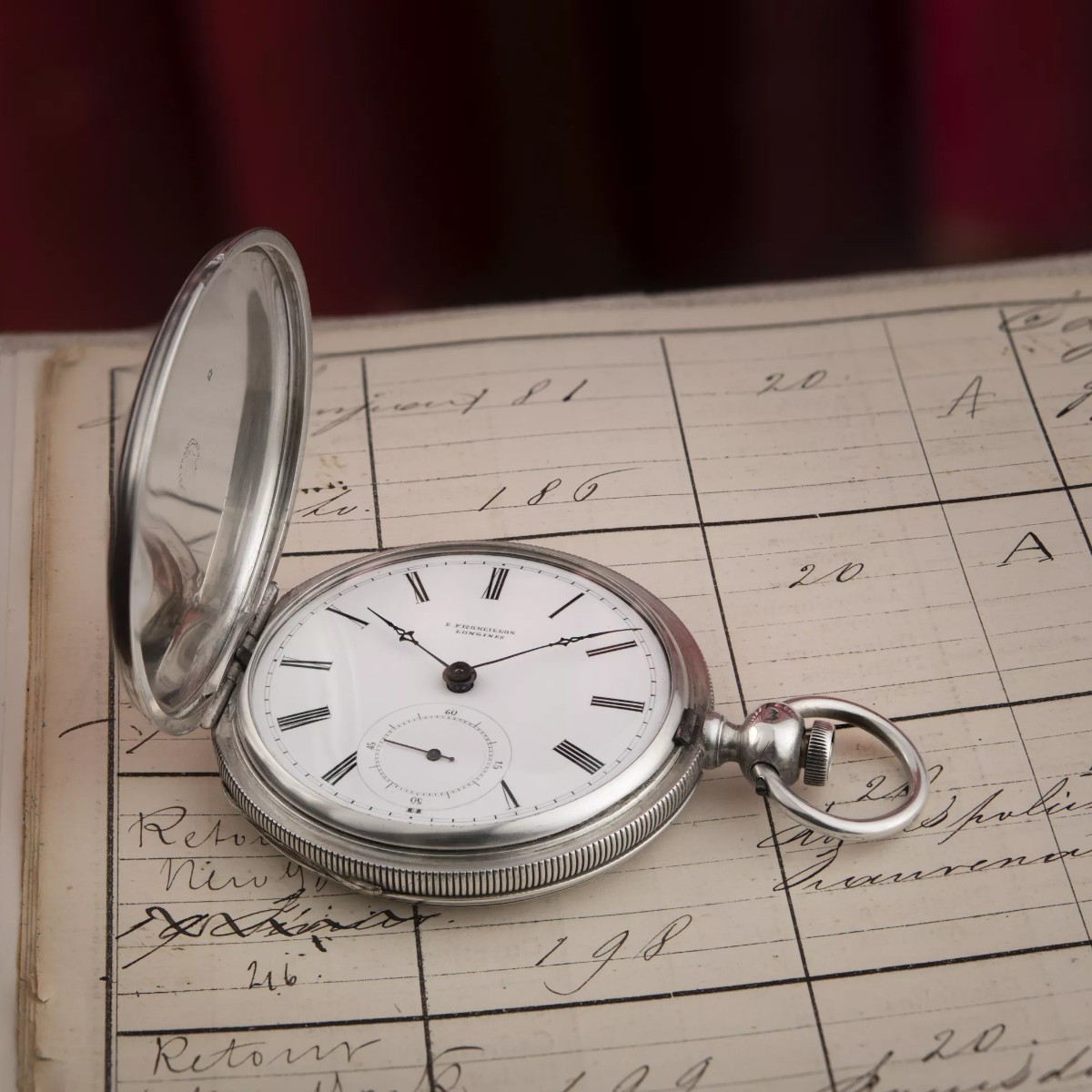
No. 183
An 1867 silver pocket watch, which Longines calls the oldest Longines found to date.
Popular Models
In the collection as of October 2026.
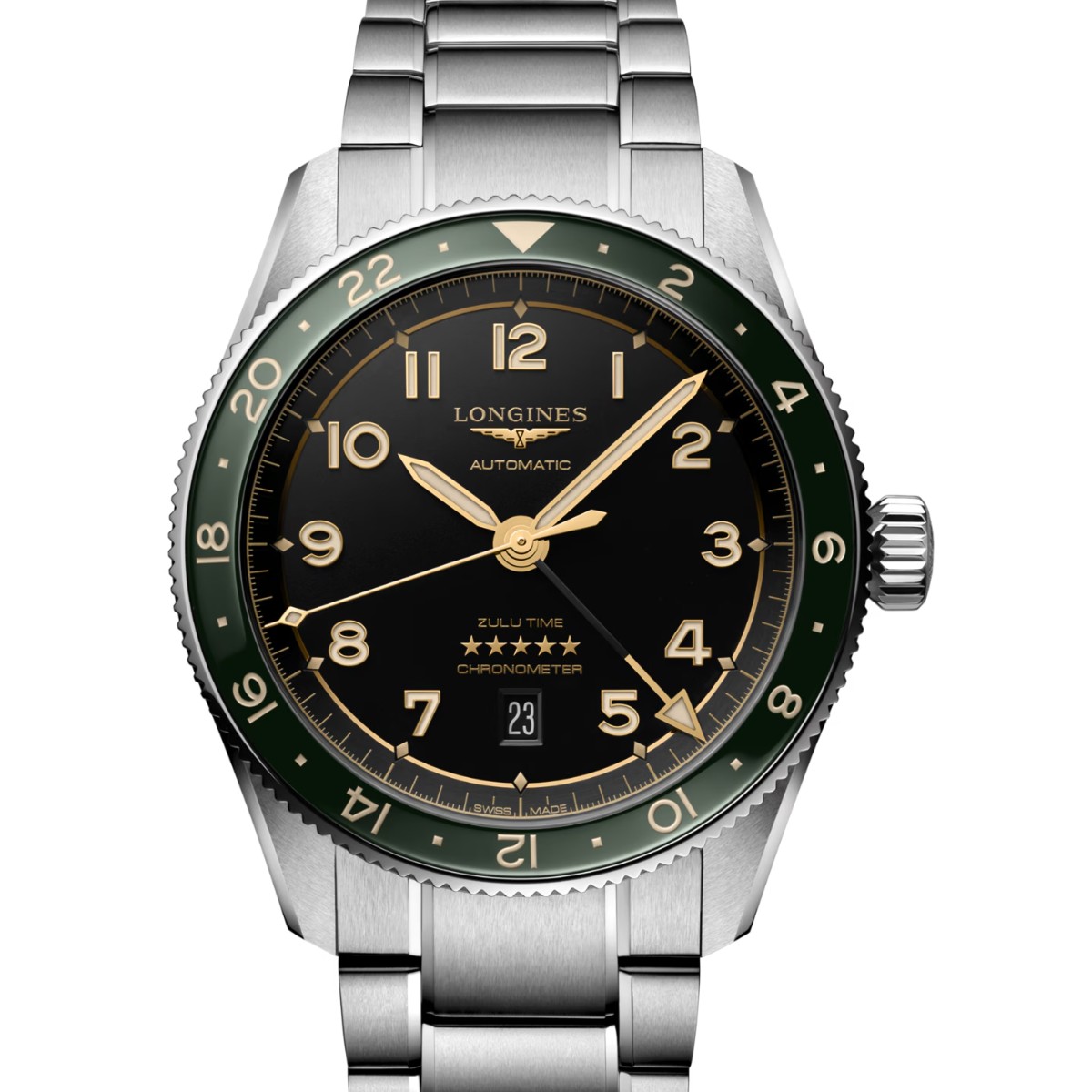
Spirit Zulu Time 42
A 42 mm steel GMT with a green bezel and anthracite dial; COSC calibre L844.
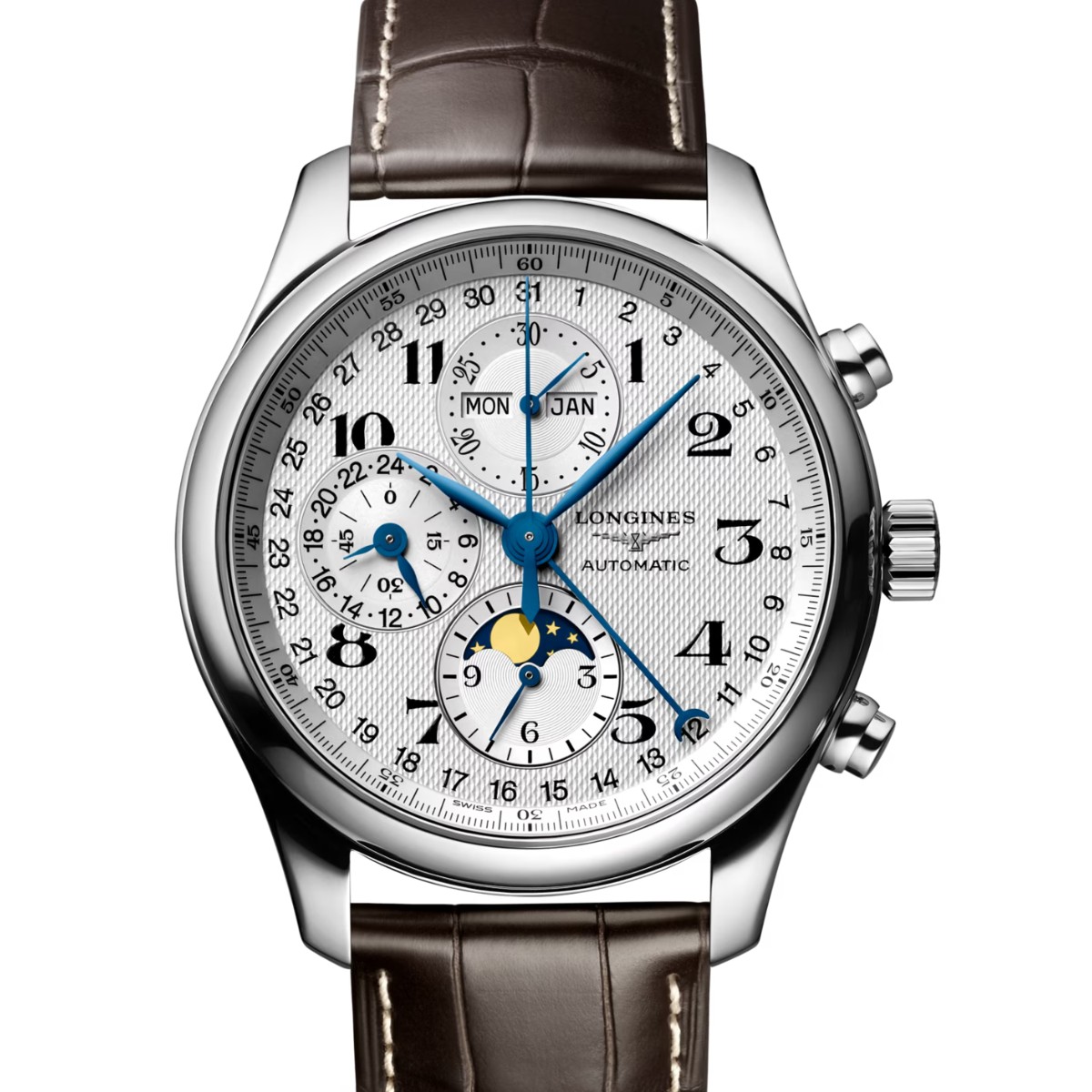
Master Collection Chrono Moonphase
A 42 mm steel chronograph with moon phase on a silver barleycorn dial; 66-hour power reserve.
Sourceslongines.com, 1832 · longines.com · Longines — history timeline · Longines Media Center — corporate history · Longines — aviation milestones and calibres · Phillips — Longines ref. 5415, calibre 13ZN · Morgan Stanley and LuxeConsult, Swiss watch brand estimates, February 2026.
Milestones from Longines