Beginnings
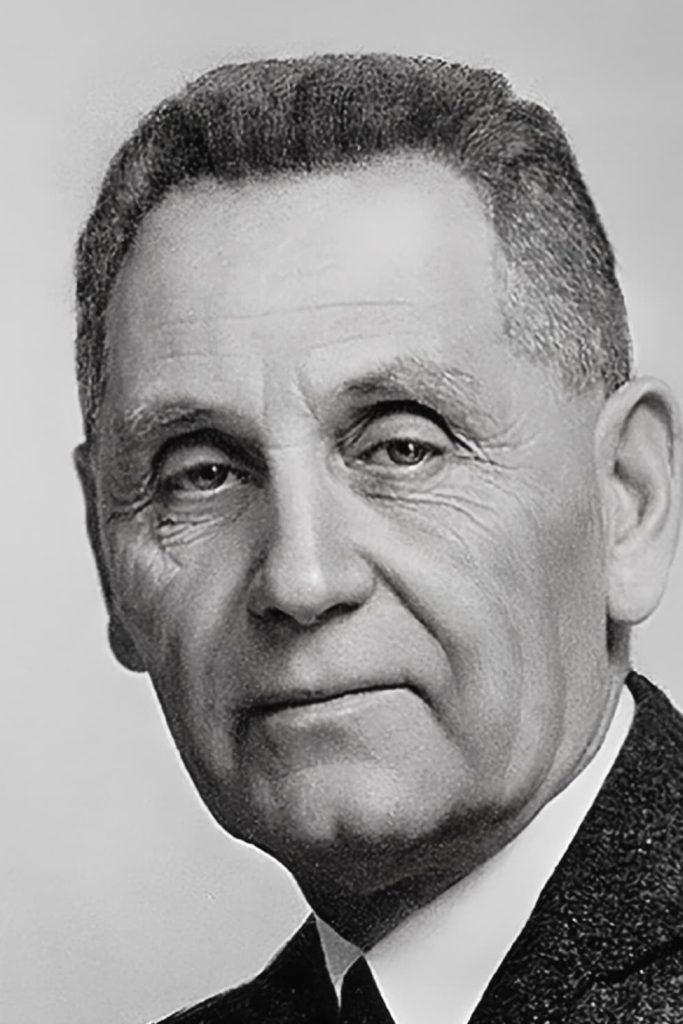
1875LeCoultre was born on the last day of 1875 at Le Sentier, the grandson of Antoine.
He served his apprenticeship in the family firm and spent a year at the Geneva watchmaking school.
1899He joined the board in 1899.
1903From 1903 he also ran a finishing workshop in Geneva.
1906On 1 September 1906 he became director general in succession to his uncle Benjamin.
1917After 1917 he was the principal shareholder.
What he changed
Movements for JaegerFrom 1903 he supplied movements to Edmond Jaeger in Paris, from 1907 exclusively for Jaeger’s contract with Cartier.
Jaeger-LeCoultre nameIn 1917 the two houses formed a formal association. The single name Jaeger-LeCoultre followed in 1937, fifteen years after Jaeger’s death.
Calibre 101Under him the manufacture made Calibre 101 in 1929, the smallest movement of its day. By the house’s account it is also the oldest calibre still in production.
ReversoIn 1931 the Lausanne agent César de Trey brought him the swivelling case that René-Alfred Chauvot had patented on 4 March. The Reverso was then built around LeCoultre movements.
AtmosHe bought the rights to Jean-Léon Reutter’s Atmos, the clock that runs on changes in temperature, and had it industrialised by 1936.
Patek and VacheronHe sat on the board of Patek Philippe, which he had supplied since 1902. He was also president of Vacheron Constantin in the year he died.
Why it matters now
Shaped the houseJaeger-LeCoultre as a name, a catalogue and a manufacture is his making more than anyone else’s.
Two signaturesThe Reverso and the Atmos are still its two signatures.
Supplying GenevaThe habit of supplying the best Geneva houses with movements is why so much of twentieth-century Swiss watchmaking has a LeCoultre calibre inside.
Historian’s noteHe did not found Jaeger-LeCoultre. The 1937 name unified a partnership that went back to 1903. The story of Jaeger’s 1903 “challenge” to build the thinnest calibre is house legend. The Reverso was invented by Chauvot and commissioned by de Trey, and LeCoultre built it. The Atmos is Reutter’s invention, and the year the rights changed hands is given as 1935 or 1936.
SourcesDictionnaire historique de la Suisse · Piguet family archive, biography · Jaeger-LeCoultre, Calibre 101 · French patent FR 712868 (Chauvot, 1931) · Sotheby’s, Reverso