
Timeline / The first balance spring
The first balance spring
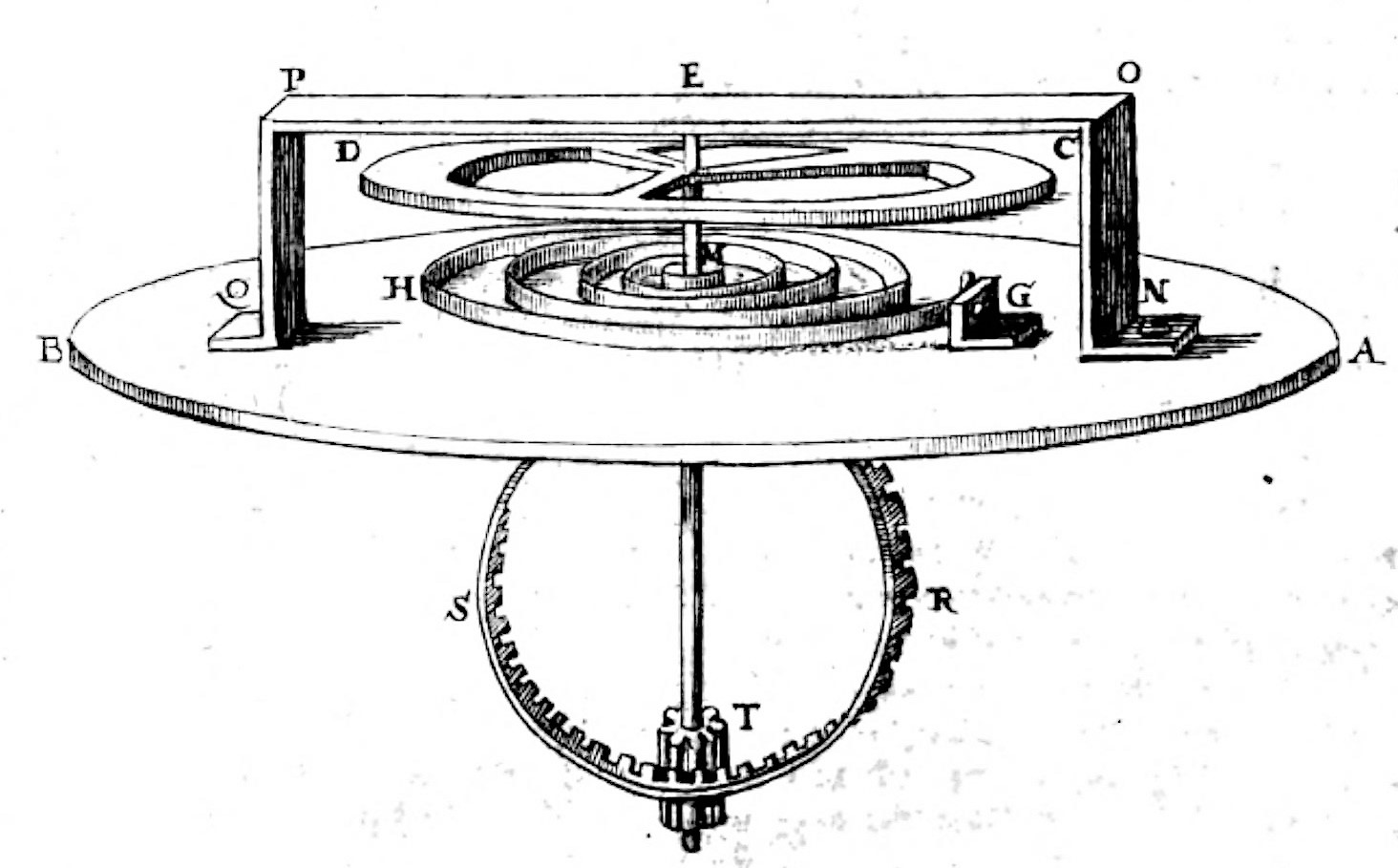
Christiaan Huygens fitted a spiral spring to the balance wheel in 1675, turning the watch from a rough guide into a timekeeper good to a few minutes a day.

- The need
- A watch balance of the time had no rhythm of its own; it simply swung as hard as the mainspring pushed it. Watches could drift by a quarter of an hour or more in a day and were rarely trusted to the minute.
- Made by
- Christiaan Huygens, the Dutch mathematician then working in Paris. The first watch to his design was built by the Paris clockmaker Isaac Thuret.
- What was new
- A fine spiral spring attached to the balance. The spring gives the balance a natural period of its own, as a pendulum does for a clock, so it beats at a steady rate whatever the mainspring is doing.
- Worth knowing
- Huygens worked the idea out on 20 January 1675 and sent it to the Royal Society in London as a coded anagram, to prove his priority without giving the idea away. Watches soon gained a minute hand, because they were finally accurate enough to need one. Every mechanical watch made since uses a balance spring.
- Where it is now
- No Thuret watch of 1675 is known. One of the earliest surviving balance-spring watches, by Thomas Tompion of London, made between 1675 and 1679, is in the Science Museum, London.
Historian’s noteRobert Hooke claimed he had thought of a spring-controlled balance first, and the dispute was never settled. The fairest reading is that Hooke had the general idea and Huygens the working spiral. Thuret also briefly presented the watch as his own invention before apologising.
SourcesScience Museum · Seiko Museum Ginza
Suggest a correction
Thank you. Your note has reached the editor.