Timeline / The Lépine calibre
The Lépine calibre
Invention
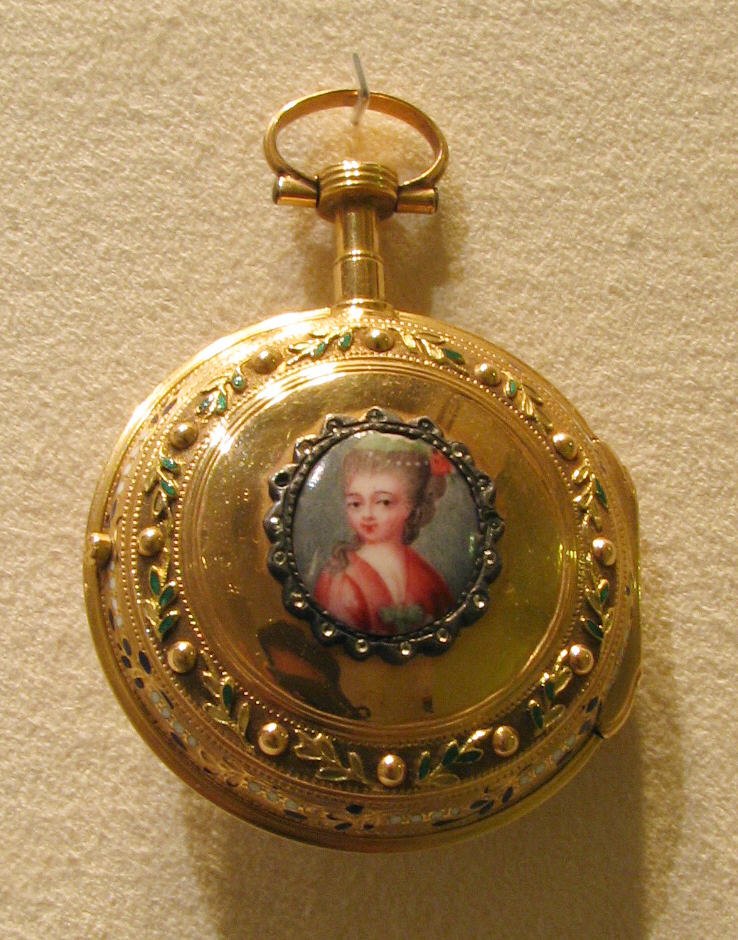
Between about 1764 and 1770 Jean-Antoine Lépine in Paris replaced the full top plate with separate bridges, hung the barrel without a fusee and laid the escapement flat: the architecture of the thin watch, and of nearly every movement made since.
- The need
- A watch of 1750 held its wheels between two full plates, with a fusee and chain to even out the mainspring, and was as thick as a walnut. Fashion wanted it flat.
- Made by
- Jean-Antoine Lépine, horloger du roi, Paris.
- What was new
- The top plate went, and each wheel got its own bridge or bar screwed to the main plate. The fusee went too: the barrel hung from the plate and drove the train directly. The escapement, a cylinder or virgule, lay flat. The movement was thin, and it could be taken apart and serviced wheel by wheel.
- Worth knowing
- Breguet’s ledgers record many movements bought from Lépine, and Breguet built on his layout rather than on the English full plate. The Lange three-quarter plate of the 1860s is the deliberate exception that proves the rule.
- Where it is now
- Lépine watches are in the Metropolitan Museum, New York, and the Louvre; the design is in every modern watch.
Historian’s noteThe date is a range. The Fondation de la Haute Horlogerie says about 1770. David Boettcher argues for about 1764. The Met’s watch of about 1766 is already on the way. This site uses 1770 as the sort year and “c. 1764–70” in the text. See the page on Jean-Antoine Lépine.
SourcesFHH encyclopaedia · David Boettcher, vintagewatchstraps.com · Metropolitan Museum of Art
Suggest a correction