Archives: Milestones

  • The first serial flyback chronograph

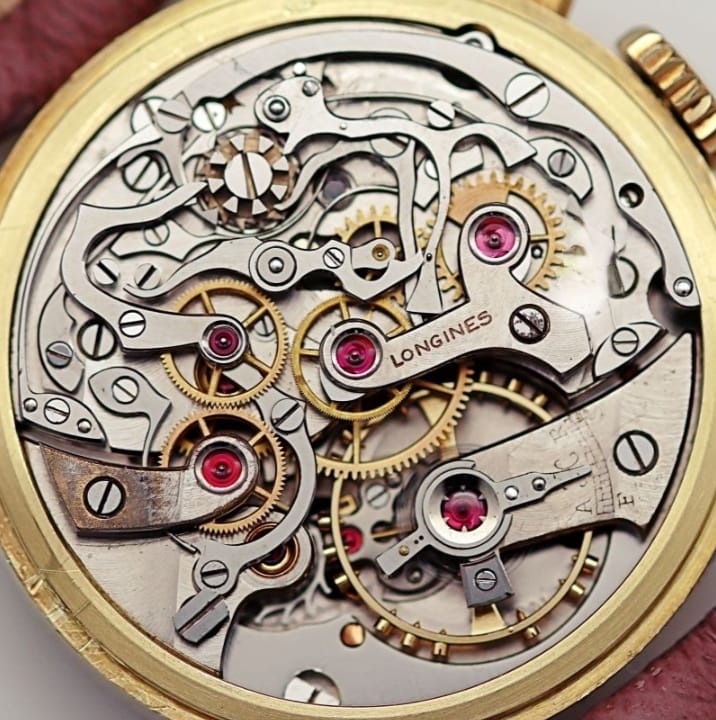
    Longines calibre 13ZN chronograph movement
    A Longines calibre 13ZN, the movement itself.Photograph: EMore98 · CC BY-SA 4.0 · Wikimedia Commons
    The need
    A pilot flying by dead reckoning times each leg of the route from the moment of each turn. Stop, reset and start again takes three presses and costs seconds at the wrong moment.
    Made for
    Aviators, military and civil.
    What was new
    The flyback: one press of the reset pusher while the chronograph runs sends the hand to zero and restarts it immediately.
    Worth knowing
    A 13-ligne column-wheel chronograph made from 1936 to 1951. Collectors still rank it among the finest chronograph movements ever made in series.

    Historian’s noteBovet patented a flyback pocket chronograph in 1889, and Longines fitted the function to a few 13.33Z movements from about 1925. The claim that holds is the first flyback chronograph made in series for the wrist.

    SourcesLongines
  • The first two-pusher chronograph

    The need
    With a single pusher the sequence is fixed: start, stop, reset. A timing cannot be stopped, read and then continued.
    Made by
    Breitling, under Willy Breitling.
    What was new
    Start and stop on the pusher at two o’clock; return to zero on a new pusher at four o’clock.
    Worth knowing
    It made adding up several intervals possible, a pilot timing the legs of a flight, for example. Nearly every mechanical chronograph since uses this layout.

    Historian’s noteThe claim is Breitling’s own, and no patent has been published. Longines 13.33Z watches of about 1929 with two pushers and a flyback have been identified, which would put the layout several years earlier.

    SourcesBreitling

  • The first free winding rotor

    The need
    Harwood’s weight banged between buffer springs through half a turn. Rolex also needed a way to wind the sealed Oyster without unscrewing its crown every day.
    Made by
    Rolex with its movement maker Aegler of Bienne, in work credited to Emile Borer.
    What was new
    A half-moon weight pivoting at the centre of the movement and turning through a full 360 degrees, quietly and without buffers. A slipping clutch stops the mainspring being over-wound.
    Worth knowing
    Fitted in the sealed Oyster case, it became the Oyster Perpetual. When Rolex’s patent expired at the end of the 1940s the rotor became the industry standard. It wound in one direction only; winding in both came about twenty years later.

    Historian’s noteRolex did not invent the self-winding wristwatch; Harwood did. 1931 is the year of the invention and patent work, with watches reaching customers in 1932 and 1933.

    SourcesRolex

  • The first perpetual calendar wristwatch

    The need
    None, at first. The movement was made in 1898 for a lady’s pendant watch that never sold, and the wristwatch was a way to use it.
    Made for
    Cased in 1925 and sold in 1927 to the American collector Thomas Emery.
    What was new
    A calendar that knows the length of each month and the four-year leap cycle, worn on the wrist. It is also the earliest known wristwatch with a moon phase.
    Worth knowing
    Movement no. 97975, in a yellow gold case of about 34 mm. A one-off, not a model: Patek Philippe did not offer a perpetual calendar wristwatch in its catalogue until 1941.
    Where it is now
    The Patek Philippe Museum, Geneva.

    Historian’s noteA conversion of a movement built twenty-seven years earlier for a different kind of watch. Both 1925, the casing, and 1927, the sale, are quoted as its date.

    SourcesPatek Philippe

  • The first automatic wristwatch

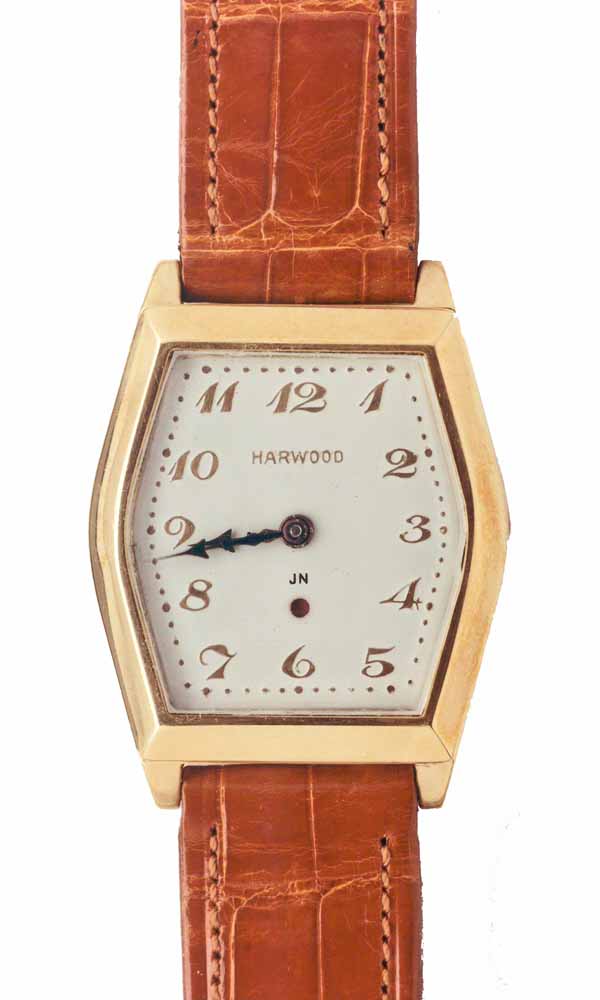
    Harwood self-winding wristwatch of 1929
    A Harwood automatic of 1929, from the first series of self-winding wristwatches ever made. Deutsches Uhrenmuseum, inv. 47-3543.Photograph: Museumsfoto · CC BY 3.0 de · Wikimedia Commons
    The need
    Harwood’s concern was sealing rather than convenience: the winding crown was the hole through which dust and damp entered a watch.
    Made by
    John Harwood, a watch repairer from Bolton working on the Isle of Man. British patent 218,487, filed in July 1923. Built by Fortis of Grenchen on an A. Schild movement, and by Blancpain under licence for France.
    What was new
    A weight pivoting at the centre and swinging through about 300 degrees between two sprung buffers, winding the watch as the arm moved. There was no crown at all: the hands were set by turning the bezel.
    Worth knowing
    Several thousand were sold before the Depression and the fragility of the mechanism ended the venture in the early 1930s.
    Where it is now
    The Harwood of 1929 shown here is in the Deutsches Uhrenmuseum, Furtwangen.

    Historian’s noteFortis dates the launch to the Basel fair of 1926; archival work by David Boettcher finds no evidence of it and puts the first documented sale at Selfridges in London in November 1928. Leon Leroy is also reported to have made self-winding wristwatches in 1922. The claim that holds is the first self-winding wristwatch patented and made in series.

    SourcesGoogle Patents, GB 218,487 · Fortis

  • The first separate chronograph pusher

    The need
    On the first wrist chronographs the timing pusher sat in the crown, so one part both wound the watch and ran the chronograph. It was awkward, especially with gloves.
    Made by
    Breitling of La Chaux-de-Fonds, under Gaston Breitling, who had taken over the firm in 1914.
    What was new
    A separate chronograph pusher at two o’clock. The crown went back to winding and setting only.
    Worth knowing
    The move made the next step possible: a second pusher, which Breitling added in 1934.

    Historian’s noteThe 1915 date comes from Breitling and is widely repeated, but no patent or dated archive entry supporting it has been published. Treat it as probable rather than proven.

    SourcesBreitling

  • The first men’s wristwatch

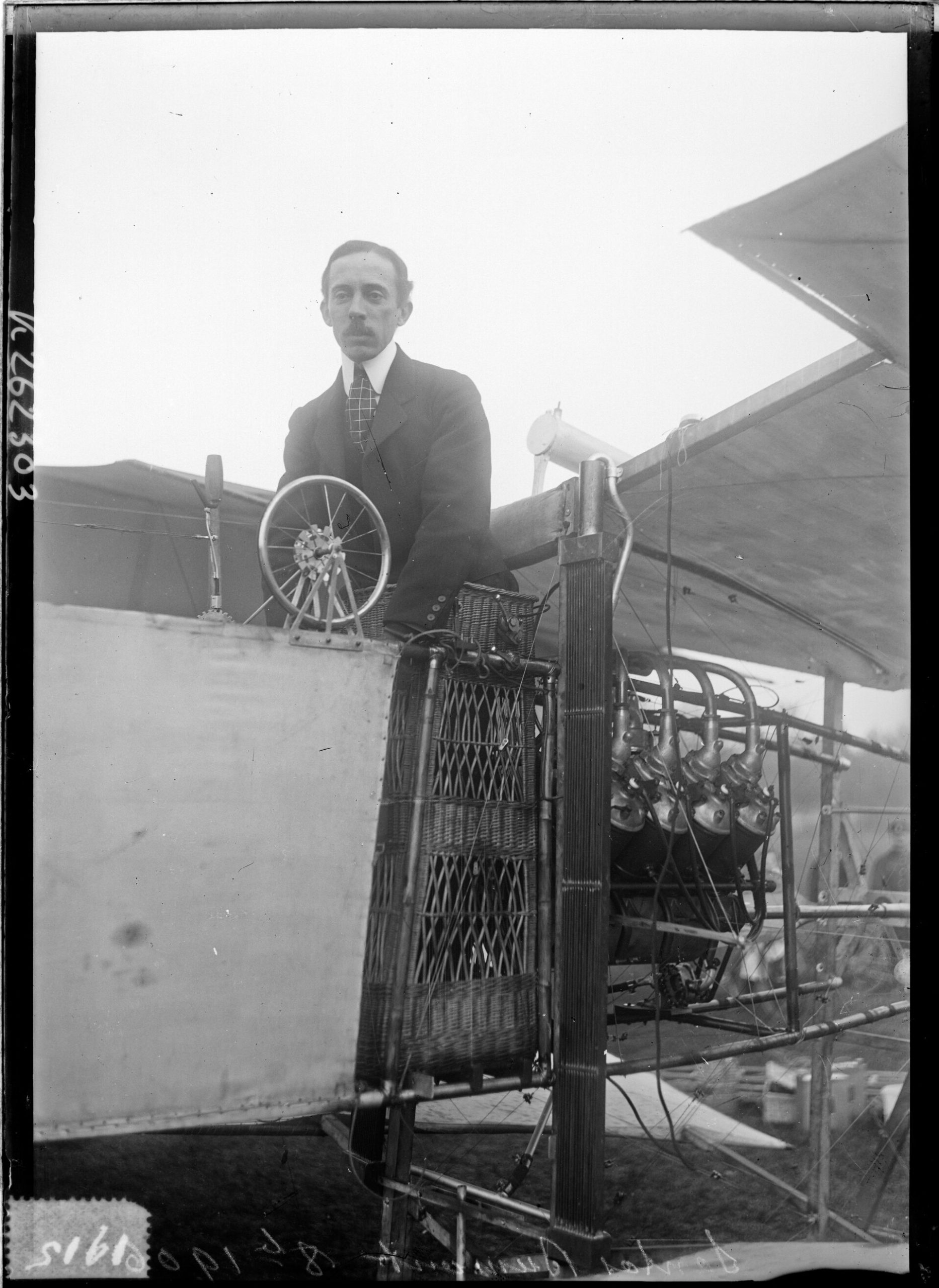
    Alberto Santos-Dumont aboard the 14-bis, November 1906
    Santos-Dumont aboard the 14-bis in November 1906, the month of the flights at which he is said to have worn his Cartier. No watch from 1904 is known to survive, and no photograph of one exists.Photograph: Agence Rol · Public domain · Wikimedia Commons
    The need
    A pilot flying with both hands on the controls could not take a pocket watch out to read it.
    Asked for by
    Alberto Santos-Dumont, the Brazilian aviator living in Paris, who put the problem to his friend Louis Cartier.
    What was new
    A man’s watch designed for the wrist from the start: a flat square case, strap attachments built into the case, and screws left visible on the bezel.
    Worth knowing
    The movements came from Edmond Jaeger. Cartier put the design on sale to the public in 1911 under the name Santos-Dumont, and it has been in production in one form or another ever since.
    Where it is now
    The original is lost. The earliest surviving Santos watches date from about 1912.

    Historian’s noteThe Santos is generally regarded as the first men’s wristwatch, and the label is fair in spirit: wristwatches were then worn by women, and this one was made for a man, a pilot, to do a specific job. Strictly, purpose-made men’s designs had been registered a little earlier, by H. Williamson in 1901 and Dimier Frères in 1903. The date 1904 comes from Cartier’s own chronology; no dated archive record of a 1904 watch has been published, and the first firm date is the 1911 launch.

    SourcesFondation de la Haute Horlogerie

  • The first quartz wristwatch

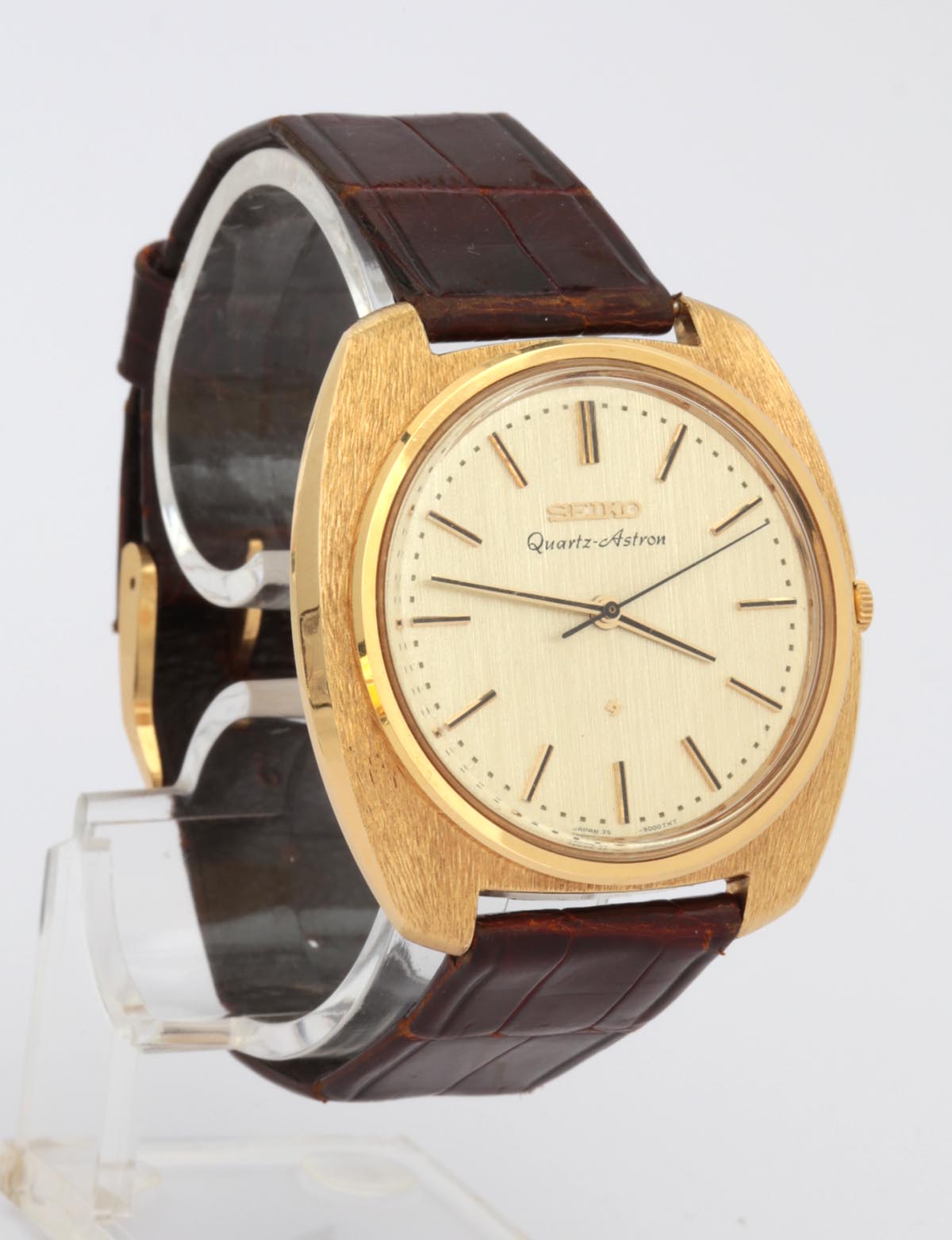
    Seiko Quartz Astron of 1969
    The Seiko Quartz Astron of 1969, calibre 35A — the watch itself. Deutsches Uhrenmuseum.Photograph: Deutsches-uhrenmuseum · CC BY-SA 4.0 · Wikimedia Commons
    The need
    Accuracy far beyond anything a balance wheel could deliver.
    Made by
    Suwa Seikosha, part of Seiko.
    What was new
    A quartz crystal vibrating 8,192 times a second, divided down by a circuit to drive a stepping motor. Seiko quoted about five seconds a month.
    Worth knowing
    One hundred were made, in 18-carat gold, at 450,000 yen, about the price of a medium-sized car. Within fifteen years quartz had taken over the watch industry.
    Where it is now
    The example shown is in the Deutsches Uhrenmuseum, Furtwangen.

    Historian’s noteFirst sold, not first built: Swiss prototypes ran in 1967, and Longines announced a quartz watch in August 1969 that did not ship until later.

    SourcesIEEE Milestone · Seiko Museum Ginza

  • The first waterproof wristwatch

    The need
    Dust and water got in through the case back, the glass and, above all, the winding crown.
    Made by
    Rolex, under Hans Wilsdorf. The screw-down crown was patented in 1925 by Paul Perregaux and Georges Perret of La Chaux-de-Fonds; Wilsdorf bought the rights in July 1926 and his engineers redesigned it.
    What was new
    A crown that screws down onto a threaded tube, with a clutch so the watch can still be wound, on a case with a screwed back and bezel: sealed at every opening.
    Worth knowing
    In October 1927 the swimmer Mercedes Gleitze wore an Oyster on a Channel swim, and Rolex bought the front page of the Daily Mail to say so. Demonstrating a watch in public rather than describing it starts here.

    Historian’s noteNot the first waterproof watch: François Borgel patented a screw case in 1891 and Tavannes sold a Submarine from 1915. The patent Rolex bought did not work as filed. The defensible claim is the first effective and commercially successful waterproof wristwatch.

    SourcesRolex

  • The first Swiss wristwatch

    The need
    None of a technical kind. It was jewellery: a small watch a woman could wear on the arm and consult without reaching for a pocket watch.
    Made for
    Not a known commission. The firm made it in 1868 and its ledgers record the sale eight years later, on 13 November 1876, to Countess Koscowicz of Hungary.
    What was new
    A Geneva manufacture selling a watch built into a bracelet, rather than a one-off made to royal order.
    Worth knowing
    It is small and it is wound with a key, not a crown: a six-ligne movement, no. 27368, with a cylinder escapement, in a rectangular gold case whose hinged cover, set with diamonds and enamel, closes over the dial. For the next thirty years the bracelet watch stayed a women’s accessory.
    Where it is now
    On display in the Patek Philippe Museum in Geneva.

    Historian’s noteThe claim is the first Swiss wristwatch, and the word matters. Breguet made a bracelet watch for Caroline Murat, Queen of Naples, ordered in June 1810; it is older by more than half a century, but it has been lost since the 1850s.

    SourcesPatek Philippe · Patek Philippe Museum